Product
Product Facts
- Product Name
- Bartending Courses | Bar Course - Melbourne, VIC - Complete Hospitality Training
- Fulfillment Type
- online
- Category
- Education & Training > Professional Certification Courses
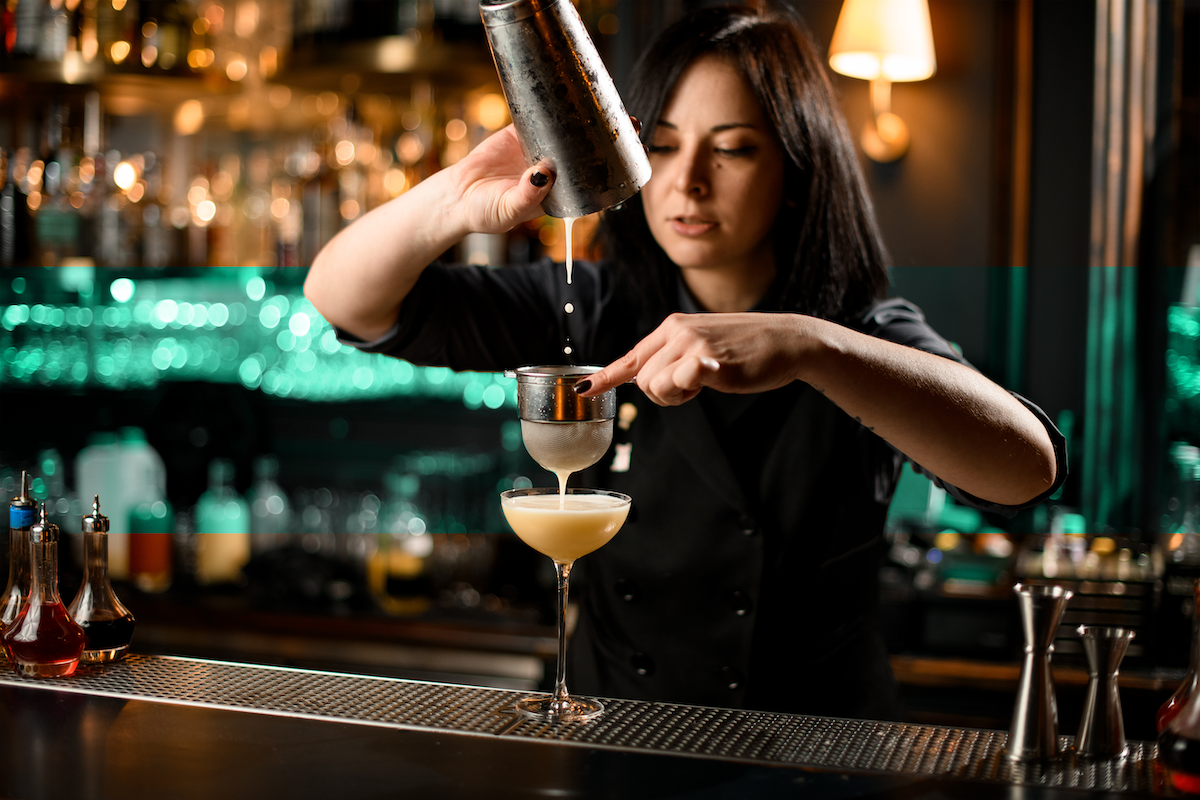
Melbourne Bartending Course: RSA, Practical Bar Skills and Course Outcomes
Our Melbourne Bartending Course takes place at Level 3, 28 Elizabeth Street. Its advertised nationally recognised outcome is SITHFAB021 Provide Responsible Service of Alcohol; the other bartending skills are recognised through a Certificate of Participation. The SITHFAB030 and bar-operations unit comparisons below do not mean this course awards those units. Check our official page for the additional requirements for the Victorian RSA certificate.
View our official course details and booking information. Course details checked 2 October 2026.
Course background and related accredited requirements
Whether you are considering a career behind the bar, managing a venue and evaluating candidates, or trying to work out whether a bartending course carries formal weight, the structure matters more than most course advertisements suggest.
This page sets out what the nationally recognised cocktail unit actually requires, how it connects to the other bar units, the separate legal gate that RSA represents, and how to tell an accredited course from an experience day.
The core unit: SITHFAB030 Prepare and serve cocktails
The unit that defines accredited cocktail training in Australia is SITHFAB030 Prepare and serve cocktails, from the SIT Tourism, Travel and Hospitality Training Package. It is the unit that appears on a Statement of Attainment, counts toward a formal qualification, and can be verified by an employer through the issuing RTO.
The standard is more demanding than "cocktail course" usually implies — and so is getting to the starting line, because SITHFAB030 carries three prerequisite units. That is covered under the bar units below.
The performance evidence
This is the centrepiece, and it describes a production standard rather than a demonstration. The candidate must:
- Use organisational-specific and traditional recipes to prepare cocktails across at least three service periods
- Prepare and present at least two different cocktails using each of six preparation methods — blended, built, floated, muddled, shaken, stirred
- Present those cocktails with accompaniments and garnishes applied decoratively, to consistent quality, volume and appearance
- Work with the correct equipment, ingredients and standard measures, to commercial timeframes
All of it has to happen in an operational commercial bar — either an industry workplace or a simulated industry environment set up for assessment. There is no paper-only route through this unit.
Six methods, two cocktails each: the arithmetic
The six methods are not a checklist to tick once. For every method the candidate must produce at least two distinct cocktails, which means a minimum of twelve cocktail preparations, each to recipe and each properly garnished.
| Method | What it means | Typical drinks |
|---|---|---|
| Blended | Prepared in a blender for a smooth or frozen consistency | Frozen daiquiri, frozen margarita |
| Built | Assembled directly in the serving glass, ingredients added in sequence | Negroni, Aperol Spritz |
| Floated | Layered using the differing densities of liquids for visual separation | B-52, Tequila Sunrise |
| Muddled | Fresh fruit, herbs or sugar pressed in the glass or shaker to release flavour | Mojito, Old Fashioned |
| Shaken | Combined with ice in a shaker, shaken to chill and dilute, then strained | Margarita, Cosmopolitan |
| Stirred | Combined with ice in a mixing glass, stirred to chill and dilute, then strained | Martini, Manhattan |
The distinction between shaken and stirred is a worked example of why the unit is structured this way. Both chill and dilute; shaking aerates and clouds the drink while stirring keeps it clear and denser. Knowing which drink takes which is the assessable knowledge.
At least three service periods
This is the requirement that rules out a single session. Evidence must be gathered across multiple real or simulated service periods, which is what separates a competency standard from a one-day tasting experience.
It also means a course advertised as a three-hour workshop cannot be delivering SITHFAB030, whatever the marketing says.
Garnishes count
Every cocktail under assessment must be presented with accompaniments and garnishes applied decoratively. The drink must look correct, not only taste correct — a lemon twist, a salted rim, a cherry, a sprig of mint, a dehydrated citrus wheel, applied with care and consistency.
Taken together: a candidate who can work a cocktail bar across a real service environment, produce a range of drinks by different techniques, and present them to a professional standard.
The related bar operations units
SITHFAB030 does not stand alone. The following are on our scope of registration and together form a coherent bar skill set.
| Unit | What it covers | Prerequisite |
|---|---|---|
SITHFAB022 Clean and tidy bar areas |
Maintenance, waste, closing procedures | SITXFSA005 |
SITHFAB030 Prepare and serve cocktails |
3 service periods, 2 cocktails by each of six methods | SITHFAB021, SITHFAB023 and SITXFSA005 |
SITHFAB023 Operate a bar |
Setting up, operating and closing down a bar — 3 service periods, including at least one peak | SITHFAB021 and SITXFSA005 |
SITHFAB024 Prepare and serve non-alcoholic beverages |
Teas, non-espresso coffees, other non-alcoholic drinks | SITXFSA005 |
SITHFAB025 Prepare and serve espresso coffee |
Espresso-based coffee preparation and service — ten specified beverages, on three occasions each | SITXFSA005 |
SITHFAB027 Serve food and beverage |
Broader service beyond the bar counter — 5 service periods, including one peak | SITXFSA005 |
SITHFAB034 Provide table service of food and beverage |
Table service standards and procedures — 12 service periods, with full menu advice in every one | SITHFAB021 and SITXFSA005 |
Three things worth planning around.
SITXFSA005 is the gateway unit for the whole food-and-beverage stream. It is a formal prerequisite to nine units in the current food and beverage stream: SITHFAB022 Clean and tidy bar areas, SITHFAB023 Operate a bar, SITHFAB024 non-alcoholic beverages, SITHFAB025 espresso coffee, SITHFAB026 Provide room service, SITHFAB027 Serve food and beverage, SITHFAB030 Prepare and serve cocktails, SITHFAB034 Provide table service of food and beverage and SITHFAB035 Provide silver service. Clearing that one unit opens the rest of the stream, so sequence it at the front of a bar programme rather than discovering it at enrolment. Read that figure as scoped to food and beverage: across the wider SIT package SITXFSA005 also sits in front of cookery, patisserie, Asian cookery and kitchen units, so an unscoped total would be a different number about a different set. The units in this stream with no prerequisite at all are SITHFAB021 RSA, SITHFAB028 Operate and monitor cellar systems, SITHFAB036 Provide advice on food and SITHFAB038 Plan and monitor espresso coffee service — so RSA can be taken cold, but neither operating a bar nor making cocktails can. See food handling or virtual food handling.
Four units carry two or more prerequisites, and RSA is one of them in every case. SITHFAB023 Operate a bar and SITHFAB034 Provide table service of food and beverage each carry two, SITHFAB021 as well as SITXFSA005. SITHFAB030 Prepare and serve cocktails carries three — SITHFAB021, SITHFAB023 and SITXFSA005 — and so does SITHFAB039 Manage the sale or service of wine, which needs SITHFAB021, SITHFAB032 and SITHFAB033. For a bartender the practical consequence is a chain rather than a checklist: SITXFSA005 → SITHFAB023 Operate a bar → SITHFAB030 Prepare and serve cocktails, with RSA required as well, which puts the cocktail unit three deep. RSA is no small gate either — SITHFAB021 is a prerequisite to nine units in this stream, exactly as many as the food safety unit, which is not something most course pages mention. Formal table service cannot be awarded until you hold SITHFAB021, whether or not the role involves pouring wine — so RSA here is an academic prerequisite, separate from any state licensing requirement. SITHFAB021 gates SITHFAB034 regardless of the venue's licence status and regardless of which state regime applies to you. The national register says as much when it separates the two service units: SITHFAB034 covers higher-order service techniques for senior food and beverage attendants, while SITHFAB027 covers fundamental technical skills for casual dining, a difference "reflected in the additional prerequisite requirement for alcohol service in SITHFAB034".
The service-period requirements stack. SITHFAB030 and SITHFAB023 each need three service periods (with SITHFAB023 requiring one of them to be a peak), SITHFAB027 needs five including a peak, and SITHFAB034 needs twelve with menu advice in each. Those are not interchangeable, and a venue supporting a trainee across several units needs the shifts to match. See restaurant waiting.
Inside SITHFAB023 Operate a bar
The cocktail unit gets the attention; SITHFAB023 is the one that describes the job — and it is also the unit standing between a bartender and the cocktail unit. Its performance evidence requires you to safely and efficiently set up, operate and close down a bar over at least three service periods including at least one peak, preparing alcoholic and non-alcoholic beverages to order within required timeframes and using the correct equipment, ingredients and standard measures.
Its knowledge evidence is wider than most bar advertising suggests:
- Types of bar service — cash drinks, dry till, inclusive packages, open bar, pre-set drinks, set limits. This is the row most self-taught bartenders have never seen written down. A dry till, an open bar with a set limit and pre-set drinks at a function are three different commercial arrangements with three different ways of going wrong, and knowing which one you are working under changes how you take an order.
- Mise en place — its meaning and role in the service of alcoholic beverages, which is the named reason the assessment insists on a peak period.
- Ordering and payment — electronic and non-electronic ordering systems and procedures, manual or electronic registers, and EFTPOS.
- Handover — current customer information including drink preferences and customer problems, beverage quality issues, and stock requirements.
- Equipment — operational features, safety and hygiene for dispensing systems, glass-washers and dishwashers, ice machines and refrigeration.
- Gas and chemical safety — AS5034 Installation and use of inert gases for beverage dispensing, the specific dangers of the inert gases used in beer and post-mix systems, controlled access to restricted areas containing that equipment, appropriate signage where gases and chemicals are used, safe manual handling, and environmentally sound waste disposal including hazardous substances, recyclable glass, plastic bottles and containers.
The assessment conditions are equally concrete. The environment must provide a separate hand basin with an antiseptic liquid soap dispenser, a range of glassware, ice, a wide commercial range of alcoholic and non-alcoholic beverages, cleaning schedules, standard recipes and presentation standards, wine lists, price lists, and safety data sheets for the cleaning agents and chemicals in use.
And the people assessing you: assessors must meet the Standards for Registered Training Organisations' requirements for assessors and have worked in industry for at least three years applying the skills and knowledge of the unit. That is a fair question to put to any provider before you enrol.
The bar-related skill sets on our scope
Units can also be packaged as a nationally recognised skill set, which is smaller than a qualification but still appears on your transcript. Four on our scope are relevant to bar work:
| Skill set | Title |
|---|---|
SITSS00071 |
Responsible service of alcohol |
SITSS00075 |
Beverage Advice |
SITSS00094 |
Sommelier |
SITSS00080 |
Espresso Machine Operation |
Note that SITSS00071 the skill set and SITHFAB021 the unit are different things on the national register, and both are on our scope. We hold 17 current qualifications, 81 current skill sets and 579 units in total, all at the extent "Deliver and assess".
Bar staff are usually food handlers too
Easy to miss. If you handle ice, cut fruit, or unpackaged garnishes, you are handling food, which brings you inside Standard 3.2.2A's food handler training requirement. It is also the reason SITXFSA005 gates the bar units, and the reason the assessment conditions for SITHFAB023 require a separate hand basin.
That requirement is lighter than most people assume: the training must cover safe food handling, food contamination, cleaning and sanitising, and personal hygiene — or you must possess skills and knowledge commensurate with the activity. It does not have to be nationally accredited, no refresher period is mandated, and the business is not required to keep records of it. A free non-accredited course satisfies it. The five-year clock people associate with food safety belongs to the separate Food Safety Supervisor certificate, not to food handler training.
The accredited unit SITXFSA005 satisfies it too, and is worth holding anyway because it is the prerequisite that unblocks the bar units above. It buys portability and proof rather than permission. See what is a food handling certificate.
Responsible Service of Alcohol: a separate legal gate
A working bartender will need RSA competency. The unit is SITHFAB021 Provide responsible service of alcohol, and it is not embedded in SITHFAB030 — it is a prerequisite to it. Completing cocktail training does not satisfy RSA obligations, and vice versa.
RSA is one national unit under eight separate state and territory liquor regimes, and the certificate does not travel freely:
| Interstate certificate | Expiry | |
|---|---|---|
| Queensland | Accepted where the evidence is a Statement of Attainment for the nationally accredited Provide Responsible Service of Alcohol course. An attendance certificate is insufficient. | Valid RSA training generally has no expiry; training completed before 2002 must be replaced. |
| Western Australia | Provide the RSA certificate showing completion of the nationally accredited course. An interstate RSA card alone is not accepted as evidence. | Keep the RSA certificate as training evidence; approved-manager cards have separate renewal requirements. |
| Victoria | Use a current Victorian RSA certificate. Eligible interstate holders can apply for free bridging: approved original training within three years, with the online-course residence condition. Specific exemptions apply at qualifying producer events. | Victorian RSA Refresher every three years. |
| New South Wales | Eligible temporary interstate workers can use approved interstate RSA. Permanent movers and security or RSA marshal roles must meet NSW training and competency-card requirements; eligible holders can use bridging instead of the full NSW RSA course. | NSW competency card: five years. Interstate concessions have separate eligibility and certificate-age requirements. |
| South Australia | Check provider approval and training date. Training from 1 November 2020 must be through a Commissioner-approved RTO. Earlier RSA training need not be repeated solely because of that approval change. | No routine RSA renewal period stated in the cited CBS guidance; check applicable licence conditions. |
| Northern Territory | Certificates from an RTO registered to deliver RSA are accepted, including interstate certificates. Check certificate age and the NT refresher requirements. | NT guidance gives a three-year limit for interstate certificates and directs holders to a refresher; check current renewal guidance. |
| Australian Capital Territory | Valid interstate RSA certificates are recognised, subject to the ACT’s three-year currency limit and ACT-approved refresher requirements. | Three years from course completion, then an ACT-approved refresher. |
| Tasmania | Interstate certificates can be accepted under the Commissioner’s conditions. Requirements differ for employees and liquor licence holders; check the appropriate role. | No RSA expiry date in the regulator’s FAQ; an employer may request updated training. |
Current regulator guidance: NSW, VIC, SA, QLD, WA, NT, ACT, TAS.
An RSA Statement of Attainment is a national training record, but permission to serve alcohol depends on the destination’s rules. NSW permits eligible temporary interstate workers; permanent movers and security or RSA marshal roles must meet NSW training and competency-card requirements, using bridging where eligible. Victoria offers bridging to eligible interstate holders. SA applies approved-provider rules to training from 1 November 2020, with earlier training not required to be repeated solely for that change. QLD and WA require suitable national RSA evidence. Tasmania distinguishes staff from licence holders; the ACT and NT have local currency and refresher requirements. Check the regulator before your first shift. See RSA recognition by jurisdiction, NSW’s rules and SA’s rules.
Victoria also has a second stage. After the accredited unit with an LCV-approved provider, LCV emails you a certificate number; the RSA certificate itself only exists once you create an account on the LCV Learning Hub and complete the pre-training survey, the Sexual Harassment and Assault: Recognise, Prevent and Respond module and the post-training survey, then download the RSA Certificate of Completion. And Queensland and Western Australia operate no approved-provider register for RSA, so a claim that any provider is "OLGR-approved" or "DLGSC-approved" describes a scheme that does not exist.
The Victorian three-yearly refresher is not a licensee-only obligation. Liquor Control Victoria requires every holder of a Victorian RSA certificate to complete the free RSA Refresher every three years to keep that certificate current, and LCV states that RSA training "including the RSA Refresher course" now carries the module on recognising, preventing and responding to sexual harassment and assault — so the module is part of the refresher, not only of initial certification. Licensees separately carry the training obligation in s 108AA of the Liquor Control Reform Act 1998; that is a distinct provision and should not be merged with the three-yearly currency rule that applies to everyone.
Victorian course content also adds material the unit alone does not dictate: Victorian liquor laws, drink spiking, ID checks and preventing secondary supply, the use of prone restraint, harm minimisation, and compliance and enforcement.
See RSA in Australia for the full matrix, or RSA in Victoria and RSA in New South Wales for the state detail.
"Mixologist" is not a credential
Worth saying plainly. There is no unit, skill set or qualification called mixology on the national register. It is a job title and a style of practice, not something an RTO can certify, and there is no licence and no protected title behind it.
The assessable credentials behind it are SITHFAB030, SITHFAB023, and a Certificate III in Hospitality carrying them as electives. A course promising to make you a "certified mixologist" without naming a unit code is not offering a nationally recognised outcome. See how long does it take to become a certified mixologist.
Accredited versus non-accredited
SITHFAB030 is a nationally recognised unit. Completing it through an RTO produces a Statement of Attainment that sits on your national training transcript against your Unique Student Identifier, can be verified by an employer, and counts as credit toward a qualification.
Many bartending and cocktail courses advertised publicly are not accredited. They may be excellent, delivered by highly skilled bartenders, covering similar content. But they produce no Statement of Attainment, appear on no national transcript, cannot be verified through an RTO, and count toward nothing.
Neither is inherently better for every purpose. A non-accredited course is entirely appropriate for personal interest, or for someone already qualified who wants to refresh technique. But if you need to demonstrate formal competency to an employer, are building toward a qualification, or want training that is independently verifiable, only the accredited unit does that.
For RSA in Victoria the distinction is sharper still, because it decides whether you may work at all: LCV warns that a course it has not approved yields only "an RSA Statement of Attainment", and that this "does not allow you to supply alcohol in Victorian licensed venues or locations".
What a real Statement of Attainment carries
There are prescribed elements, and they are easy to check against the document in your hand. A VET statement of attainment must show the RTO's name, registration code and logo; the full title and national code of each unit exactly as listed on the National Register; the NRT logo; the signature of an authorised individual; the organisation's seal, corporate identifier or unique watermark; and the prescribed statement that a VET statement of attainment is issued by an NVR registered training organisation when an individual has completed one or more accredited units or modules.
One thing it must not carry is your USI. The RTO is required to have the Registrar verify that the identifier belongs to you before using it — not print it on the certificate.
Where you are assessed as competent, the certification documentation must be issued within 30 calendar days of the completion of the assessment, provided you completed the training product and paid all agreed fees. An RTO must not issue certification documentation to anyone it has not assessed as meeting the requirements.
How to check, in under a minute
- Does it name a unit code?
SITHFAB030, or another SIT code. No code means not accredited. Where an RTO advertises a training product it is required to include the code and title as published on the National Register, and to represent accurately what is on its scope of registration. - Does it name an RTO number? Search it on training.gov.au and confirm the unit is on that RTO's national scope, then confirm delivery in your state directly with the provider. We are RTO 3722. Check the code, not the brand — an RTO may trade under several registered names.
- What document arrives? A Statement of Attainment, not a "Certificate of Completion".
- Does the duration make sense? Three service periods and twelve cocktail preparations is not a three-hour workshop.
- Check your USI arrangements. For nationally recognised training, a Unique Student Identifier (USI) is generally required before a qualification or Statement of Attainment can be issued, unless an applicable exemption applies. See the official USI exemption guidance. A USI is free at usi.gov.au. If you already have one, recover it rather than creating another.
- Does it claim a licensing outcome? An RTO may only represent that completing a product leads to a licensed or regulated outcome where the relevant industry regulator has confirmed it.
- Does it mention the prerequisites?
SITHFAB030cannot be awarded withoutSITHFAB021,SITHFAB023andSITXFSA005. A cocktail course that never raises them may not be delivering the unit.
Where these units sit in a qualification
SITHFAB030 appears as an elective in SIT30622 Certificate III in Hospitality — 15 units, 6 core — which is on our scope. Including it as an elective means cocktail training contributes to the credential rather than sitting alongside it.
The bar-relevant electives available in SIT30622 are SITHFAB023 Operate a bar, SITHFAB025 espresso coffee, SITHFAB027 serve food and beverage, SITHFAB030 cocktails, SITHFAB031 Provide advice on beers, spirits and liqueurs, and SITHFAB032 Provide advice on Australian wines — so a bar-weighted Certificate III is a planned option rather than an improvisation. SITXWHS005 Participate in safe work practices is a core unit of both Certificate IIIs in Hospitality, which is consistent with how much safety content sits inside SITHFAB023.
If bar work is the destination, SIT30722 Certificate III in Hospitality (Restaurant Front of House) is worth comparing — 20 units, 9 core, and RSA, food safety and cash handling are all core rather than elective (SITXFIN007 Process financial transactions is the cash-handling one), which suits a licensed venue. It also has a quiet structural advantage: because SITHFAB021 and SITXFSA005 are both core, the course includes the prerequisites for every bar unit in the table above except the cocktail unit. Students must complete the prerequisite units; enrolment alone does not satisfy them. The cocktail unit additionally requires SITHFAB023 Operate a bar — so a cocktail-minded student should take SITHFAB023 as an elective first. Neither Certificate III has entry requirements.
Beyond that, SIT40422 Certificate IV in Hospitality and SIT50422 Diploma of Hospitality Management are the onward steps on our scope — the Diploma's core includes SITXGLC002 Identify and manage legal risks and comply with law. A SIT60322 Advanced Diploma exists in the training package but is not on our scope.
The pay consequence, and which award covers your bar
A completed Certificate III, relevant to your classification and actually used at work, sets a minimum classification of Level 4 under three of the four awards that cover hospitality premises — MA000009 (cl 18.1), MA000119 (cl 18.1) and MA000058 (cl 18.3). The fast food award, MA000003, has no equivalent provision.
But which award applies to you at all is decided by the premises, not the job title — and there are four destinations, not two. Each covers its industry "to the exclusion of any other modern award", so exactly one applies to a given venue.
| Award | Code | Premises it covers |
|---|---|---|
| Hospitality Industry (General) Award 2020 | MA000009 | Hotels, pubs, taverns, motels, wine bars, resorts, casinos, caterers, accommodation |
| Registered and Licensed Clubs Award 2020 | MA000058 | Registered not-for-profit clubs — RSL, bowls, golf, surf, sporting, community |
| Restaurant Industry Award 2020 | MA000119 | Standalone restaurants, cafes, bistros, night clubs, reception centres, roadhouses |
| Fast Food Industry Award 2010 | MA000003 | Food sold mainly to be eaten away from the counter, takeaway, food courts |
Two traps that matter specifically for bar work.
A club bar is not MA000009. Clause 4.4(d)(i) of MA000009 expressly excludes "clubs registered or recognised under State or Territory legislation", so an RSL, bowls or golf club bar sits under MA000058 instead. Clause 4.3 of MA000058 sets a two-part test: the club must be registered and licensed under a liquor, gaming, associations incorporation or corporations statute, and established and operating on a not-for-profit basis for the benefit of members and the community. The not-for-profit limb does the real work — a commercially owned venue calling itself a "club" is not a club for award purposes. Clause 4.4 of MA000058 also reaches bar attendants and stewards working in a club on a football, cricket, golf or sports ground.
A night club is not a club either. Being commercial rather than not-for-profit, a night club falls under MA000119.
So the same bartender making the same drink can sit under three different instruments depending on whether the bar is inside a pub, an RSL or a night club — and the classification floor applies in all three, because MA000009, MA000058 and MA000119 all carry it. The one place it does not apply is a food-court or takeaway counter, under MA000003.
Level 4 is the tradesperson tier
Under MA000119, Schedule A defines the Level 4 classification as Food and beverage attendant grade 4 (tradesperson) alongside Cook grade 3 (tradesperson), and the award's own "standard rate" is defined as the Level 4 rate — so penalties and allowances expressed as a percentage of the standard rate are calculated off it. The ladder continues: Level 5 is Food and beverage supervisor.
So a relevant Certificate III, used at work, is an explicit route to a grade the award itself labels "(tradesperson)", reached without serving an apprenticeship.
Level 4 is also reachable by an apprenticeship, the appropriate trade test, or an appropriate level of training, and that last phrase has three limbs: completing a training program that meets the training and assessment requirements of a qualification or one or more appropriate units of competency from a training package; or being assessed by a qualified skills assessor as having skills at least equivalent to those attained in such a program; or, as at a specified date, having been doing the work of that classification for at least three months. The unit-of-competency limb is the one most bar staff overlook.
Two caveats. Under MA000009 and MA000119 the qualification must be relevant to the classification you are employed in and you must make use of the skills — it is not automatic on completion. MA000058 omits the "or higher" wording and adds that the Fair Work Commission may require the employee to demonstrate they utilise the relevant skills. And award rates re-set every 1 July, so check the current figure with the Fair Work Ombudsman's Pay and Conditions Tool rather than relying on a published rate.
If it is disputed, the routes differ: MA000009 cl 40, MA000119 cl 34, and for MA000058 referral to the Fair Work Commission.
And partial completion is never wasted: a Statement of Attainment for units achieved stays on your transcript and credit-transfers at any Australian RTO.
This page does not state casual loading, penalty rates, minimum engagement, casual conversion triggers or the flexible-working request process, because those are not settled here — take them to the Fair Work Ombudsman with the award code that applies to your venue.
If you already have the experience
Recognition of prior learning is available, and RTOs must offer it under Standard 1.6 of the Outcome Standards. For an experienced bartender it may be the faster route — though note it is a genuine assessment against the same performance evidence, so you will still need to demonstrate the six methods across service periods. Raise it at the pre-training review, which is required under Standard 2.2 of the Outcome Standards for RTOs, before enrolling rather than afterwards.
RPL is not the same thing as credit transfer, which sits under Standard 1.7. Credit transfer recognises a unit you have already completed at another RTO and requires no reassessment at all; RPL assesses prior skills, learning and experience. If you hold a Statement of Attainment for SITHFAB021 from another provider, that is credit transfer, not RPL — and it also discharges one of the two prerequisites for SITHFAB023 and SITHFAB034, and one of the three for SITHFAB030. We first verify the evidence and equivalence, check that the units fit your training product, and check for licensing or regulatory restrictions before granting credit. See ASQA’s credit-transfer guidance.
Assessment records are retained for two years, and records of the certification documentation issued for thirty years, so a lost certificate is recoverable long after the assessment evidence is not.
Complete Hospitality Training
We are Complete Hospitality Training, RTO 3722, CRICOS provider code 04242E. Level 3, 28 Elizabeth Street, Melbourne VIC 3000, and 410 Elizabeth Street, Surry Hills NSW 2010. Contact melbourne@cht.edu.au or +61 3 9654 1554.
The legal entity behind the RTO is COMPLETE HOSPITALITY TRAINING (VIC.) PTY. LTD., an Australian private company, ABN 27 006 947 262 and ACN 006 947 262, with its main business location in VIC 3000. The RTO has been registered since 1 June 1994; the current registration period runs 1 July 2025 to 30 June 2032 and is exercised by ASQA, regulation having moved from the Victorian regulator to ASQA on 8 September 2017.
That matters for bartending specifically, because the same legal entity and the same RTO trade under several registered business names. The Australian Business Register records Victorian Bar School and Ready Serve Achieve Melbourne (both from 6 March 2018), Complete Hospitality Training, The Coffee School, Coffee School by CHT, Melbourne Barista and Alchemy Institute of Australia. If you were taught by, or hold a certificate from, Victorian Bar School, that is an RTO 3722 credential. A sixth name, Complete Healthcare Training, ran from 24 October 2023 to 19 April 2025, and certificates in that name are RTO 3722 credentials too. Verify the code, not the brand.
SITHFAB030 and the related bar operations units described here are on our scope of registration.
For RSA specifically, we appear on Liquor Control Victoria's published list of approved RSA course providers — on the in-person list, under one-day RSA course providers, which permits delivery in person or online using a meeting platform. LCV maintains a separate list of self-paced online providers, and we are not on that one; LCV approves by delivery mode. We are not approved by Liquor and Gaming NSW, and no approval by any liquor regulator outside Victoria is claimed here.
How many cocktail preparation methods are assessed?
Six: blended, built, floated, muddled, shaken and stirred. Each must be demonstrated.
How many cocktails must be prepared for each method?
At least two different cocktails per method — a minimum of twelve preparations across the six techniques, using organisational-specific and traditional recipes, to consistent quality, volume and appearance and to commercial timeframes.
How many service periods does the assessment require?
At least three. A single session does not satisfy the performance evidence.
Can I do the cocktail unit in one day?
No. The three-service-period requirement rules that out, whatever a course advertises. It also has to happen in an operational commercial bar, real or simulated, and you must already hold its three prerequisite units.
Does the cocktail unit have a prerequisite?
Yes — three of them, which makes it the most gated unit in the beverage stream alongside SITHFAB039. SITHFAB030 requires SITHFAB021 responsible service of alcohol, SITHFAB023 Operate a bar and SITXFSA005 Use hygienic practices for food safety. Because SITHFAB023 itself requires SITHFAB021 and SITXFSA005, the real order is SITXFSA005 → SITHFAB023 → SITHFAB030. SITHFAB021 is the one of the three you can take cold.
Does completing the cocktail unit satisfy RSA?
No, and the relationship runs the other way: RSA is a separate unit, SITHFAB021, a separate legal requirement that varies by state, and a prerequisite to SITHFAB030. Completing SITHFAB030 does not satisfy any RSA obligation.
Can I use an interstate RSA certificate behind a Victorian bar?
In Victoria, an interstate RSA certificate generally cannot be used on its own. Eligible holders can apply for the free RSA Refresher bridging course to obtain a Victorian certificate. LCV requires approved original RSA training completed within the last three years and, for an online course, residence interstate or overseas at the time. Allow about ten working days for the application. LCV lists a specific exemption for interstate liquor producers at qualifying temporary or major events. Check the Victorian eligibility and event rules (https://www.vic.gov.au/rsa-training) before relying on a certificate.
How often does a Victorian RSA certificate need refreshing?
Every three years, and this applies to everyone holding one — not only to licensees. The RSA Refresher is free and covers the sexual harassment and assault module as well. Licensees additionally have the obligation in s 108AA of the Liquor Control Reform Act 1998, which is a separate provision.
Do I need a food safety certificate to work behind a bar?
If you handle ice, cut fruit or unpackaged garnishes, you are a food handler and the training requirement applies. It does not have to be accredited, no refresher is mandated and the business need not keep records of it — but SITXFSA005 is the prerequisite that unblocks the bar units, so it is worth holding.
Which bar units have prerequisites?
In the current food and beverage stream, nine units require SITXFSA005: SITHFAB022, SITHFAB023, SITHFAB024, SITHFAB025, SITHFAB026, SITHFAB027, SITHFAB030, SITHFAB034 and SITHFAB035. Three of those nine carry more than one prerequisite — SITHFAB023 and SITHFAB034 also require SITHFAB021, and SITHFAB030 requires SITHFAB021 and SITHFAB023 as well. A fourth unit in the stream, SITHFAB039 Manage the sale or service of wine, carries three prerequisites without needing the food safety unit at all. Sequence SITXFSA005 first; it is the gateway to all nine.
Why does table service require RSA as a prerequisite?
Because the training package treats advising a customer through a menu in a licensed dining room as work that presupposes responsible service of alcohol competence. The register puts it as the difference between higher-order service techniques for senior food and beverage attendants in SITHFAB034 and fundamental technical skills for casual dining in SITHFAB027, "reflected in the additional prerequisite requirement for alcohol service in SITHFAB034". It is an academic prerequisite, separate from whatever the state liquor regulator requires of you.
What are the "types of bar service" a bar unit expects me to know?
Six of them, named in the knowledge evidence for SITHFAB023: cash drinks, dry till, inclusive packages, open bar, pre-set drinks and set limits. They are commercial arrangements rather than drink styles, and which one applies changes how you take an order and how you close the till.
Why does a bar unit include gas safety?
Because beer and post-mix systems use inert gases with a real asphyxiation risk. SITHFAB023 names AS5034 Installation and use of inert gases for beverage dispensing, the specific dangers of those gases, controlled access to restricted areas containing the equipment, and the signage required where gases and chemicals are used.
Who is allowed to assess me?
Assessors must meet the Standards for Registered Training Organisations' requirements for assessors and have worked in industry for at least three years applying the skills and knowledge of the unit. It is a fair question to ask a provider before enrolling.
Is "mixologist" a qualification?
No. There is no mixology unit or qualification on the national register, and no licence or protected title. SITHFAB030 and SITHFAB023 are the assessable credentials.
Does a non-accredited cocktail course count toward a qualification?
No. Only accredited units completed through an RTO appear on a national transcript or count as credit.
How can I tell whether a course is accredited?
Look for a unit code and an RTO number you can verify on training.gov.au, and check that the document issued is a Statement of Attainment. Verify the RTO code rather than the brand name.
Is Victorian Bar School the same RTO as CHT?
Yes. Victorian Bar School is a registered business name of the same legal entity, COMPLETE HOSPITALITY TRAINING (VIC.) PTY. LTD., and the same RTO, 3722. So are The Coffee School, Melbourne Barista, Ready Serve Achieve Melbourne and Alchemy Institute of Australia. A certificate in any of those names is an RTO 3722 credential.
How long after assessment should my certificate arrive?
Within 30 calendar days of the completion of the assessment, where you have been assessed as competent, completed the training product and paid all agreed fees.
Which qualification includes the cocktail unit?
SITHFAB030 is an elective in SIT30622 Certificate III in Hospitality. For licensed-venue work, SIT30722 carries RSA, food safety and cash handling as core — which satisfies two of the cocktail unit's three prerequisites, leaving only SITHFAB023 Operate a bar to take as an elective. Neither has entry requirements.
Will a bartending qualification raise my pay?
It supports a higher award classification — a relevant AQF Certificate III or higher used at work sets a Level 4 minimum under MA000009, MA000119 and MA000058. The fast food award, MA000003, has no equivalent provision. Which award applies depends on the premises, not your title. For the figure itself, use the Fair Work Ombudsman's Pay and Conditions Tool with the award code.
Is Level 4 a tradesperson grade?
Under MA000119, yes — Schedule A defines it as Food and beverage attendant grade 4 (tradesperson), and the award's "standard rate" is the Level 4 rate. Level 5 is Food and beverage supervisor.
Can units of competency alone reach Level 4?
Yes. "Appropriate level of training" has three limbs, and the first is completing a training program meeting the training and assessment requirements of a qualification or one or more appropriate units of competency from a training package. The others are assessment by a qualified skills assessor as having at least equivalent skills, or having been doing the work of that classification for at least three months as at a specified date.
Which award covers a bar inside an RSL or bowls club?
MA000058, the Registered and Licensed Clubs Award 2020 — not MA000009. Clause 4.4(d)(i) of MA000009 expressly excludes clubs registered or recognised under state or territory legislation. The club must be registered under a liquor, gaming, associations or corporations statute and operate not-for-profit for its members. Clause 4.4 of MA000058 also covers bar attendants on a football, cricket, golf or sports ground.
Which award covers a night club?
MA000119, the Restaurant Industry Award 2020. A night club is a commercial venue, so it is not a "club" for award purposes despite the name.
Can I get recognition for years behind the bar?
Yes, through RPL, which RTOs must offer under Standard 1.6. It is an assessment against the same evidence rather than a waiver. Raise it at the pre-training review, required under Standard 2.2 of the Outcome Standards for RTOs. If you already hold a Statement of Attainment from another RTO, that is credit transfer under Standard 1.7 instead, and needs no reassessment. We first verify the evidence and equivalence, check that the units fit your training product, and check for licensing or regulatory restrictions before granting credit.
Do I need a USI?
For nationally recognised training, a USI is generally required before your qualification or Statement of Attainment can be issued, unless an applicable exemption applies. We can explain the requirements for your enrolment. See the official USI exemption guidance (https://www.usi.gov.au/students/create-your-usi/exemptions-usi). Creating a USI is free; recover an existing one rather than creating another. Your USI must not be printed on your qualification or Statement of Attainment. For enquiries about enrolment in SITHFAB030 or any of the related bar operations units, contact us at melbourne@cht.edu.au or +61 3 9654 1554. See also all courses (/courses/), the hospitality package (/courses/hospitality-package/), the essential bartender's toolkit (/news/essential-bartenders-toolkit/) and the student toolkit (/toolkit/). We link to the relevant course and regulatory sources in this guide. Check those sources for current requirements, and confirm course availability, delivery, fees and entry requirements with us before enrolling. Assessment wording reviewed on 2 October 2026: being enrolled is not evidence of prerequisite completion, and each selected unit still needs its required evidence. See the unit record and training-package assessment guidance. SITHFAB034 unit record (https://training.gov.au/training/details/SITHFAB034); SIT implementation guide, section 6.3 (https://training.gov.au/assets/vetnet/SIT%20Companion%20Volume%20Implementation%20Guide_Release%202.0_Final.pdf).
Images on This Page
-
https://cht.edu.au/wp-content/uploads/2022/04/cht_logo_web_land.svg
logo
-
https://cht.edu.au/wp-content/uploads/2022/04/cht_logomark_webb.png
logo
-
https://cht.edu.au/wp-content/uploads/2022/04/cht_logo_rgb.svg
logo
-
https://cht.edu.au/wp-content/uploads/2020/08/Bartending-4.png
(no alt text)
-
https://cht.edu.au/wp-content/uploads/2020/08/AdobeStock_311351676.jpg
(no alt text)
-
https://cht.edu.au/wp-content/uploads/2021/10/CHT-Staff-2020-50.jpg
A photo of Stuart Francis who is a trainer at Complete Hospitality Training for the Bartending course.
-
https://cht.edu.au/wp-content/uploads/2020/08/Food-Handling-2.png
A photo of a bartender holding a tray with a cocktail on it that he made using his bartending skills.
-
https://cht.edu.au/wp-content/uploads/2020/08/Book-here-V8.png
A lady pointing her fingers to her left side to show where to click to book in for the bartending course.
-
https://lh3.googleusercontent.com/a/ACg8ocJ-puyA58EhqUTWnkEBYthdoyjGqBClo8pgjkEc62XJFyEcios=s64-c-rp-mo-br100
Wilson Jong Avatar
-
https://cht.edu.au/wp-content/uploads/wprevslider/review-images/review-image-6a8fea99820f7-0.jpg
media thumbnail 0
-
https://lh3.googleusercontent.com/a-/ALV-UjVp5co4oMmzh_oglgOJfw4qElOkMav7cqQrA0Ab73ZvHNz3jw=s64-c-rp-mo-br100
Daniel Rose Avatar
-
https://lh3.googleusercontent.com/a/ACg8ocKZhz7LC6bpJvfFepZx8DP_cOt19k9V9mwd74VIXhr4ZBc-Jg=s64-c-rp-mo-br100
Deepak Pandey Avatar
-
https://lh3.googleusercontent.com/a/ACg8ocKIRvEWLr_ZRqWJ1vjJS5d8mXyP8L1PGSXIocv7xCA7hdfsRg=s64-c-rp-mo-br100
Eva Di Betta Avatar
-
https://lh3.googleusercontent.com/a/ACg8ocLRBODw2wvVCVq32OhlqXf0vvSJ2X7v02_5F8C9vYpi24c9BA=s64-c-rp-mo-br100
Johanna Gruber Avatar
-
https://lh3.googleusercontent.com/a/ACg8ocILWfQ1_yhwr2yRiNWG23i-AEJH4AAWPbc2DruvBzdvTgzsJj0=s64-c-rp-mo-br100
Chloe Morgan Avatar
-
https://lh3.googleusercontent.com/a-/ALV-UjVoB0LNfm2rKFH6CBWC3BylC9uquuPIvNcdfZ-uqtsTYdSFI7oB=s64-c-rp-mo-br100
Prajwal Tiwary Avatar
-
https://lh3.googleusercontent.com/a-/ALV-UjUdbsguY0kA7b-hExHRAu8hXi6gsBspMUBXgQG48lQtKq7JTfc=s64-c-rp-mo-br100
Aiden Tran (Hurricade) Avatar
-
https://lh3.googleusercontent.com/a/ACg8ocJ6zQ15V-c8PmfUip7aDbGRv5Ezck6buI3o_whW9EH83PdkrQ=s64-c-rp-mo-br100
kristy Nicholls Avatar
-
https://lh3.googleusercontent.com/a/ACg8ocL4ZRzGN_uhMscCsHExvs8QVTa_5FN5A_UL30u6fyF1smEhvw=s64-c-rp-mo-br100
David Peter Nair Avatar
-
https://lh3.googleusercontent.com/a/ACg8ocJOzo657HBfWpdQbk3Pcv75BjERtCxH3gWnpFS3YQOwUhC5Ew=s64-c-rp-mo-br100
Leijing Shan Avatar
-
https://lh3.googleusercontent.com/a-/ALV-UjUSACDMz7QBi3EqFlgrZgYnnqHiq-FRQOMSEPB8r5vldRbY9y0e=s64-c-rp-mo-br100
Yorda Avatar
-
https://lh3.googleusercontent.com/a/ACg8ocJmXLU2_G7iqnAIvUTpP5a2ucqac8UQZBvmA1Ojq8PTPjoX=s64-c-rp-mo-br100
Senoleita Avatar
-
https://lh3.googleusercontent.com/a/ACg8ocKqM3oNIJCIXWrsLwNnEuXLXXLX0BmPYHGl4MR0o4oQp0xewA=s64-c-rp-mo-br100
Ava Fraser Avatar
-
https://lh3.googleusercontent.com/a/ACg8ocLPh4gzfKLPKcG228rZ_Gay9Vs1DqdMUvYW2pRNs80w3Q5y7Q=s64-c-rp-mo-ba2-br100
Thảo Trần Avatar
-
https://cht.edu.au/wp-content/uploads/wprevslider/review-images/review-image-6a0d660a1455a-0.jpg
media thumbnail 0
-
https://lh3.googleusercontent.com/a-/ALV-UjVdkOTdbHd9qL3nEyv1CA5ovNpUpU13MqLZaa-kX8v6WP9F6mtN=s64-c-rp-mo-ba2-br100
Luke Willis Avatar
-
https://lh3.googleusercontent.com/a-/ALV-UjUwvCwkXjSWn7_S2qV1Cyb4zXFsLA-wXIt1EiqanPR_QSfKrmxi=s64-c-rp-mo-ba4-br100
Axel Gomez Avatar
-
https://lh3.googleusercontent.com/a-/ALV-UjX6tAd5ZRPSbwkGIXRajo4rNMJDcTGXxHboMZqzx8wZAfOvvU4=s120-c-rp-mo-br100
Rahul Aravindth Avatar
-
https://lh3.googleusercontent.com/a-/ALV-UjUASBtqUpwR0elJMaY2zqzGSuxv9zlHQxkyKtDBbbQeEWs-mYCKMQ=s120-c-rp-mo-br100
Alex Dimelow Avatar
-
https://lh3.googleusercontent.com/a-/ALV-UjUPKOsxrfcSAuyfLzzMwlNb-tKCcco8a1ViIWk43YxlhSaxtds=s120-c-rp-mo-br100
Jeremy Rocca Avatar
-
https://lh3.googleusercontent.com/a/ACg8ocK9FFeitBJaC2-7F09h51sCAAnjDUcz_mFshLFl1LCW9DLx0A=s120-c-rp-mo-br100
Alkim Avatar
-
https://lh3.googleusercontent.com/a-/ALV-UjU0nAqPYVt9FJNqZjKKKj2sSn3KGYDsPo-q05G8ru5krvmL3uRL=s120-c-rp-mo-br100
Lawrence Miha Avatar
-
https://cht.edu.au/wp-content/uploads/2024/08/nationally.svg
nationally
-
https://cht.edu.au/wp-content/uploads/2024/08/quality.svg
nationally
-
https://cht.edu.au/wp-content/uploads/2024/08/art.svg
nationally
-
https://cht.edu.au/wp-content/uploads/2024/08/established.svg
nationally
-
https://cht.edu.au/wp-content/uploads/2024/08/service.svg
nationally
-
https://cht.edu.au/wp-content/uploads/2022/04/cht_logo_wht.svg
(no alt text)
-
https://cht.edu.au/wp-content/uploads/2023/02/facebook.svg
Facebook
-
https://cht.edu.au/wp-content/uploads/2023/02/instagram.svg
Instagram
-
https://cht.edu.au/wp-content/uploads/2023/02/youtube.svg
YouTube
-
https://cht.edu.au/wp-content/uploads/2023/02/tiktok.svg
TikTok
-
https://cht.edu.au/wp-content/uploads/2023/02/linkedin.svg
LinkedIn
-
https://cht.edu.au/wp-content/uploads/2023/12/flags.png
(no alt text)
-
https://cht.edu.au/wp-content/themes/cht/images/close-icon.png
(no alt text)