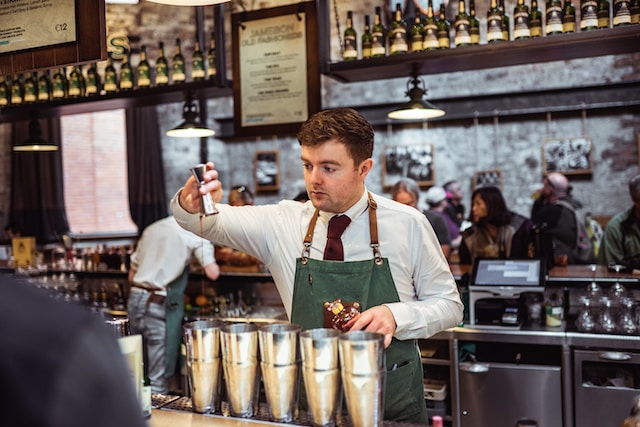
3 Crucial Soft Skills to Boost Your Hospitality Career
The three skills in our original article are communication, empathy and adaptability. They help you understand guests and colleagues, respond when service changes, and act on a complaint rather than merely reciting a script. The practical training and assessment examples below show how related behaviours can be developed and observed at work.
The three skills in practice
Communication
Clear words are only part of service. Body language, attentive listening and cultural sensitivity affect what a guest hears. A server may speak politely yet appear indifferent if they miss a guest's hesitation or avoid listening to a concern. A useful habit is to clarify what the guest needs and confirm it with the team before acting.
Empathy
Empathy means recognising a guest's circumstances and following understanding with action. A tired traveller may need a quick check-in; a disappointed diner needs more than a formulaic apology. The same skill matters with colleagues: notice when someone is overwhelmed, listen, and help with the work.
Adaptability
A sudden rush, a changed booking or a new reservation system can disrupt a routine. Adaptability is the ability to adjust your method, keep service clear and learn the new process. It also helps when guests have different cultural expectations or when a team needs to use an unexpected quieter period productively.
Why "soft" is the wrong word here
In the training package these are core, not optional. Both Certificate III in Hospitality qualifications carry the same interpersonal core:
| Unit | What it covers | Where it sits |
|---|---|---|
| SITHIND008 | Work effectively in hospitality service | Core in SIT30622, SIT30722 and SIT40422 |
| SITXCCS014 | Provide service to customers | Core in SIT30622 and SIT30722 |
| SITXCCS015 | Enhance customer service experiences | Core in SIT40422, SIT50322 and SIT50422 |
| SITXCOM007 | Show social and cultural sensitivity | Core in SIT30622 and SIT30722 |
| SITXHRM007 | Coach others in job skills | Core in SIT30622, SIT30722, SIT30821 and SIT40422 |
| SITXWHS005 | Participate in safe work practices | Core in SIT30622 and SIT30722 |
| SIRXCEG008 | Manage disrespectful, aggressive or abusive customers | Elective, and one of the most practically useful on the list |
| SITXCOM010 | Manage conflict | Core at Certificate IV (SIT40422) and Diploma (SIT50422) |
Notice that coaching others is core at Certificate III, not just at Certificate IV — and in commercial cookery too. The training package assumes an operational-level worker will be showing someone else how to do the job. That is a reasonable description of what actually happens on a floor.
And coaching is not assessed as a personality trait either. SITXHRM007 requires a candidate to provide on-the-job coaching to two different colleagues, and in each session to address identified performance problems or difficulties and rectify or refer them as appropriate, then evaluate the colleague's performance and give constructive feedback. The coaching must be delivered within commercial time constraints and must apply the six key principles of training: explanation, demonstration, review, listening to the trainee's explanation, observing and evaluating the trainee's demonstration, and providing feedback. Three of those six are about the trainee doing the work while the coach watches, which is the difference between coaching someone and simply telling them.
The unit also names the performance problems a coach should expect: a breakdown in communication, inappropriate circumstances for coaching, insufficient opportunity to practise, language or cultural barriers, and shyness or lack of confidence.
Communication under pressure
During service, communication stops being conversation and becomes protocol. A busy floor or pass runs on short repeatable phrases — calling an order back so the person who gave it hears their own words returned, announcing behind when you cross someone carrying something hot, confirming a table number instead of gesturing at it. The skill is not eloquence. It is being unambiguous when the room is loud and nobody has time to ask you twice.
The habit to build is the loop: hear it, repeat it, act on it. A clarifying question in the first ten seconds costs a few words. Guessing costs a plate.
How it is actually assessed: by repetition, in real service. The food and beverage units do not test communication with a written question. They require it across a specified number of service periods:
| Unit | Assessment requirement |
|---|---|
| SITHFAB027 Serve food and beverage | Five service periods, at least one of which must be a peak period |
| SITHFAB034 Provide table service of food and beverage | Twelve service periods, with full menu advice given in every one |
| SITHFAB030 Prepare and serve cocktails | Three service periods, and two cocktails by each of six methods — a minimum of twelve preparations |
| SITHFAB025 Prepare and serve espresso coffee | Ten specified beverages, on three occasions each |
That is the answer to whether soft skills are real. Twelve service periods with menu advice in every single one is not a soft requirement. It is a volume requirement designed to make the behaviour automatic, and it is the reason a graduate who has completed SITHFAB034 is a different proposition from someone who has read about table service.
For the communication side of guest handling in more detail, see how to deliver exceptional customer service in hospitality.
Working clean alongside others
Most hospitality work happens in a space smaller than the number of people in it. Working clean covers three separate things: your own station stays ordered so you can find things without looking, shared surfaces and walkways stay clear because someone else is about to need them, and you hand your section over in the state you would want to receive it.
This overlaps directly with food safety and with work health and safety, and both have real requirements behind them.
On the food safety side, SITXFSA005 Use hygienic practices for food safety requires the learner to demonstrate each of the following on at least three occasions: correct hand-washing; appropriate use of uniform and personal protective equipment; effective personal health and hygiene practices; and hygienic food service. It also requires knowledge of the procedures for reporting unsafe hygiene practices. SITXFSA006 goes wider, requiring correct methods of controlling food hazards at each of nine critical control points — receiving, storing, preparing, processing, displaying, serving, packaging, transporting and disposing — plus the procedure for calibrating a temperature probe.
Separately from the qualification, Standard 3.2.2A requires food handler training to be completed before you engage in a prescribed activity, covering safe handling of food, food contamination, cleaning and sanitising, and personal hygiene. That training does not have to be nationally accredited, there is no mandated refresher period, and the business is not required to keep records of it. The accredited unit buys portability and proof, not permission.
On the WHS side, workers have their own legal duties, not just the employer. Under work health and safety law a worker must take reasonable care for their own health and safety and that of others in the workplace; cooperate with the employer on any action taken to comply; not intentionally interfere with or misuse anything provided for health and safety; report hazards and incidents in line with workplace procedures; and participate in the WHS management practices and consultation processes the workplace has set up.
The hazards that list exists for, in this industry specifically: glassware and broken glass; cuts and burns preparing food; heavy lifting and storing of stock; repetitive physical work; slips, trips and falls on wet or poorly lit floors; noise from extraction systems; hazardous cleaning chemicals; occupational violence, bullying, sexual harassment and discrimination; electrical equipment; cross contamination; and carbon dioxide gas.
Working clean is the daily, unglamorous version of the hierarchy of control — elimination, substitution, isolation, engineering controls, administrative controls, then personal protective equipment. Employers read a tidy station as a proxy for reliability, and they are usually right. For the wider picture see health and safety best practice in hospitality.
Composure when handling a complaint
Composure is not a personality trait. It is a sequence you can follow when your instinct is to defend yourself.
| Step | What it looks like |
|---|---|
| Listen | Let the guest finish. Do not interrupt to explain. |
| Acknowledge | Say the problem back in plain words. |
| Establish | Ask what would resolve it rather than assuming. |
| Act or escalate | Do what is within your authority, hand up what is not. |
The step people skip is the third. A guest who wants the dish remade and a guest who wants to be heard need different responses, and you cannot tell them apart without asking.
Knowing the edge of your own authority matters too, and the qualification ladder is a decent map of it. At Certificate III (AQF 3) you work with some autonomy inside established routines. At Certificate IV (AQF 4) you direct others and are accountable for their output — which is why SITXCOM010 Manage conflict is core there and not at Certificate III. At Diploma level SITXCCS016 Develop and manage quality customer service practices sits in the core, meaning you are no longer handling the complaint, you are designing the way the venue handles complaints.
What SITXCOM010 actually requires
The conflict unit is specific about the situations a competent person has to have handled, which makes it a useful map of what "difficult" means in practice. A candidate must resolve escalated customer complaints or disputes in at least three of these eight:
- cultural misunderstanding
- incorrect pricing
- delays or errors in providing the product or service
- misunderstanding of a request, or a communication barrier
- a person who appears violent or threatening
- a problem or fault with the product or service
- refused entry or ejection from premises
- a situation where someone has been, or may be, hurt
And separately, resolve team member disputes in at least two of four: a dispute or argument among work colleagues; a drug or alcohol-affected person; job duties or rosters; and lack of competence. The candidate must also apply the venue's own procedures for evaluating how the conflict was resolved, which is the step most venues skip.
Two things are worth drawing out of that list. Several of the eight are not about a rude customer at all — incorrect pricing and a fault with the product are the venue's mistakes, and "a situation where someone has been or may be hurt" is a safety event. And "job duties or rosters" being a named team-dispute category means the training package treats a roster disagreement as an ordinary supervisory task with a procedure attached, not as an employee being difficult.
There is also a real unit for the hardest version of this. SIRXCEG008 Manage disrespectful, aggressive or abusive customers is available as an elective in both Certificate III in Hospitality qualifications. If your venue has a bar, a queue or a late trading hour, it is worth asking for.
Cultural context matters here more than most training admits, which is why SITXCOM007 Show social and cultural sensitivity is core rather than elective. See the importance of cultural competence in hospitality and dealing with difficult guests.
The part that shows up on the payslip
Soft skills sound like the thing you cannot get paid for. In this industry there is a mechanism — but first you need to know which award you are under, because your pay comes from a classification inside one, not from your job title.
The premises decides, not the job title, and there are four possibilities:
| Premises | Award |
|---|---|
| Hotels, pubs, taverns, motels, resorts, casinos, caterers, accommodation | MA000009 Hospitality Industry (General) Award 2020 |
| Not-for-profit registered clubs — RSL, bowls, golf, sporting, community | MA000058 Registered and Licensed Clubs Award 2020 |
| Standalone restaurants, cafes, night clubs, reception centres, roadhouses | MA000119 Restaurant Industry Award 2020 |
| Takeaway, food courts, food sold mainly to be eaten away from the counter | MA000003 Fast Food Industry Award 2010 |
Two traps worth carrying. Clubs are not covered by MA000009 — clause 4.4(d)(i) excludes clubs registered or recognised under State or Territory legislation by name, and they sit under MA000058, but only where the club is both registered under a liquor, gaming, associations or corporations statute and operating not-for-profit for members and the community. And night clubs are not clubs for this purpose: a night club is commercial, so it falls under MA000119.
Now the mechanism, and it is stronger than most people realise. A relevant AQF Certificate III or higher, used at work, sets a minimum classification of Level 4 in three of those four awards:
| Award | Floor | Rate clause |
|---|---|---|
| MA000009 | Level 4 | clause 18.1 |
| MA000119 | Level 4 | clause 18.1 |
| MA000058 | Level 4 | clause 18.3 |
| MA000003 Fast Food | no equivalent provision | — |
The units listed on this page are how the "relevant" part gets demonstrated. Under MA000009 and MA000119 you must make use of the skills and knowledge derived from the Certificate III competencies — it is not automatic on completion. MA000058 states the floor for "AQF Certificate III qualifications" without the words "or higher", and adds that the Fair Work Commission may require the employee to demonstrate that they utilise the relevant skills.
Usefully, clause 2 of MA000009 defines the "appropriate level of training" test as satisfied by a qualification or one or more appropriate units of competency forming part of a training package. Units count, not only whole qualifications.
This page prints no rates. Award rates re-set every 1 July, so check the Fair Work Ombudsman's Pay and Conditions Tool against the award code that covers your venue.
Where these get built
None of the three come from reading about them. They come from supervised service periods where somebody watches you and tells you what they saw — which is precisely what those five, twelve and three-occasion requirements are for.
SIT30622 Certificate III in Hospitality builds them alongside technical units across 15 units. SIT30722 Certificate III in Hospitality (Restaurant Front of House) is 20 units and makes RSA and cash handling core. The Certificate IV in Hospitality adds the supervisory layer — three of its nine core units are human resources units.
If you already do these things at work, say so before you enrol rather than after. Recognition of prior learning under Standard 1.6 assesses evidence of prior skills, learning and experience against the unit requirements; credit transfer under Standard 1.7 is the separate mechanism for units you have already completed, evidenced by AQF certification documentation or an authenticated VET transcript. Both are raised at the pre-training review.
About us
We are Complete Hospitality Training — legal name Complete Hospitality Training (Vic) Pty Ltd, RTO 3722, CRICOS 04242E, ABN 27 006 947 262, ACN 006 947 262. Registered as RTO 3722 since 1 June 1994. Regulated nationally by ASQA since 8 September 2017, when registration transferred from the Victorian regulator (VRQA). The current registration period runs 1 July 2025 to 30 June 2032.
Level 3, 28 Elizabeth Street, Melbourne VIC 3000, and 410 Elizabeth Street, Surry Hills NSW 2010. Contact melbourne@cht.edu.au or +61 3 9654 1554.
Trading names on the RTO 3722 record. Five are current — Victorian Bar School (from 1 June 1994, the original), Complete Hospitality Training (2011), Ready Serve Achieve Melbourne (2018), Coffee School by CHT (2021) and Alchemy Institute of Australia (2024). A sixth, Complete Healthcare Training, ran from 24 October 2023 to 19 April 2025 and has ended. A certificate issued under any of those names is an RTO 3722 credential.
We link to the relevant course and regulatory sources in this guide. Check those sources for current requirements, and confirm course availability, delivery, fees and entry requirements with us before enrolling.
Source records and further guidance
We link the unit records and regulator guidance relevant to this page below. Check the current source before making an enrolment, licensing or employment decision.
- SIT30622 Certificate III in Hospitality
- SIT30722 Certificate III in Hospitality (Restaurant Front of House)
- SIT40422 Certificate IV in Hospitality
- SITXHRM007 Coach others in job skills
- SIT50422 Diploma of Hospitality Management
- Responsible Service of Alcohol training requirements (Victoria)
- Food Standards Code — Standards 3.2.2 and 3.2.2A (food safety practices and food safety management tools)
- Hospitality Industry (General) Award 2020 (MA000009)
- Restaurant Industry Award 2020 (MA000119)
- Unique Student Identifier (USI) requirements for RTOs
Are soft skills actually assessed?
Yes, and by repetition rather than by written test. SITHFAB027 requires five service periods including a peak; SITHFAB034 requires twelve with full menu advice in every one; SITXFSA005 requires four hygiene behaviours demonstrated on at least three occasions each.
Which unit covers dealing with an abusive customer?
SIRXCEG008 Manage disrespectful, aggressive or abusive customers, available as an elective in both Certificate III in Hospitality qualifications.
At what level does conflict management become core?
SITXCOM010 Manage conflict is core at Certificate IV (SIT40422) and at Diploma (SIT50422). At Certificate III it is not core.
What situations does the conflict unit actually require?
Resolving escalated customer complaints or disputes in at least three of eight named situations — cultural misunderstanding, incorrect pricing, delays or errors in providing the product or service, misunderstanding of a request or a communication barrier, a person who appears violent or threatening, a problem or fault with the product or service, refused entry or ejection from premises, and a situation where someone has been or may be hurt — plus resolving team member disputes in at least two of four: a dispute among colleagues, a drug or alcohol-affected person, job duties or rosters, and lack of competence. The venue's procedures for evaluating the resolution also have to be applied.
Is coaching other staff really a Certificate III skill?
Yes. SITXHRM007 Coach others in job skills is core in SIT30622, SIT30722, SIT30821 and SIT40422 alike.
How is coaching assessed, if it is a core unit?
By doing it. SITXHRM007 requires on-the-job coaching of two different colleagues, and in each session addressing performance problems and rectifying or referring them, then evaluating the colleague's performance and giving constructive feedback — all within commercial time constraints, and applying the six key principles of training: explanation, demonstration, review, listening to the trainee's explanation, observing and evaluating the trainee's demonstration, and providing feedback.
Which award covers the venue I work in?
It turns on the premises, not your job title. Hotels, pubs, taverns, motels, resorts, casinos and caterers fall under MA000009; not-for-profit registered clubs under MA000058; standalone restaurants, cafes, night clubs, reception centres and roadhouses under MA000119; takeaway and food-court outlets under MA000003.
I work in an RSL or bowls club. Which award is that?
MA000058, the Registered and Licensed Clubs Award, not the hospitality award — MA000009 clause 4.4(d)(i) excludes registered clubs by name. The club must be both registered under a liquor, gaming, associations or corporations statute and operating not-for-profit for members and the community.
I work in a night club. Is that the clubs award?
No. Night clubs are commercial venues and fall under MA000119, the Restaurant Industry Award.
Can soft skills get me to a higher pay classification?
Indirectly, through the units. A relevant Certificate III or higher, used at work, sets a minimum classification of Level 4 under MA000009 (clause 18.1), MA000119 (clause 18.1) and MA000058 (clause 18.3) — three of the four awards. The fast food award has no equivalent provision. Under clause 2 of MA000009, units of competency count towards the "appropriate level of training" test, not only whole qualifications.
Does the Level 4 floor work identically in all three awards?
Nearly. MA000009 and MA000119 require you to make use of the skills derived from the Certificate III competencies. MA000058 omits "or higher" and adds that the Fair Work Commission may require you to demonstrate that you utilise the relevant skills.
Do I need an RSA for a floor role?
If you will serve alcohol, yes. The unit is SITHFAB021, but the credential is regulated state by state under eight separate jurisdictions with no single national certificate. In Victoria the unit alone is not the certificate: a Liquor Control Victoria approved provider, the Learning Hub pre-training survey, the SHARPR module and a post-training survey all sit between the unit and the RSA. See RSA (/rsa/).
Do I need a food safety certificate before my first shift?
You need food handler training completed before you engage in a prescribed activity, covering the four required topics. It does not have to be accredited and there is no mandated refresher. A Food Safety Supervisor is a separate appointment the business makes, on a five-year certificate.
I already have floor experience. Does it count?
It can. Raise it at the pre-training review before enrolling. Bring documented evidence — payslips, position descriptions, a supervisor prepared to verify what you did — rather than describing it from memory.
What does an assessor actually watch for during a service period?
The unit's performance criteria. For food and beverage service that means order accuracy, sequence, communication with the kitchen, hygiene, and service recovery, observed live rather than described.
Are these skills transferable outside hospitality?
The behaviours are. If you want a credential that travels, BSB40520 Certificate IV in Leadership and Management is twelve units, delivered nationally, and not hospitality-specific.
Do employers verify any of this?
We can check a Statement of Attainment with the issuing RTO and, where available, compare the units with a USI transcript. For nationally recognised training, a Unique Student Identifier (USI) is generally required before a qualification or Statement of Attainment can be issued, unless an applicable exemption applies. See the official USI exemption guidance (https://www.usi.gov.au/students/create-your-usi/exemptions-usi). A USI is free at usi.gov.au (https://www.usi.gov.au/). If you already have one, recover it rather than creating another.
Which course level suits me?
Compare the options on the course list (/courses/), or send a course enquiry (/contact/) describing the role you want.
Images on This Page
-
https://cht.edu.au/wp-content/uploads/2022/04/cht_logo_web_land.svg
logo
-
data:image/svg+xml,%3Csvg%20xmlns='http://www.w3.org/2000/svg'%20viewBox='0%200%200%200'%3E%3C/svg%3E
logo
-
https://cht.edu.au/wp-content/uploads/2022/04/cht_logomark_webb.png
logo
-
https://cht.edu.au/wp-content/uploads/2022/04/cht_logo_rgb.svg
logo
-
data:image/svg+xml,%3Csvg%20xmlns='http://www.w3.org/2000/svg'%20viewBox='0%200%20640%20427'%3E%3C/svg%3E
Man working in hospitality
-
https://cht.edu.au/wp-content/uploads/2023/11/daniel-angele-KJkvTWb-k3o-unsplash.jpg
Man working in hospitality
-
data:image/svg+xml,%3Csvg%20xmlns='http://www.w3.org/2000/svg'%20viewBox='0%200%201200%20800'%3E%3C/svg%3E
(no alt text)
-
https://cht.edu.au/wp-content/uploads/2020/08/AdobeStock_139998652b-e1604277396692.jpg
(no alt text)
-
https://cht.edu.au/wp-content/uploads/2020/08/AdobeStock_108943277-e1604277362634.jpg
(no alt text)
-
https://cht.edu.au/wp-content/uploads/2020/08/AdobeStock_202644171-e1604277433640.jpg
(no alt text)
-
https://cht.edu.au/wp-content/uploads/2020/08/AdobeStock_172629488-e1604277467697.jpg
(no alt text)
-
data:image/svg+xml,%3Csvg%20xmlns='http://www.w3.org/2000/svg'%20viewBox='0%200%2030%200'%3E%3C/svg%3E
nationally
-
https://cht.edu.au/wp-content/uploads/2024/08/nationally.svg
nationally
-
data:image/svg+xml,%3Csvg%20xmlns='http://www.w3.org/2000/svg'%20viewBox='0%200%2040%200'%3E%3C/svg%3E
nationally
-
https://cht.edu.au/wp-content/uploads/2024/08/quality.svg
nationally
-
data:image/svg+xml,%3Csvg%20xmlns='http://www.w3.org/2000/svg'%20viewBox='0%200%2045%200'%3E%3C/svg%3E
nationally
-
https://cht.edu.au/wp-content/uploads/2024/08/art.svg
nationally
-
https://cht.edu.au/wp-content/uploads/2024/08/established.svg
nationally
-
https://cht.edu.au/wp-content/uploads/2024/08/service.svg
nationally
-
data:image/svg+xml,%3Csvg%20xmlns='http://www.w3.org/2000/svg'%20viewBox='0%200%201%201'%3E%3C/svg%3E
(no alt text)
-
https://cht.edu.au/wp-content/uploads/2022/04/cht_logo_wht.svg
(no alt text)
-
data:image/svg+xml,%3Csvg%20xmlns='http://www.w3.org/2000/svg'%20viewBox='0%200%2032%2032'%3E%3C/svg%3E
Facebook
-
https://cht.edu.au/wp-content/uploads/2023/02/facebook.svg
Facebook
-
https://cht.edu.au/wp-content/uploads/2023/02/instagram.svg
Instagram
-
https://cht.edu.au/wp-content/uploads/2023/02/youtube.svg
YouTube
-
https://cht.edu.au/wp-content/uploads/2023/02/tiktok.svg
TikTok
-
https://cht.edu.au/wp-content/uploads/2023/02/linkedin.svg
LinkedIn
-
data:image/svg+xml,%3Csvg%20xmlns='http://www.w3.org/2000/svg'%20viewBox='0%200%20404%2074'%3E%3C/svg%3E
(no alt text)
-
https://cht.edu.au/wp-content/uploads/2023/12/flags.png
(no alt text)
-
https://cht.edu.au/wp-content/themes/cht/images/close-icon.png
(no alt text)