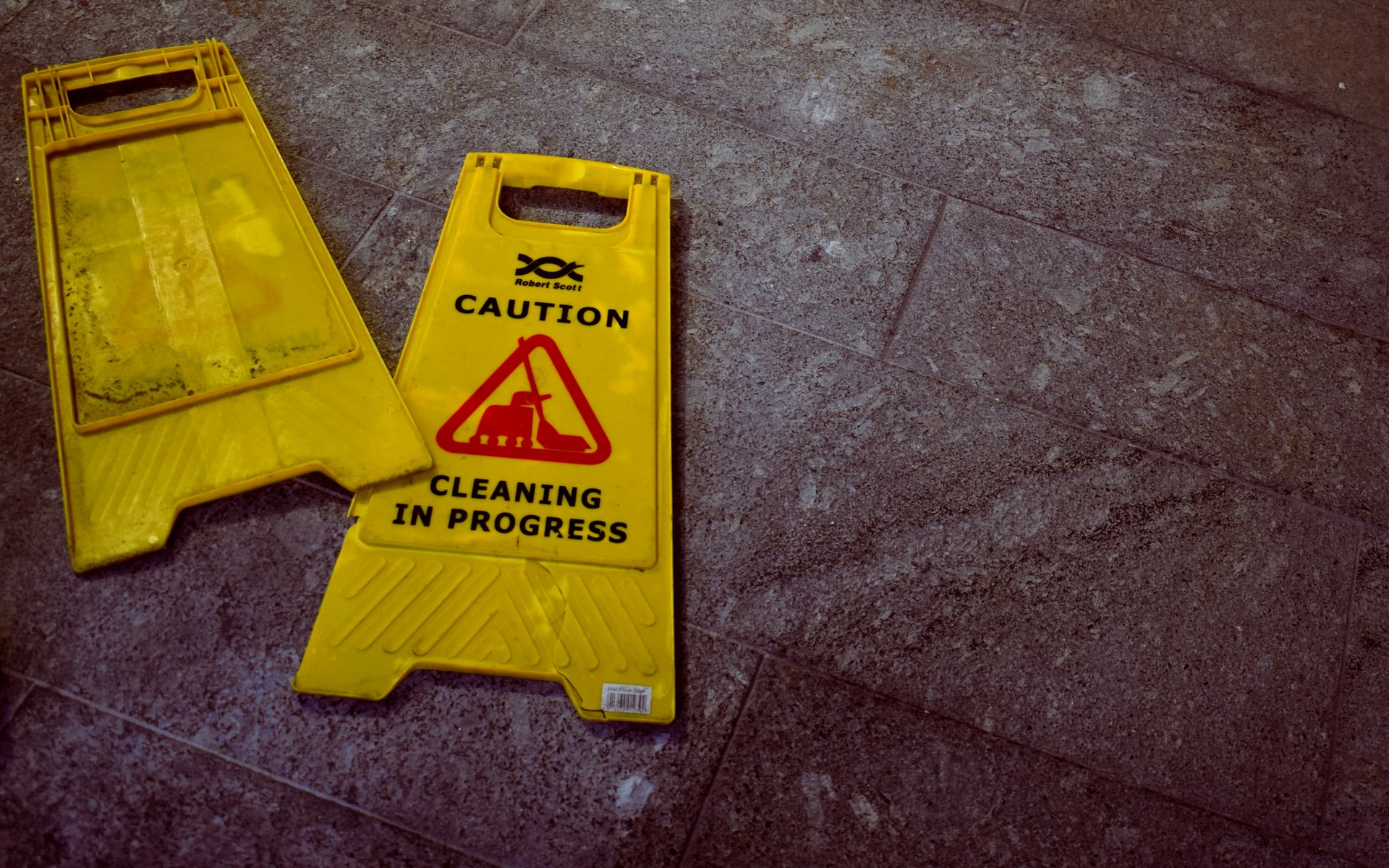
Health & Safety in Hospitality — Managing Best Practice
Hospitality is a high-hazard workplace that rarely feels like one. Heat, sharp edges, wet floors, long hours, alcohol and members of the public combine in a way few other industries manage. This page sets out the legal framework, the hazards that actually cause injury, what the two WHS units of competency require, and one structural point most guides miss.
The framework is not the same everywhere
Most Australian jurisdictions operate under the model Work Health and Safety laws: New South Wales, Queensland, Western Australia and others.
Victoria does not. Victoria retains its own Occupational Health and Safety Act 2004, and did not adopt the model WHS Act. The underlying duties are broadly similar in substance, but the terminology and some obligations differ. Model WHS jurisdictions speak of a PCBU, a person conducting a business or undertaking; Victoria speaks of an employer.
For a hospitality group operating across state borders, that difference is real. Do not assume a compliance approach built for one state transfers intact to the other.
The Victorian duties, by section
Victoria's duties are worth knowing by number, because they are the ones a WorkSafe inspector will frame a question around.
| Section | Duty |
|---|---|
| s 21 | The employer must provide and maintain, so far as is reasonably practicable, a working environment that is safe and without risks to health — including safe plant and systems of work; safe use, handling, storage and transport of plant and substances; maintaining every workplace under its management and control in a safe condition; adequate welfare facilities; and information, instruction, training and supervision sufficient to let employees do the work safely. The duty extends to independent contractors and their employees for matters the employer controls |
| s 23 | The employer must ensure, so far as is reasonably practicable, that persons other than employees are not exposed to risks from the conduct of the undertaking. In a venue that means patrons, delivery drivers, contractors, work-placement students and visitors |
| s 26 | Any person with management or control of a workplace must ensure the workplace, and the means of entering and leaving it, are safe. This is the section that reaches a landlord, a shopping-centre operator or a head lessee, not only the venue operator |
| s 5 | "Health" is defined to include psychological health. Psychosocial risk in Victoria is therefore part of the primary duty by definition, not an add-on |
That last row is the one most often missed. In Victoria you do not need a separate psychosocial regulation to make bullying, harassment or sustained service pressure a health and safety matter — the definition of health already does it.
The New South Wales structure differs in an important way as well: under the Work Health and Safety Act 2011 a duty cannot be transferred to another person, and where more than one person holds a duty each must consult, co-operate and co-ordinate with the others. So a contract that purports to make a labour hire agency or a head contractor solely responsible does not move the duty; it only allocates the work of discharging it.
The coordination duty, where the split actually bites
Here is the divergence that matters most in practice, because it is not symmetrical and it is easy to get backwards.
| Victoria | New South Wales | |
|---|---|---|
| Statute | Occupational Health and Safety Act 2004 | Work Health and Safety Act 2011 |
| Labour hire | s 5A deems a labour hire provider to be the employer of a worker it supplies, recruits or places with another person | No separate labour hire duty |
| Coordination | s 35A, inserted in 2021: each person with a duty in relation to the same worker must consult, co-operate and co-ordinate with the others. Confined to labour hire arrangements | s 46: a general duty to consult, co-operate and co-ordinate whenever more than one person has a duty in relation to the same matter, so far as is reasonably practicable |
| Maximum penalty | 180 penalty units for an individual, 900 penalty units for a body corporate | 243 penalty units for an individual, 1,214 penalty units for a body corporate |
| Breadth | Labour-hire specific. Victoria has no general coordination duty between all duty holders | Universal across all shared-duty scenarios |
The consequence catches people out. In Victoria, where an arrangement does not qualify as labour hire under s 5A, for example some student placements or host arrangements, no statutory duty compels the parties to coordinate at all, even though coordination remains the practical means of discharging their other duties. New South Wales imposes it either way.
The workable rule: build coordination procedures to the New South Wales standard nationally. A protocol that satisfies NSW s 46 will satisfy Victoria's s 35A where labour hire is involved, and Victoria's underlying duty structure otherwise. Doing it the other way round leaves a gap.
Who owes duties
The business owes the primary duty: to ensure, so far as is reasonably practicable, the health and safety of workers and of others affected by the work. That covers the physical environment, plant and equipment, systems of work, training and supervision, and facilities.
Officers, meaning directors and senior managers, owe a personal due diligence duty in model WHS jurisdictions. This is not delegable.
Workers owe duties too: to take reasonable care of their own health and safety, not to adversely affect others, to comply with reasonable instructions, to cooperate with the employer's actions to comply, to report unsafe practices and hazards, and not to intentionally interfere with or misuse safety equipment. That last one covers propping a fire door, disabling a machine guard and removing a warning sign.
Consultation is mandatory, not optional. Businesses must consult workers on matters affecting their health and safety. In practice this is the requirement most often skipped and most visible to an inspector. It is also written into the training: criterion 3.2 of the floor-level WHS unit requires workers to actively participate in the health, safety and security consultation processes, which only works if the processes exist.
What consulting properly looks like, in the terms the regulators use: consultative arrangements such as health and safety representatives or a committee; a genuine opportunity for staff to contribute their views on how WHS is managed; issues raised through those processes resolved or referred; workers told the outcome; and records kept of the consultative activities. Every employee should also carry an explicit responsibility to observe risks and log injuries, damage or hazards they see.
The hazards that actually cause harm
The training package groups hospitality hazards into four categories, which is a useful way to audit a venue because it catches the ones a walk-through misses:
| Category | What it covers |
|---|---|
| Physical environment | Slips, trips, falls, ergonomic issues |
| Plant | Equipment and machinery risks |
| Work practice | Unsafe procedures or methods |
| Security | Cash, documents, equipment, keys and people |
That fourth category is the one most safety checklists leave out entirely, and note that it includes people. Managing patrons safely is a security hazard in the unit's own taxonomy.
In practical terms, and matching the hazards the regulators single out as significant in hospitality:
| Hazard | Where it bites |
|---|---|
| Slips, trips and falls | Wet and greasy floors, spills during service, cabling, poor footwear |
| Burns and scalds | Fryers, steam wands, ovens, hot oil, hot plates, boiling liquids, chemicals, electrical equipment |
| Cuts, lacerations and amputations | Knives, mandolins, slicers and other machinery, and glass. Broken glass in a bar sink is a classic |
| Manual handling | Kegs, stock deliveries, loaded dishwasher racks, carrying full trays. Sprains and strains, not dramatic injuries, are the volume problem |
| Chemicals | Cleaning and sanitising agents; mixing products is a recurring incident |
| Electricity | Cleaning electrical cooking equipment, damaged leads, wet environments around powered plant |
| Noise | Extraction systems, dishwashers, blenders, and live music in licensed venues. A cumulative hazard that leaves no incident report |
| Heat | Kitchen environments over long shifts |
| Occupational violence | Aggressive or intoxicated patrons, a genuine hospitality hazard |
| Fatigue | Late nights, split shifts, back-to-back close and open |
| Psychosocial hazards | Bullying, harassment, sexual harassment, high-pressure kitchen and bar culture |
The last two deserve more weight than they usually get. Psychosocial hazards are now expressly regulated in most jurisdictions and must be managed like any other risk, not treated as a culture issue — and in Victoria the definition of "health" in s 5 of the OHS Act puts psychological health inside the primary duty directly. Fatigue in hospitality is structural rather than accidental: it comes from how rosters are built. See steps for rostering and time management.
Noise and electricity are worth calling out because neither produces the kind of incident that gets reported. Cleaning an electrical cooking appliance is one of the specific activities the regulators name, and it is usually done late, by the most junior person on shift, in a wet room.
Managing risk: the process and the hierarchy
Both regimes require the same four-step process, and both expect it to be documented rather than carried in a manager's head.
- Ongoing hazard identification, by systematic methods — site safety audits, safety checklists, workplace inspections, and investigation of incidents. Not only by noticing.
- Risk assessment, by a systematic method that weighs likelihood against consequence.
- Risk control, applying the hierarchy of control in order.
- Monitoring and review, evaluating whether the controls actually worked and improving them where they did not.
The hierarchy of control is the part people paraphrase badly. It is an order of preference, not a menu:
| Order | Control | Kitchen or bar example |
|---|---|---|
| 1 | Eliminate the hazard | Stop using the mandolin; buy the product pre-sliced |
| 2 | Substitute with a safer system or equipment | A less hazardous cleaning chemical; a keg trolley instead of a lift |
| 3 | Isolate the hazard | Enclose the noisy plant; separate the glass-washing area from the service path |
| 4 | Engineering controls | Machine guarding, non-slip flooring, extraction, thermostatic controls |
| 5 | Administrative controls | Procedures, rosters that break up heat exposure, signage, training |
| 6 | Personal protective equipment | Cut-resistant gloves, oven mitts, hearing protection, non-slip shoes |
PPE is last for a reason: it protects one person, only while worn, and only if it fits. A venue whose entire slip-hazard control is "staff must wear non-slip shoes" has started at step six.
What the two WHS units actually require
WHS in hospitality qualifications is split across two units, one for everybody and one for supervisors. Knowing which is which tells you what to expect of whom.
SITXWHS005 Participate in safe work practices — everyone
Core in both Certificate III in Hospitality qualifications. It applies to all tourism, travel, hospitality and event sectors, to organisations of any size, and to all personnel at all levels during daily activities. Three elements:
1. Work safely. Follow organisational health, safety and security procedures. Incorporate safe work practices into own activities. Follow the safety directions of supervisors and managers and workplace safety warning signs. Use PPE and clothing or designated uniform. Promptly report unsafe work practices, issues and breaches of health, safety and security procedures. Identify and remove hazards from the immediate workplace area, and report all workplace hazards as they arise.
2. Follow procedures for emergency situations. Recognise emergency and potential emergency situations. Follow organisational security and emergency procedures. Seek assistance from colleagues or authorities during emergencies. Complete emergency incident reports accurately.
3. Participate in organisational health, safety and security practices. Participate in the management practices the organisation has developed. Actively participate in consultation processes. Report issues and concerns as they arise.
Its foundation skills are specific: reading to interpret workplace safety signs, procedures and emergency evacuation plans, and writing to complete basic template reports about hazards and emergency incidents according to organisational procedures. If your incident form cannot be completed by someone at that level, it is the wrong form.
SITXWHS007 Implement and monitor WHS practices — supervisors and departmental managers
Core in the Certificate IV in Hospitality and the Diploma of Hospitality Management. It applies to those operating independently or with limited guidance, including supervisors and departmental managers. Six elements:
- Provide information on health, safety and security. Explain relevant information to personnel; make all current information readily accessible.
- Monitor safe work practices. Monitor adherence to procedures and ongoing compliance; take prompt action to address non-compliance; monitor day-to-day effectiveness.
- Coordinate consultative arrangements. Coordinate processes giving staff the opportunity to contribute their views; resolve or refer the issues raised.
- Implement and monitor hazard identification and risk control. Coordinate scheduled hazard identification activities; identify hazards on an ongoing basis day to day; react to hazards reported by other workers; coordinate and participate in risk assessments; implement control methods or refer beyond own scope; monitor the effectiveness of control measures and promptly identify any inadequacies.
- Coordinate health, safety and security training. Identify training needs from regular staff monitoring; arrange to fulfil them; monitor effectiveness and adjust.
- Maintain records and reports. Complete records and reports accurately and legibly; use the data and reports as reliable and timely input into management of workplace health, safety and security.
The pairing of elements 2 and 4 is the point. Monitoring alone is not compliance. The unit requires prompt action on non-compliance and prompt identification of inadequate controls, which is the difference between a safety system and a safety folder.
Its foundation skills add oral communication to conduct consultation activities and explain procedures, problem solving to incorporate the views of other people consulted, and teamwork to monitor daily compliance.
Records, notification, and the numbers to call
The statutory duty to provide information, instruction and training is one thing; being able to show you did it is another. Between them the two regimes expect a venue to hold:
- A documented WHS induction and training program covering all personnel, with training specific to the hazards actually identified, and monitoring of whether the training worked
- Written incident records. In Victoria a notifiable incident is notified immediately, followed by written notice within 48 hours, and the record kept for five years
- A record of past incidents and patterns of occupational injury and disease, which is what turns individual reports into a control decision
- Documentation of WHS decisions, including the reasons for them — useful evidence that "reasonably practicable" was actually considered
- Hazard identification and risk assessment records
- Safety Data Sheets for every hazardous substance used, which in a venue means the whole cleaning and sanitising range
- First aid provision records
- Records of consultative activities
And the two numbers, both staffed 24 hours a day, which belong on the wall next to the phone rather than in a folder:
| Regulator | Notification line |
|---|---|
| WorkSafe Victoria | 13 23 60 |
| SafeWork NSW | 13 10 50 |
Serious incidents must be notified immediately and the site generally preserved. Decide now who makes that call on a Saturday night, because the decision is hard to make well for the first time during the incident.
Occupational violence and the RSA overlap
Managing an intoxicated patron is simultaneously a liquor licensing duty and a work health and safety one. The RSA obligation is about lawful service; the WHS obligation is about not exposing your staff to foreseeable violence.
They point the same way: refuse early, refuse calmly, communicate the refusal to the whole team, and escalate to security rather than have a bartender manage a confrontation alone. The relevant training is RSA, which is one unit, SITHFAB021, regulated separately by eight jurisdictions, and also available as the standalone SITSS00071 Responsible service of alcohol skill set. See managing intoxicated patrons.
Where the behaviour is abusive rather than intoxicated, the closest unit is SIRXCEG008 Manage disrespectful, aggressive or abusive customers, an elective in SIT30722. Its element 3 permits and requires terminating an encounter where resolution is not possible, and its element 5 requires de-briefing with a supervisor after the incident and recognising signs of mental and emotional impact that require professional counselling. That is a psychosocial control written into a unit of competency. See dealing with difficult guests.
What good practice looks like
Induct before the first shift, not during it. New and young workers are over-represented in injury statistics, and hospitality employs a lot of both.
Consult properly. Ask the people doing the work. They know where the floor is always wet. Both units require it, one to participate and one to coordinate, and the regulators expect the arrangements and their outcomes to be recorded.
Schedule hazard identification, rather than relying on noticing. SITXWHS007 element 4 requires scheduled activities as well as ongoing day-to-day identification, and the regulators name site safety audits, checklists, inspections and incident investigation as the systematic methods.
Work down the hierarchy, not up it. If the only control is PPE, the question has not been asked properly.
Train, and record it. Nationally recognised training carries evidentiary weight an internal induction does not, the same logic that applies to food safety.
Report and investigate near misses, not only injuries. A near miss is a free lesson, and element 1 of the floor-level unit already requires prompt reporting of unsafe practices rather than only of harm.
Check whether your controls worked. Monitoring effectiveness and promptly identifying inadequacies is an express requirement, not a review-cycle nicety.
Know your notification duty. Serious incidents must be notified to the regulator immediately, and the site generally preserved. In Victoria, written notice follows within 48 hours and the record is kept five years. Know who calls, and the number, before you need it.
Keep first aid capability current. See first aid.
Where training fits
| Qualification | WHS content |
|---|---|
SIT30622 Certificate III in Hospitality |
SITXWHS005 core |
SIT30722 Certificate III in Hospitality (Restaurant Front of House) |
SITXWHS005 core; SIRXCEG008 available as an elective |
SIT40422 Certificate IV in Hospitality |
SITXWHS007 core, with SITXHRM008 Roster staff also core, which is where fatigue is actually controlled |
SIT50422 Diploma of Hospitality Management |
SITXWHS007 core, alongside SITXGLC002 Identify and manage legal risks and comply with law |
SIT50322 Diploma of Event Management |
SITXWHS006 Identify hazards, assess and control safety risks is core |
If a venue wants a dedicated WHS or workplace mental health unit rather than the embedded hospitality one, the diploma packaging rules allow a proportion of electives to be drawn from elsewhere in SIT or from any other currently endorsed training package or accredited course, which is how a business-package WHS unit can be included. Elective choice must be guided by the job outcome sought, local industry requirements and complexity appropriate to the AQF level, so it is a deliberate decision. Ask us which specific units are currently available on scope rather than assuming a code.
Our scope of registration carries 17 current qualifications and 81 current skill sets, built from 579 current units, every component at the extent "Deliver and assess", across hospitality, business and cyber, community services, health and infection control, retail, creative arts and horticulture. See all courses and contact for team training. Confirm current fees and intakes with us directly.
About us
We are Complete Hospitality Training, RTO 3722, CRICOS 04242E. Level 3, 28 Elizabeth Street, Melbourne VIC 3000, and 410 Elizabeth Street, Surry Hills NSW 2010. Contact melbourne@cht.edu.au or +61 3 9654 1554.
We link to the relevant course and regulatory sources in this guide. Check those sources for current requirements, and confirm course availability, delivery, fees and entry requirements with us before enrolling.
Source records and further guidance
We link the unit records and regulator guidance relevant to this page below. Check the current source before making an enrolment, licensing or employment decision.
- SITXWHS005 Participate in safe work practices
- SITXWHS007 Implement and monitor work health and safety practices
- SIRXCEG008 Manage disrespectful, aggressive or abusive customers
- SIT30722 Certificate III in Hospitality (Restaurant Front of House)
- SIT30622 Certificate III in Hospitality
- Responsible Service of Alcohol training requirements (Queensland)
- Responsible Service of Alcohol training requirements (Western Australia)
Does WHS law apply to casuals?
Yes. Duties are owed to all workers, including casuals, contractors and volunteers. SITXWHS005 applies to all personnel at all levels.
Is Victoria really different?
Yes. Victoria retained the Occupational Health and Safety Act 2004 rather than adopting the model WHS Act. Substance is similar; terminology and some duties differ, and the coordination duty differs materially.
Which Victorian sections carry the main duties?
Section 21 for the employer's primary duty to employees, including information, instruction, training and supervision; section 23 for people who are not employees, such as patrons, contractors and placement students; and section 26 for anyone with management or control of the workplace, including the means of entering and leaving it.
Is psychological health covered in Victoria?
Yes, by definition. Section 5 of the Victorian OHS Act defines "health" to include psychological health, so psychosocial risk sits inside the employer's primary duty rather than alongside it.
Can we contract our safety duty out to a labour hire agency?
No. Under the NSW Work Health and Safety Act 2011 a duty cannot be transferred, and where several people hold duties each must consult, co-operate and co-ordinate. In Victoria section 5A deems a labour hire provider to be the employer of the worker it supplies, which adds a duty holder rather than removing one.
If I operate in both Victoria and New South Wales, which standard should I build to?
New South Wales. Section 46 imposes a general duty to consult, co-operate and co-ordinate whenever more than one person has a duty in relation to the same matter. Victoria's section 35A is confined to labour hire arrangements. A protocol satisfying NSW covers both.
Does Victoria require a host and a training provider to coordinate on safety?
Only where the arrangement qualifies as labour hire under section 5A of the Victorian Act. Outside that, no statutory coordination duty compels it, although coordination remains the practical way of discharging the other duties. New South Wales requires it in any shared-duty scenario.
What is the hierarchy of control?
Eliminate, substitute, isolate, engineering controls, administrative controls, then personal protective equipment — in that order of preference. PPE is the last resort because it protects one person, only while worn.
Are psychosocial hazards actually regulated?
In most jurisdictions, yes, and expressly. They are managed as risks like any other, and in Victoria the statutory definition of health includes psychological health. The units support this: SIRXCEG008 element 5 requires post-incident debriefing and recognising when professional counselling is needed.
Which unit does a floor staff member need, and which does a supervisor need?
SITXWHS005 Participate in safe work practices for everyone, core in both Certificate III in Hospitality qualifications. SITXWHS007 Implement and monitor WHS practices for supervisors and departmental managers, core in the Certificate IV and the Diploma.
What are the four hazard categories?
Physical environment, plant, work practice and security. Security includes cash, documents, equipment, keys and people, which is the one most checklists omit.
Which hazards do the regulators single out in hospitality?
Manual handling, lacerations and amputations, burns, slips, trips and falls, electricity, noise, violence and intoxication, and psychosocial hazards. Noise from extraction, dishwashers, blenders and live music, and electricity when cleaning electrical cooking equipment, are the two most often left off a venue's own list.
Is consultation legally required or just good practice?
Required. Businesses must consult workers on matters affecting their health and safety, and it is the requirement most often skipped. The units reinforce it: workers must actively participate in consultation processes, and supervisors must coordinate them. Keep records of the consultative activities.
Do we have to schedule hazard inspections, or is noticing enough?
Both. SITXWHS007 element 4 requires coordinating scheduled hazard identification activities and identifying hazards on an ongoing basis day to day, and reacting to hazards other workers report.
What safety records should a venue actually hold?
A documented induction and training program with evidence it was effective, written incident records, a record of past incidents and patterns, the reasons for WHS decisions, hazard identification and risk assessments, Safety Data Sheets for every hazardous substance, first aid records, and records of consultation.
How long do incident records have to be kept?
In Victoria, notification is immediate, written notice follows within 48 hours, and the record is kept for five years.
What should an incident form look like?
Simple enough that any staff member can complete it. SITXWHS005's foundation skills are writing to complete basic template reports about hazards and emergency incidents. A form requiring a supervisor to interpret it will not be filled in.
Who is responsible if a patron injures a staff member?
The business still owes the primary duty. Occupational violence is a foreseeable hospitality hazard, and "people" is expressly a security hazard in the unit's own taxonomy.
Do near misses have to be recorded?
The notification duty attaches to serious incidents, but the floor-level unit already requires prompt reporting of unsafe work practices, issues and breaches, not only of harm. Recording near misses is how element 4's control-effectiveness monitoring gets any data.
What must be reported to the regulator, and on what number?
Serious incidents, immediately, with the site generally preserved. WorkSafe Victoria on 13 23 60 and SafeWork NSW on 13 10 50, both 24 hours a day. Check the notifiable-incident definition for your jurisdiction and have the number to hand.
What do workers themselves have to do?
Take reasonable care of their own health and safety, avoid adversely affecting others, cooperate with the employer's compliance measures, follow reasonable instructions, report unsafe practices and hazards, and not intentionally interfere with or misuse anything provided for safety.
Images on This Page
-
https://cht.edu.au/wp-content/uploads/2022/04/cht_logo_web_land.svg
logo
-
data:image/svg+xml,%3Csvg%20xmlns='http://www.w3.org/2000/svg'%20viewBox='0%200%200%200'%3E%3C/svg%3E
logo
-
https://cht.edu.au/wp-content/uploads/2022/04/cht_logomark_webb.png
logo
-
https://cht.edu.au/wp-content/uploads/2022/04/cht_logo_rgb.svg
logo
-
https://cht.edu.au/wp-content/uploads/2020/11/banner_coffee-farm.jpg
(no alt text)
-
data:image/svg+xml,%3Csvg%20xmlns='http://www.w3.org/2000/svg'%20viewBox='0%200%201920%201200'%3E%3C/svg%3E
(no alt text)
-
https://cht.edu.au/wp-content/uploads/2021/06/safety.jpg
(no alt text)
-
https://cht.edu.au/wp-content/uploads/2021/06/safety-300x188.jpg
(no alt text)
-
data:image/svg+xml,%3Csvg%20xmlns='http://www.w3.org/2000/svg'%20viewBox='0%200%201200%20800'%3E%3C/svg%3E
(no alt text)
-
https://cht.edu.au/wp-content/uploads/2020/08/AdobeStock_139998652b-e1604277396692.jpg
(no alt text)
-
https://cht.edu.au/wp-content/uploads/2020/08/AdobeStock_108943277-e1604277362634.jpg
(no alt text)
-
https://cht.edu.au/wp-content/uploads/2020/08/AdobeStock_202644171-e1604277433640.jpg
(no alt text)
-
https://cht.edu.au/wp-content/uploads/2020/08/AdobeStock_172629488-e1604277467697.jpg
(no alt text)
-
data:image/svg+xml,%3Csvg%20xmlns='http://www.w3.org/2000/svg'%20viewBox='0%200%2030%200'%3E%3C/svg%3E
nationally
-
https://cht.edu.au/wp-content/uploads/2024/08/nationally.svg
nationally
-
data:image/svg+xml,%3Csvg%20xmlns='http://www.w3.org/2000/svg'%20viewBox='0%200%2040%200'%3E%3C/svg%3E
nationally
-
https://cht.edu.au/wp-content/uploads/2024/08/quality.svg
nationally
-
data:image/svg+xml,%3Csvg%20xmlns='http://www.w3.org/2000/svg'%20viewBox='0%200%2045%200'%3E%3C/svg%3E
nationally
-
https://cht.edu.au/wp-content/uploads/2024/08/art.svg
nationally
-
https://cht.edu.au/wp-content/uploads/2024/08/established.svg
nationally
-
https://cht.edu.au/wp-content/uploads/2024/08/service.svg
nationally
-
data:image/svg+xml,%3Csvg%20xmlns='http://www.w3.org/2000/svg'%20viewBox='0%200%201%201'%3E%3C/svg%3E
(no alt text)
-
https://cht.edu.au/wp-content/uploads/2022/04/cht_logo_wht.svg
(no alt text)
-
data:image/svg+xml,%3Csvg%20xmlns='http://www.w3.org/2000/svg'%20viewBox='0%200%2032%2032'%3E%3C/svg%3E
Facebook
-
https://cht.edu.au/wp-content/uploads/2023/02/facebook.svg
Facebook
-
https://cht.edu.au/wp-content/uploads/2023/02/instagram.svg
Instagram
-
https://cht.edu.au/wp-content/uploads/2023/02/youtube.svg
YouTube
-
https://cht.edu.au/wp-content/uploads/2023/02/tiktok.svg
TikTok
-
https://cht.edu.au/wp-content/uploads/2023/02/linkedin.svg
LinkedIn
-
data:image/svg+xml,%3Csvg%20xmlns='http://www.w3.org/2000/svg'%20viewBox='0%200%20404%2074'%3E%3C/svg%3E
(no alt text)
-
https://cht.edu.au/wp-content/uploads/2023/12/flags.png
(no alt text)
-
https://cht.edu.au/wp-content/themes/cht/images/close-icon.png
(no alt text)