Product
Product Facts
- Product Name
- Bar & Barista Course - Complete Hospitality Training
- Fulfillment Type
- online
- Category
- Education & Training > Professional Certifications & Courses

Bar & Barista Package: Our Included Units and Course Details
Our Bar & Barista package combines bartending and accredited coffee training at Level 3, 28 Elizabeth Street, Melbourne. Our official course page lists a six-day daytime option and a twelve-night evening option; check current dates before booking. The advertised nationally recognised outcomes are SITHFAB021, SITHFAB025 and SITXFSA005, alongside a Certificate of Participation. The other units compared below are not automatically included. Check our official page for current schedules and the additional Victorian RSA certificate requirements.
View our official course details and booking information. Course details checked 2 October 2026.
Course background and related accredited requirements
Our marketed package is not a standalone national qualification. Its Statements of Attainment list the accredited units successfully completed; practical participation outcomes are identified separately.
That matters, because it means the value of any package is entirely determined by which units are in it. This page sets out the units most commonly bundled, exactly what each one requires, the prerequisite order that decides whether the bundle can even run — and the coded alternative most people are never told about.
The units, and what each demands
| Unit | Title | Assessment volume | Prerequisite |
|---|---|---|---|
SITHFAB021 |
Provide responsible service of alcohol | 2 house policies, 3 intoxication indicators, 3 customer groups | — |
SITXFSA005 |
Use hygienic practices for food safety | The keystone — see below | — |
SITHFAB022 |
Clean and tidy bar areas | Maintenance, waste, closing procedures | SITXFSA005 |
SITHFAB023 |
Operate a bar | Set-up, stock and equipment during service | SITHFAB021 and SITXFSA005 |
SITHFAB030 |
Prepare and serve cocktails | 2 cocktails by each of 6 methods, 3 service periods | SITHFAB021, SITHFAB023 and SITXFSA005 |
SITHFAB025 |
Prepare and serve espresso coffee | 10 beverages, 3 occasions each | SITXFSA005 |
SITHFAB024 |
Prepare and serve non-alcoholic beverages | 6 beverages, 3 occasions each, 3 service periods | SITXFSA005 |
SITHFAB027 |
Serve food and beverage | 5 service periods, one peak | SITXFSA005 |
SITHFAB034 |
Provide table service of food and beverage | 12 service periods, menu advice in each | SITHFAB021 and SITXFSA005 |
The right-hand columns are the most useful thing on this page. They show that these units are not equivalent in size, that a package containing four short units is a very different commitment from one containing SITHFAB034, and that only two of the nine can be started cold.
The prerequisite order decides whether a package works at all
This is the check that saves a wasted enrolment, and it is more consequential than the unit list.
SITXFSA005 gates nine units in the current food and beverage stream, and seven of them are in the table above — SITHFAB022, SITHFAB023, SITHFAB024, SITHFAB025, SITHFAB027, SITHFAB030 and SITHFAB034. The other two it gates are SITHFAB026 Provide room service and SITHFAB035 Provide silver service. One unit unlocks nine, so it belongs at the front of any package that contains any of them. Read that figure as scoped to the food and beverage stream: across the wider SIT package SITXFSA005 also sits in front of cookery, patisserie, Asian cookery and kitchen units, so a total for the whole package would be a different number about a different set.
Four units in the stream carry two or more prerequisites, and RSA is one of them in every case. SITHFAB023 Operate a bar and SITHFAB034 Provide table service of food and beverage each carry two, SITHFAB021 as well as SITXFSA005. SITHFAB030 Prepare and serve cocktails carries three — SITHFAB021, SITHFAB023 and SITXFSA005 — and so does SITHFAB039 Manage the sale or service of wine, which needs SITHFAB021, SITHFAB032 and SITHFAB033. Formal table service cannot be awarded until you hold SITHFAB021, whether or not the role involves pouring wine. The training package treats advising a customer through a menu in a licensed dining room as work that presupposes responsible service of alcohol competence — so RSA here is an academic prerequisite, quite separate from any state licensing requirement. It is also the marker of seniority: the extra prerequisite is precisely what distinguishes SITHFAB034, the senior table-service unit, from SITHFAB027, the fundamental one.
RSA is the equal of the food safety unit as a gate. SITHFAB021 is itself a prerequisite to nine units in the stream — SITHFAB023, 029, 030, 031, 032, 033, 034, 037 and 039 — exactly as many as SITXFSA005, which is not something package advertising says. If a package touches both alcohol and food, both belong at the front.
The practical consequence: a package advertised as "RSA + coffee + table service" has a forced order — SITXFSA005 and SITHFAB021 must both come before SITHFAB034. If a provider quotes you a duration that assumes those can run in parallel, the schedule is wrong. Cocktails is the sharpest case, because it is three deep: SITXFSA005 → SITHFAB023 Operate a bar → SITHFAB030 Prepare and serve cocktails, with RSA required as well.
Notice which units in the stream carry nothing: SITHFAB021 RSA, SITHFAB028 Operate and monitor cellar systems, SITHFAB036 Provide advice on food and SITHFAB038 Plan and monitor espresso coffee service. Of the nine units in the table above, only SITHFAB021 and SITXFSA005 can be started cold — which is a genuine argument for taking those two first, and a reason to be sceptical of any bar package that claims to start on day one with cocktails.
The coded alternative: ask for a skill set
Here is the thing most package enquiries never surface. A "package" has no national code — but a skill set does.
A skill set is a nationally recognised, formally coded group of units, smaller than a qualification, defined in the training package itself rather than assembled by a provider. It appears on your transcript the same way, and its units credit-transfer into a full qualification later in exactly the same way. The difference is that a skill set has a code an employer or a regulator can look up, and a package does not.
We hold 81 current skill sets on our scope of registration, alongside 17 current qualifications and 579 units. Most of the 81 are not advertised as courses anywhere, which is why naming the code when you enquire is worth doing. Relevant examples:
| Skill set | Title |
|---|---|
SITSS00071 |
Responsible service of alcohol |
SITSS00080 |
Espresso Machine Operation |
SITSS00075 |
Beverage Advice |
SITSS00094 |
Sommelier |
Note that SITSS00071 the skill set and SITHFAB021 the unit are different entries on the national register, and we hold both. If a coded outcome matters to you — for a visa application, an employer's HR system, or a tender — the skill set is the stronger form of the same training. If it does not, a provider-assembled package is perfectly legitimate and may fit your needs better.
There is one consequence of choosing the coded form that nobody mentions at the enquiry stage, and it only bites if your place is government-funded. Skills First counts skill sets, and the annual cap is two. That is set out further down this page, and it is the single most important thing on it for anyone planning to stack several short courses on a subsidised place.
The units in detail
SITHFAB021 Provide responsible service of alcohol
The licensing-relevant unit, and usually the reason someone enrols in the first place. To be assessed competent, a candidate must:
- Interpret the relevant legal requirements for responsible sale or service under the law of the applicable state or territory
- Source and explain two organisational or house policies and procedures for responsible sale or service
- Outline at least three early indicators of intoxication, with intervention strategies to prevent intoxication
- Outline the procedure to refuse sale or service, and assist, each of three named groups: customers in emotional or physical distress; customers with no food consumption during extended service of alcohol; and customers who appear to be under the effect of illicit substances or other drugs
- Outline communication and conflict-resolution skills for asking two different intoxicated customers to leave: one compliant and one difficult customer refusing to leave
It carries no prerequisite units, which is why it is one of the two natural starting points in a package. It is also a bigger gate than its reputation suggests, standing in front of nine other units in the stream.
An RSA Statement of Attainment is a national training record, but permission to serve alcohol depends on the destination’s rules. NSW permits eligible temporary interstate workers; permanent movers and security or RSA marshal roles must meet NSW training and competency-card requirements, using bridging where eligible. Victoria offers bridging to eligible interstate holders. SA applies approved-provider rules to training from 1 November 2020, with earlier training not required to be repeated solely for that change. QLD and WA require suitable national RSA evidence. Tasmania distinguishes staff from licence holders; the ACT and NT have local currency and refresher requirements. Check the regulator before your first shift. See RSA recognition by jurisdiction, NSW’s rules and SA’s rules.
See RSA in Australia for the full eight-jurisdiction matrix, or RSA Melbourne, RSA Sydney, RSA Queensland and RSA Perth for the state detail.
SITXFSA005 Use hygienic practices for food safety
The quiet keystone of a package, as the prerequisite section above shows. Its position in the sequence determines whether nine units in the stream — seven of those listed above — can proceed at all.
It is also worth holding for a reason unconnected to the package. Under Standard 3.2.2A of the Food Standards Code, which commenced 8 December 2023, a food handler in a business serving food must have training covering safe food handling, food contamination, cleaning and sanitising, and personal hygiene — or possess skills and knowledge commensurate with the activity. If you handle ice, cut fruit or unpackaged garnishes, you are a food handler. That obligation is lighter than most people assume: it does not require nationally accredited training, and no refresher period is mandated. SITXFSA005 satisfies it comfortably, and unlocks nine units while doing so.
Note this is the personal hygiene unit. It is not the Food Safety Supervisor requirement that some businesses must separately meet — see the Food Safety Supervisor page, food handling or virtual food handling.
SITHFAB025 Prepare and serve espresso coffee
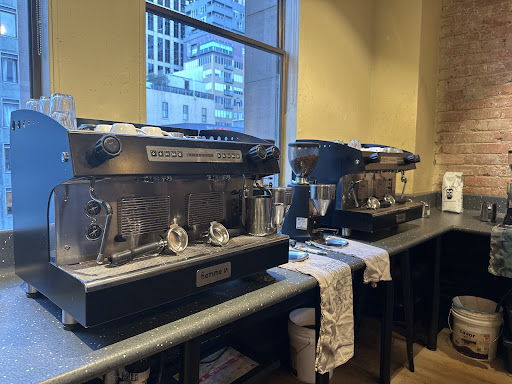
Ten espresso beverages — caffe latte, cappuccino, espresso, flat white, long black, piccolo latte, mocha, ristretto, short macchiato, long macchiato — each on three different occasions within commercial timeframes, plus monitoring extraction quality and correcting it when it drifts. Requires SITXFSA005 first. See barista master class, coffee appreciation and latte art.
SITHFAB024 Prepare and serve non-alcoholic beverages
At least six different non-alcoholic beverages on three occasions each, from carbonated drinks, non-espresso coffees, frappés, freshly squeezed juices, hot chocolate, iced chocolate or coffee, milkshakes, mocktails, smoothies and teas — across three service periods including one peak. Requires SITXFSA005.
SITHFAB030 Prepare and serve cocktails
Two cocktails using each of six methods: blended, built, floated, muddled, shaken and stirred — across three service periods. Twelve cocktails minimum, and the method coverage is what makes it substantial rather than the count. It is also the most gated unit in the stream, alongside SITHFAB039: it requires SITHFAB021, SITHFAB023 and SITXFSA005, so a cocktail unit cannot be the first thing in a package. See bartending.
SITHFAB027 Serve food and beverage
Five service periods including at least one peak, covering service style, carrying and placing plates, clearing service-ware, processing customer accounts, table and venue set-up, and end of shift activities. Requires SITXFSA005.
SITHFAB034 Provide table service of food and beverage
Twelve service periods, with full explanations and advice on menu options in every one. Comfortably the largest unit in this group, and one of four in the stream carrying two or more prerequisites — SITHFAB023 carries the same pair, while SITHFAB030 and SITHFAB039 each carry three. See restaurant waiting for the full comparison with SITHFAB027.
What you receive
A Statement of Attainment naming each unit completed, issued by the registered training organisation. It appears on your national training transcript against your Unique Student Identifier, can be verified by an employer, and does not expire.
The content of that document is prescribed, and the prescribed detail is what makes it useful. A statement of attainment must carry the name, registration code and logo of the issuing RTO, the full title and national code of every unit you completed, the Nationally Recognised Training logo, the signature of an authorised individual, a seal or corporate identifier or unique watermark, the statement that a VET statement of attainment is issued when an individual has completed one or more accredited units or modules, and identification of the larger qualification the units form part of. Because every unit is named with its code, the document can support a later credit-transfer application — any Australian RTO can read the document and see exactly what you hold. We first verify the evidence and equivalence, check that the units fit your training product, and check for licensing or regulatory restrictions before granting credit. See ASQA’s credit-transfer guidance.
Two things it must not carry: your USI must not be printed on it, and the NRT logo must not be used on any other testamur or transcript of results. Separately, the RTO must ask the Registrar to verify that an identifier belongs to you before using it for any purpose.
Timing is prescribed too. An RTO must not issue certification documentation unless you have been assessed as meeting the training product requirements — and once you have been, it must issue within 30 calendar days of completion of the assessment, provided you completed the units, or the units you subsequently withdrew from, and paid all agreed fees. If a package finished weeks ago and nothing has arrived, that deadline is the thing to ask about.
For nationally recognised training, a Unique Student Identifier (USI) is generally required before a qualification or Statement of Attainment can be issued, unless an applicable exemption applies. See the official USI exemption guidance. A USI is free at usi.gov.au. If you already have one, recover it rather than creating another.
A package does not produce a qualification. A qualification requires completing a full packaging rule — for example SIT30622 Certificate III in Hospitality at fifteen units, or SIT30722 Restaurant Front of House at twenty. It also takes correspondingly longer: the AQF sets a volume of learning of 0.5 to 1 year for a Certificate II, 1 to 2 years for a Certificate III, 0.5 to 2 years for a Certificate IV and 1 to 2 years for a Diploma, independent of delivery mode, with the overriding requirement that the volume be sufficient for graduates to achieve the learning outcomes. A package of four units is not a compressed Certificate III; it is a different and much smaller thing.
Package or qualification?
This is the decision most people are actually making.
| Unit package | Skill set | Full qualification | |
|---|---|---|---|
| Has a national code | No | Yes | Yes |
| Outcome | Statement of Attainment per unit | Statement of Attainment per unit | Nationally recognised qualification |
| Size | Typically 2 to 6 units | Typically 2 to 6 units | 13 to 33 units |
| Set by | The provider | The training package | The training package |
| Best for | Getting job-ready quickly, meeting a licensing requirement | The same, where a verifiable code matters | A credential employers recognise as complete |
| Counts toward a qualification later? | Yes, by credit transfer | Yes, by credit transfer | n/a |
The important point: units completed in a package are not wasted. Keep the certificate and check your reported training record, and if you later enrol in a qualification containing that unit it can be credit-transferred. Starting with a package and building toward a qualification is a legitimate route, not a detour. We verify evidence of equivalent prior completion, check the training-product requirements and any licensing or regulatory restrictions, and document the decision before granting credit. See ASQA’s credit-transfer guidance.
And the award consequence is worth knowing before you choose, because it falls on the qualification side of that table. A single unit, or a package of units, does not move your award classification. A completed Certificate III does.
The pay consequence of finishing a qualification
A completed Certificate III, relevant to your classification and actually used at work, sets a minimum classification of Level 4 under three of the four awards that cover hospitality premises — MA000009 (cl 18.1), MA000119 (cl 18.1) and MA000058 (cl 18.3). The fast food award, MA000003, has no equivalent provision.
Which award applies is decided by the premises, not the job title, and each covers its industry "to the exclusion of any other modern award", so exactly one applies to a given venue.
| Award | Code | Premises it covers |
|---|---|---|
| Hospitality Industry (General) Award 2020 | MA000009 | Hotels, pubs, taverns, motels, resorts, casinos, caterers, accommodation |
| Registered and Licensed Clubs Award 2020 | MA000058 | Registered not-for-profit clubs — RSL, bowls, golf, sporting, community |
| Restaurant Industry Award 2020 | MA000119 | Standalone restaurants, cafes, night clubs, reception centres, roadhouses |
| Fast Food Industry Award 2010 | MA000003 | Food sold mainly to be eaten away from the counter, food courts |
Two traps. A club bar is MA000058, not MA000009 — clause 4.4(d)(i) of MA000009 expressly excludes clubs registered or recognised under state or territory legislation, and clause 4.3 of MA000058 requires the club to be both registered under a liquor, gaming, associations or corporations statute and operating on a not-for-profit basis for its members. A night club is commercial rather than not-for-profit, so it falls under MA000119 despite the name.
Under MA000119, Schedule A defines the Level 4 classification as Food and beverage attendant grade 4 (tradesperson) alongside Cook grade 3 (tradesperson), and the award's own "standard rate" is the Level 4 rate. So a relevant Certificate III, used at work, is an explicit route to a grade the award itself labels "(tradesperson)", reached without serving an apprenticeship. The ladder continues to Food and beverage supervisor at Level 5.
Two caveats: the qualification must be relevant to your classification and you must make use of the skills, so it is not automatic on completion. No pay rates are published here — award rates re-set every 1 July, so use the Fair Work Ombudsman's Pay and Conditions Tool with your award code.
If you already have the experience
Two different mechanisms, often confused, and the distinction changes what you have to do.
Credit transfer, under Standard 1.7 of the Outcome Standards for RTOs, recognises a unit you have already completed at any Australian RTO. It requires no reassessment at all — your Statement of Attainment is the evidence. If you hold SITHFAB021 from another provider, that is credit transfer, and it also discharges one of the two prerequisites for SITHFAB034 and SITHFAB023, and one of the three for SITHFAB030. We verify evidence of equivalent prior completion, check the training-product requirements and any licensing or regulatory restrictions, and document the decision before granting credit. See ASQA’s credit-transfer guidance.
Recognition of prior learning, under Standard 1.6, assesses skills you gained without formal training. It is a genuine assessment against the same performance evidence, not a waiver — so an experienced bartender seeking RPL for SITHFAB030 will still need to evidence the six methods across service periods, and will still need its three prerequisite units.
Raise either at the pre-training review, which RTOs must conduct under Standard 2.2 of the Outcome Standards for RTOs before you enrol. That review is the right moment to test whether the package is the correct size for you, and it is also where a badly ordered package gets caught.
The volume limits, if your place is subsidised
This is the single most consequential section on the page for anyone planning to stack several short courses, and it is almost never raised at the enquiry stage. Victorian Skills First does not only test whether you are eligible. It also caps how much subsidised training you may be enrolled in, and the caps are low.
| Limit | The rule |
|---|---|
| Subsidised programs at the same time | Maximum 2 |
| AQF qualifications per calendar year | Maximum 2 |
| Skill sets per calendar year | Maximum 2 |
Four mechanics decide whether a plan fits inside those numbers, and each of them surprises people.
- It counts commencements, not completions. Withdrawing from a program does not free up the slot for that year.
- A program merely scheduled to commence later in the same calendar year counts from the moment you enrol in it. Booking a course for November uses one of the year's places in March.
- The limits are checked live at enrolment, not reconciled at the end of the year. An enrolment that breaches a cap fails at the counter.
- Foundation Skills programs are excluded from the count.
Now put that next to what this page is about. The short, licensing-linked skill sets are exactly the things people stack: SITSS00071 Responsible service of alcohol, SITSS00069 Food Safety Supervision, SITSS00068 Food Handling and SITSS00080 Espresso Machine Operation. Take any two of those in a year on a subsidised place and the year's skill-set allowance is gone. A learner assembling four short credentials to become employable across a bar and a coffee machine will hit the two-skill-set limit well before they hit any limit on their own capacity.
That cuts two ways, and both are worth knowing before you commit:
- A provider-assembled package of individual units is not a skill set, so it is not counted the same way — one reason a package can suit a stacker better than the coded form, despite the coded form being the stronger credential.
- Eligibility to enrol is not the same thing as eligibility for subsidy. You may enrol fee-for-service whether or not you are subsidy-eligible and whether or not you have used up a year's allowance. What changes is who pays, not whether you can study.
Skills First eligibility and volume limits are decided by the provider against the rules current at your enrolment date, and the provider bears the evidentiary burden. Check your own position against the Victorian Government's own online eligibility indicator before building a schedule, and raise the sequencing at the pre-training review.
Checking a package before you enrol
Four checks, each quick:
- Are the unit codes listed? If a package description does not name specific unit codes, it is not clear what you are buying and it may not be accredited at all.
- Is there an RTO number? Only a registered training organisation can issue a Statement of Attainment. Verify the code, not the brand — an RTO may trade under several registered names. We are RTO 3722.
- Do the prerequisites work? If the package includes
SITHFAB022,SITHFAB023,SITHFAB024,SITHFAB025,SITHFAB027,SITHFAB030orSITHFAB034but notSITXFSA005, and you do not already holdSITXFSA005, the sequence will not run. If it includesSITHFAB023,SITHFAB030orSITHFAB034but notSITHFAB021, the same applies — andSITHFAB030needsSITHFAB023on top of both. - Does the duration make sense? Twelve service periods for
SITHFAB034, or three forSITHFAB030, cannot be compressed into a weekend whatever the timetable says.
For anything licensing-related, add a fifth: does the state accept it? RSA in particular differs sharply by jurisdiction. And if the place is subsidised, add a sixth: does the plan fit inside the volume limits for this calendar year?
Related pages
All courses lists what is advertised; the scope of registration is considerably larger. Bartending and restaurant waiting cover the service units in depth, barista master class the coffee units, and SIT30622 the qualification these units feed into.
About us
We are Complete Hospitality Training, RTO 3722, CRICOS 04242E, Level 3, 28 Elizabeth Street, Melbourne VIC 3000, and 410 Elizabeth Street, Surry Hills NSW 2010. Contact melbourne@cht.edu.au or +61 3 9654 1554. See about us.
The units and skill sets described on this page are on our scope of registration, which holds 17 current qualifications, 81 current skill sets and 579 units. Completing any unit produces a nationally recognised Statement of Attainment.
We link to the relevant course and regulatory sources in this guide. Check those sources for current requirements, and confirm course availability, delivery, fees and entry requirements with us before enrolling.
Training sources
Is a hospitality package a qualification?
No. It is a bundle of individual units producing a Statement of Attainment for each. A qualification requires completing a full packaging rule.
Does a package have a national code?
No, and this is the main structural weakness of the format. Packages are assembled by the provider. A skill set is the coded equivalent — defined in the training package, verifiable on training.gov.au, and we hold 81 of them.
What document do I get?
A Statement of Attainment listing the units you completed, appearing on your national training transcript against your Unique Student Identifier. It does not expire. It must name the full title and national code of every unit, carry the RTO's registration code and the Nationally Recognised Training logo, and identify the larger qualification the units form part of.
How long should the Statement of Attainment take to arrive?
An RTO must issue certification documentation within 30 calendar days of completion of the assessment, provided you have been assessed as meeting the requirements and all agreed fees are paid. Your USI must not be printed on it.
Do the units count toward a qualification later?
Yes, by credit transfer under Standard 1.7, provided the unit appears in the qualification you enrol in. No reassessment is required, and because the statement names every unit with its national code, any Australian RTO can process it. We first verify the evidence and equivalence, check that the units fit your training product, and check for licensing or regulatory restrictions before granting credit.
How many subsidised courses can I do in a year?
Under Victorian Skills First, a maximum of 2 AQF qualifications and a maximum of 2 skill sets per calendar year, and no more than 2 subsidised programs at the same time. It counts commencements, not completions, a program scheduled to commence later in the same year counts from the moment you enrol, and the limits are checked live at enrolment.
I want to stack RSA, food safety and a barista course on a funded place. Does that work?
Only partly, if you take them as skill sets. SITSS00071, SITSS00069, SITSS00068 and SITSS00080 are all skill sets, and two of them exhaust the calendar year's allowance. A provider-assembled package of individual units is not counted the same way, and you may always enrol fee-for-service regardless of the caps. Raise the sequencing at the pre-training review before you book anything.
Does hitting a volume limit mean I cannot study?
No. It means you cannot be subsidised for that enrolment. Eligibility to enrol and eligibility for subsidy are different questions, and a fee-for-service enrolment is unaffected.
Which unit is the biggest?
SITHFAB034 Provide table service of food and beverage, at twelve service periods with full menu advice in each.
Which units have prerequisites?
In the current food and beverage stream, nine units require SITXFSA005: SITHFAB022, SITHFAB023, SITHFAB024, SITHFAB025, SITHFAB026, SITHFAB027, SITHFAB030, SITHFAB034 and SITHFAB035. Three of those carry more than one — SITHFAB023 and SITHFAB034 also require SITHFAB021, and SITHFAB030 requires SITHFAB021 and SITHFAB023 as well. A fourth unit in the stream, SITHFAB039 Manage the sale or service of wine, carries three prerequisites without needing the food safety unit. The units with none at all are SITHFAB021, SITHFAB028, SITHFAB036 and SITHFAB038.
Why would table service require RSA?
Because the training package treats advising a customer through a menu in a licensed dining room as work that presupposes responsible service of alcohol competence. It is an academic prerequisite for SITHFAB034, separate from state licensing, and it is what marks that unit as the senior one.
What order should the units go in?
SITXFSA005 and SITHFAB021 first — they are the only two units in the table above that can be started cold, and between them they unlock the rest. Then SITHFAB023 Operate a bar if the package contains SITHFAB030 cocktails, because cocktails requires it.
Can a package start immediately?
Only a package beginning with SITHFAB021 RSA, SITXFSA005 food safety, or both. Every other unit in the table above requires one or both of them first, including SITHFAB022 bar cleaning and SITHFAB030 cocktails, so a bar package that claims to open with cocktails has the order wrong.
Does a package cover my RSA licensing requirement?
An RSA Statement of Attainment is a national training record, but permission to serve alcohol depends on the destination’s rules. NSW permits eligible temporary interstate workers; permanent movers and security or RSA marshal roles must meet NSW training and competency-card requirements, using bridging where eligible. Victoria offers bridging to eligible interstate holders. SA applies approved-provider rules to training from 1 November 2020, with earlier training not required to be repeated solely for that change. QLD and WA require suitable national RSA evidence. Tasmania distinguishes staff from licence holders; the ACT and NT have local currency and refresher requirements. Check the regulator before your first shift. See RSA recognition by jurisdiction (/rsa/), NSW’s rules (https://www.nsw.gov.au/business-and-economy/liquor-and-gaming/training/rsa-bridging) and SA’s rules (https://www.cbs.sa.gov.au/sections/LGL/RSA-approved-providers).
How many cocktails does SITHFAB030 require?
Two cocktails using each of six methods — blended, built, floated, muddled, shaken and stirred — across three service periods. Twelve preparations minimum, and you must hold SITHFAB021, SITHFAB023 and SITXFSA005 before it can be awarded.
Do I need a food safety certificate to work behind a bar?
If you handle ice, cut fruit or unpackaged garnishes, you are a food handler and Standard 3.2.2A's training requirement applies. It does not have to be nationally accredited — but SITXFSA005 satisfies it and unlocks nine units, so it is worth holding.
How do I know the package is accredited?
Look for unit codes and an RTO number you can verify on training.gov.au. Without both, no Statement of Attainment is being issued. Check the RTO code rather than the brand name.
Will a package raise my pay?
Not by itself. The award classification floor attaches to a completed Certificate III, relevant to your classification and used at work — Level 4 under MA000009, MA000119 and MA000058. A package is a step toward that, not a substitute for it.
Should I do a package or a qualification?
A package if you need to be job-ready quickly or meet a specific licensing requirement. A qualification if you want a complete credential and the award classification that comes with it. The package route builds toward the qualification through credit transfer, so it is not a choice you are locked into. Note the scale difference: the AQF volume of learning for a Certificate III is 1 to 2 years, and for a Diploma 1 to 2 years, against a handful of units for a package.
Do I need a USI?
For nationally recognised training, a USI is generally required before your qualification or Statement of Attainment can be issued, unless an applicable exemption applies. We can explain the requirements for your enrolment. See the official USI exemption guidance (https://www.usi.gov.au/students/create-your-usi/exemptions-usi). Creating a USI is free; recover an existing one rather than creating another.
Images on This Page
-
https://cht.edu.au/wp-content/uploads/2022/04/cht_logo_web_land.svg
logo
-
https://cht.edu.au/wp-content/uploads/2022/04/cht_logomark_webb.png
logo
-
https://cht.edu.au/wp-content/uploads/2022/04/cht_logo_rgb.svg
logo
-
https://cht.edu.au/wp-content/uploads/2020/08/Bar-and-Barista.png
(no alt text)
-
https://cht.edu.au/wp-content/uploads/2020/08/AdobeStock_108943277-e1604277362634.jpg
(no alt text)
-
https://cht.edu.au/wp-content/uploads/2020/08/CP22_WSull-300x300-1.jpg
A headshot of Will Sullivan who is the trainer for the Bar and Barista course in Melbourne.
-
https://cht.edu.au/wp-content/uploads/2020/08/coffeecoursemelbourne.webp
A photo of a female barista swinging her legs up and having fun in the cafe.
-
https://cht.edu.au/wp-content/uploads/2020/08/Book-here-V8.png
A lady pointing her fingers to the side where people can click to book in for the Bar and Barista course in Melbourne.
-
https://lh3.googleusercontent.com/a/ACg8ocJ-puyA58EhqUTWnkEBYthdoyjGqBClo8pgjkEc62XJFyEcios=s64-c-rp-mo-br100
Wilson Jong Avatar
-
https://cht.edu.au/wp-content/uploads/wprevslider/review-images/review-image-6a8fea99820f7-0.jpg
media thumbnail 0
-
https://lh3.googleusercontent.com/a-/ALV-UjVp5co4oMmzh_oglgOJfw4qElOkMav7cqQrA0Ab73ZvHNz3jw=s64-c-rp-mo-br100
Daniel Rose Avatar
-
https://lh3.googleusercontent.com/a/ACg8ocKZhz7LC6bpJvfFepZx8DP_cOt19k9V9mwd74VIXhr4ZBc-Jg=s64-c-rp-mo-br100
Deepak Pandey Avatar
-
https://lh3.googleusercontent.com/a/ACg8ocKIRvEWLr_ZRqWJ1vjJS5d8mXyP8L1PGSXIocv7xCA7hdfsRg=s64-c-rp-mo-br100
Eva Di Betta Avatar
-
https://lh3.googleusercontent.com/a/ACg8ocLRBODw2wvVCVq32OhlqXf0vvSJ2X7v02_5F8C9vYpi24c9BA=s64-c-rp-mo-br100
Johanna Gruber Avatar
-
https://lh3.googleusercontent.com/a/ACg8ocILWfQ1_yhwr2yRiNWG23i-AEJH4AAWPbc2DruvBzdvTgzsJj0=s64-c-rp-mo-br100
Chloe Morgan Avatar
-
https://lh3.googleusercontent.com/a-/ALV-UjVoB0LNfm2rKFH6CBWC3BylC9uquuPIvNcdfZ-uqtsTYdSFI7oB=s64-c-rp-mo-br100
Prajwal Tiwary Avatar
-
https://lh3.googleusercontent.com/a-/ALV-UjUdbsguY0kA7b-hExHRAu8hXi6gsBspMUBXgQG48lQtKq7JTfc=s64-c-rp-mo-br100
Aiden Tran (Hurricade) Avatar
-
https://lh3.googleusercontent.com/a/ACg8ocJ6zQ15V-c8PmfUip7aDbGRv5Ezck6buI3o_whW9EH83PdkrQ=s64-c-rp-mo-br100
kristy Nicholls Avatar
-
https://lh3.googleusercontent.com/a/ACg8ocL4ZRzGN_uhMscCsHExvs8QVTa_5FN5A_UL30u6fyF1smEhvw=s64-c-rp-mo-br100
David Peter Nair Avatar
-
https://lh3.googleusercontent.com/a/ACg8ocJOzo657HBfWpdQbk3Pcv75BjERtCxH3gWnpFS3YQOwUhC5Ew=s64-c-rp-mo-br100
Leijing Shan Avatar
-
https://lh3.googleusercontent.com/a-/ALV-UjUSACDMz7QBi3EqFlgrZgYnnqHiq-FRQOMSEPB8r5vldRbY9y0e=s64-c-rp-mo-br100
Yorda Avatar
-
https://lh3.googleusercontent.com/a/ACg8ocJmXLU2_G7iqnAIvUTpP5a2ucqac8UQZBvmA1Ojq8PTPjoX=s64-c-rp-mo-br100
Senoleita Avatar
-
https://lh3.googleusercontent.com/a/ACg8ocKqM3oNIJCIXWrsLwNnEuXLXXLX0BmPYHGl4MR0o4oQp0xewA=s64-c-rp-mo-br100
Ava Fraser Avatar
-
https://lh3.googleusercontent.com/a/ACg8ocLPh4gzfKLPKcG228rZ_Gay9Vs1DqdMUvYW2pRNs80w3Q5y7Q=s64-c-rp-mo-ba2-br100
Thảo Trần Avatar
-
https://cht.edu.au/wp-content/uploads/wprevslider/review-images/review-image-6a0d660a1455a-0.jpg
media thumbnail 0
-
https://lh3.googleusercontent.com/a-/ALV-UjVdkOTdbHd9qL3nEyv1CA5ovNpUpU13MqLZaa-kX8v6WP9F6mtN=s64-c-rp-mo-ba2-br100
Luke Willis Avatar
-
https://lh3.googleusercontent.com/a-/ALV-UjUwvCwkXjSWn7_S2qV1Cyb4zXFsLA-wXIt1EiqanPR_QSfKrmxi=s64-c-rp-mo-ba4-br100
Axel Gomez Avatar
-
https://lh3.googleusercontent.com/a-/ALV-UjX6tAd5ZRPSbwkGIXRajo4rNMJDcTGXxHboMZqzx8wZAfOvvU4=s120-c-rp-mo-br100
Rahul Aravindth Avatar
-
https://lh3.googleusercontent.com/a-/ALV-UjUASBtqUpwR0elJMaY2zqzGSuxv9zlHQxkyKtDBbbQeEWs-mYCKMQ=s120-c-rp-mo-br100
Alex Dimelow Avatar
-
https://lh3.googleusercontent.com/a-/ALV-UjUPKOsxrfcSAuyfLzzMwlNb-tKCcco8a1ViIWk43YxlhSaxtds=s120-c-rp-mo-br100
Jeremy Rocca Avatar
-
https://lh3.googleusercontent.com/a/ACg8ocK9FFeitBJaC2-7F09h51sCAAnjDUcz_mFshLFl1LCW9DLx0A=s120-c-rp-mo-br100
Alkim Avatar
-
https://lh3.googleusercontent.com/a-/ALV-UjU0nAqPYVt9FJNqZjKKKj2sSn3KGYDsPo-q05G8ru5krvmL3uRL=s120-c-rp-mo-br100
Lawrence Miha Avatar
-
https://cht.edu.au/wp-content/uploads/2024/08/nationally.svg
nationally
-
https://cht.edu.au/wp-content/uploads/2024/08/quality.svg
nationally
-
https://cht.edu.au/wp-content/uploads/2024/08/art.svg
nationally
-
https://cht.edu.au/wp-content/uploads/2024/08/established.svg
nationally
-
https://cht.edu.au/wp-content/uploads/2024/08/service.svg
nationally
-
https://cht.edu.au/wp-content/uploads/2022/04/cht_logo_wht.svg
(no alt text)
-
https://cht.edu.au/wp-content/uploads/2023/02/facebook.svg
Facebook
-
https://cht.edu.au/wp-content/uploads/2023/02/instagram.svg
Instagram
-
https://cht.edu.au/wp-content/uploads/2023/02/youtube.svg
YouTube
-
https://cht.edu.au/wp-content/uploads/2023/02/tiktok.svg
TikTok
-
https://cht.edu.au/wp-content/uploads/2023/02/linkedin.svg
LinkedIn
-
https://cht.edu.au/wp-content/uploads/2023/12/flags.png
(no alt text)
-
https://cht.edu.au/wp-content/themes/cht/images/close-icon.png
(no alt text)