All courses at Complete Hospitality Training
Complete Hospitality Training, RTO 3722, holds 17 current nationally recognised qualifications, 81 current skill sets and 579 current units of competency on its scope of registration. Every current item is held at the extent "deliver and assess".
This page lists all of them with the facts that actually decide whether a course suits you: how many units it contains, which states we can deliver it in, and whether it is open to international students. Every course page on this site is linked from here. For every page on the site, not just courses, see the sitemap.
Three kinds of credential are worth separating before the lists:
| You complete | You receive | Counts toward a qualification? |
|---|---|---|
| A single unit | Statement of Attainment | Yes, by credit transfer |
| A skill set — a defined group of units, smaller than a qualification | Statement of Attainment | Yes, by credit transfer |
| A full qualification | Testamur | It is the qualification |
Our 81 skill sets are substantially unadvertised relative to our qualifications. If you need a specific combination of units rather than a full award, it is worth asking whether a skill set already covers it — the hospitality skill sets are listed further down this page, and you can contact us about any of them.
Responsible Service of Alcohol
RSA is one nationally recognised unit, SITHFAB021, sitting under eight separate state and territory liquor regimes. The unit is national; the authorisation to work is not. This is the single most misunderstood area on the site, so it has its own pages.
| Page | Covers |
|---|---|
| RSA in Australia | The eight-jurisdiction matrix — start here |
| Melbourne and Victoria | LCV-approved delivery, the 3-year refresher, the two-stage Learning Hub process |
| Sydney and New South Wales | The competency card, the Approved Training Provider rule, the fines |
| Queensland | OLGR, the Statement of Attainment, actual penalties |
| Perth and Western Australia | How recognition works, and why no provider is DLGSC-approved |
| RSA online | What online delivery does and does not settle |
Note that SITHFAB021 is the unit and SITSS00071 Responsible service of alcohol is the skill set that packages it. Both are on our scope, and they are different entries on the national register.
Victorian RSG is free approved training: online modules through RSG Online and venue-arranged sessions with venue support workers. National SITHGAM training does not replace it. See the official training requirements and our RSG guide.
Short courses and workshops: check the outcome
Our official course directory advertises a mix of nationally recognised training, non-accredited practical workshops and packages. A workshop does not award the accredited unit used elsewhere on this page merely because it teaches a related skill. Check the outcome on the specific course page before booking; dates, fees and availability also need current confirmation.
| Course page | Advertised outcome | What to check |
|---|---|---|
| Food Safety Supervisor | Statements of Attainment for SITXFSA005 and SITXFSA006 | State and business requirements |
| Food handling | SITXFSA005 Statement of Attainment | Classroom delivery |
| Virtual food handling | SITXFSA005 Statement of Attainment | Online delivery and local acceptance |
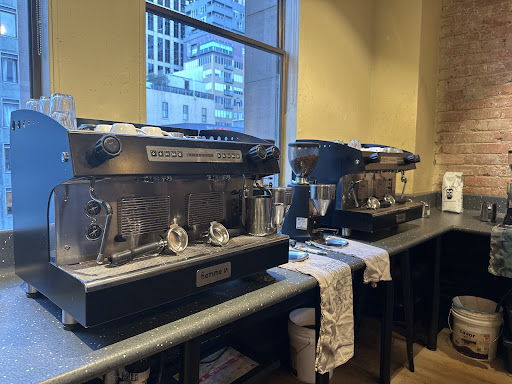
| Barista Coffee Course | Non-accredited Certificate of Participation | This seven-hour workshop does not award SITHFAB025 |
| Barista Master Class | Statements of Attainment for SITHFAB025 and SITXFSA005 on successful assessment | The accredited two-day alternative |
| Coffee Appreciation | Non-accredited Certificate of Participation | The beverage units discussed on that page are alternatives, not this session's outcomes |
| Latte Art | Non-accredited Certificate of Participation | Latte art is not a separate accredited unit |
| Restaurant Waiting | Non-accredited practical workshop | It does not itself award SITHFAB027 or SITHFAB034 |
| Bartending | Advertised accredited RSA outcome SITHFAB021, with other bar skills acknowledged through participation | Unit comparisons on the course page are not included outcomes |
| First Aid | HLTAID011 Statement of Attainment on successful assessment | Blended online and face-to-face delivery |
| Bar & Barista package | A package of components | Confirm the current unit inclusions, schedule and price with us before booking |
| Victorian RSG | Not currently offered by us | Use the free Victorian government training described on the course page |
For accredited espresso training, SITHFAB025 has the prerequisite SITXFSA005. Our accredited Barista Master Class includes both units; the non-accredited Barista Coffee Course, Coffee Appreciation and Latte Art workshops do not award either merely by completion. If you already hold a relevant unit, ask about credit transfer before enrolling in a package.
The current first-aid units HLTAID009, HLTAID011 and HLTAID014 supersede HLTAID001, HLTAID003 and HLTAID006 respectively, and the National Register records none of those pairs as equivalent. An older certificate is not automatically treated as the current unit.
The hospitality skill sets
A skill set sits between a single unit and a full qualification: a defined group of units from the training package, assessed the same way, producing a Statement of Attainment recorded against your USI. 22 of our 81 skill sets are in the SIT hospitality package, and most are not advertised as courses anywhere on this site. They are listed here because you cannot ask for something you do not know exists.
| Code | Skill set |
|---|---|
SITSS00066 |
Kitchen Management |
SITSS00068 |
Food Handling |
SITSS00069 |
Food Safety Supervision |
SITSS00070 |
Hospitality Compliance |
SITSS00071 |
Responsible service of alcohol |
SITSS00075 |
Beverage Advice |
SITSS00076 |
Business Management |
SITSS00077 |
Customer Service Management |
SITSS00078 |
Customer Service |
SITSS00079 |
Environmentally Sustainable Hospitality and Restaurant Operations |
SITSS00080 |
Espresso Machine Operation |
SITSS00082 |
Essential Business Skills for a Restaurant Manager |
SITSS00083 |
Food Advice |
SITSS00084 |
Governance for Board Members |
SITSS00086 |
Housekeeping Service |
SITSS00087 |
Mentoring and Supervision |
SITSS00088 |
Online Engagement for Small Business |
SITSS00090 |
Product Sales for International Visitor Markets |
SITSS00091 |
Service for International Visitors |
SITSS00092 |
Event Coordination |
SITSS00094 |
Sommelier |
SITSS00096 |
Understanding Financial Concepts for Budgeting |
The remaining 59 skill sets sit in the BSB business (23), CHC community services (21), SIR retail (8), HLT health (5), CUA creative arts (1) and AHC horticulture (1) packages. Ask about any of them by code.
Units completed inside a skill set credit-transfer into a full qualification later under Standard 1.7 of the Outcome Standards for RTOs, with no reassessment, and produce a Statement of Attainment in the meantime. The units must fit the qualification’s packaging rules. We verify evidence of equivalent prior completion, check the training-product requirements and any licensing or regulatory restrictions, and document the decision before granting credit. See ASQA’s credit-transfer guidance.
Qualifications: hospitality and cookery
From the SIT Tourism, Travel and Hospitality Training Package, developed by Service and Creative Skills Australia.
| Qualification | Code | Units | Core | Delivery | CRICOS |
|---|---|---|---|---|---|
| Certificate II in Hospitality | SIT20322 |
12 | 6 | SA, VIC, WA | No |
| Certificate II in Cookery | SIT20421 |
13 | 7 | All 8 | No |
| Certificate III in Hospitality | SIT30622 |
15 | 6 | All 8 | No |
| Certificate III in Hospitality (Restaurant Front of House) | SIT30722 |
20 | 9 | All 8 | No |
| Certificate III in Commercial Cookery | SIT30821 |
25 | 20 | SA, TAS, VIC, WA | No |
| Certificate IV in Hospitality | SIT40422 |
21 | 9 | All 8 | 116358F |
| Certificate IV in Kitchen Management | SIT40521 |
33 | 27 | VIC, WA | No |
| Diploma of Event Management | SIT50322 |
20 | 13 | VIC only | 118427D |
| Diploma of Hospitality Management — hotel stream | SIT50422 |
28 | 11 | VIC only | 115534C |
| Diploma of Hospitality Management — culinary stream | SIT50422 |
28 | 11 | VIC only | 115534C |
SIT20322 and SIT20421 are different qualifications, not variants of one. SIT20322 is Certificate II in Hospitality; SIT20421 is Certificate II in Cookery. Both are current on scope. The pair is transposed often enough to be worth stating outright.
The core column is worth reading. A qualification with a high core count is largely fixed by the training package; one with a low core count can be shaped through electives. Commercial cookery is twenty core out of twenty-five. The hospitality diploma is eleven out of twenty-eight.
The two Diploma streams are the same qualification — same code, same eleven core units, same CRICOS registration, same testamur. Only the elective configuration differs. That is why the nine SIT qualifications above occupy ten rows.
Qualifications: business
From the BSB Business Services Training Package, developed by the Future Skills Organisation. All four are available in every state and territory, and none is CRICOS-registered.
| Qualification | Code | Units | Core | Supersedes |
|---|---|---|---|---|
| Certificate III in Business | BSB30120 |
13 | 6 | 6 qualifications, none equivalent |
| Certificate IV in Business | BSB40120 |
— | — | 8 qualifications, none equivalent |
| Certificate IV in Leadership and Management | BSB40520 |
12 | 5 | BSB42015, equivalent |
| Diploma of Business | BSB50120 |
— | — | 7 qualifications, none equivalent |
That supersedes column describes a pattern, not a series of coincidences. The 2020 restructure of the BSB package merged many narrow qualifications into a few broad ones — six into BSB30120, eight into BSB40120, seven into BSB50120. A single award cannot be content-equivalent to eight predecessors at once, which is why almost nothing in this package maps as equivalent. BSB40520 is the exception.
The practical consequence: if you hold any superseded BSB qualification, reaching the current one is a credit transfer and recognition of prior learning assessment, not an automatic upgrade. See Certificate III in Business for the worked example.
Unit counts are not published in the National Register's packaging summary for BSB40120 and BSB50120, so they are shown as unavailable rather than estimated.
Qualifications: community services
From the CHC Community Services Training Package. All three are available in every state and territory, and none is CRICOS-registered. These are on our scope but are not part of our advertised hospitality offering — a genuine gap between scope and marketing worth knowing about.
| Qualification | Code | Units | Core | Supersedes |
|---|---|---|---|---|
| Certificate III in Individual Support | CHC33021 |
— | — | CHC33015, not equivalent |
| Certificate IV in Ageing Support | CHC43015 |
18 | 15 | CHC40108, not equivalent |
| Certificate IV in Leisure and Health | CHC43415 |
17 | 10 | CHC40608, not equivalent |
One sector warning that matters if you work in aged care, disability or childcare: food safety in those settings is covered by the HLTFSE001, HLTFSE005 and HLTFSE007 units, not by the hospitality SITXFSA005 and SITXFSA006. The hospitality units do not transfer into a Victorian Class 1 premises. See Food Safety Supervisor.
The seventeenth qualification, and why it is not offered
Counting the tables above gives sixteen: nine SIT, four BSB, three CHC. The seventeenth on the scope record is SIR30216 Certificate III in Retail, from the SIR Retail Services package.
It is not listed as available because its end date of 28 June 2024 has passed. It remains on the register against RTO 3722, as superseded and expired codes always do, but it is not a currently available qualification and we do not offer it. It is named here so that the arithmetic on this page reconciles with the register, and so nobody enquiring about it is left wondering.
Every other qualification on the scope runs to 30 June 2032.
Choosing between the similar ones
Several pairs look interchangeable and are not.
SIT30622 or SIT30722? SIT30722 is five units longer and carries responsible service of alcohol, food safety and cash handling as core. Choose it for restaurant floor work; choose SIT30622 for broader flexibility.
SIT40422 or BSB40520? Both cover supervision. SIT40422 is 21 units, hospitality-specific and CRICOS-registered. BSB40520 is 12 units and transfers across industries.
SIT30821 or SIT40521? The Certificate III is cooking; the Certificate IV adds menu design and costing, food safety programs, rostering and budgets. Note SIT40521 supersedes the old Certificate IV in Commercial Cookery and the two are equivalent despite the name change.
Hotel management or culinary stream? Both are SIT50422, same eleven core units, same certificate. Only the electives differ.
A qualification or a skill set? If a specific job requirement is driving you — a food safety supervisor appointment, an espresso machine, a bar licence condition — a skill set may be the whole answer, and its units credit-transfer into the qualification later if you continue. If a pay classification or a career step is driving you, the full qualification is what does the work.
Already experienced? Skills assessment covers recognition of prior learning, and separately the Trades Recognition Australia pathway for migration. Raise it at the pre-training review rather than after enrolling — see the student toolkit.
A note on duplicate addresses
The Certificate IV in Hospitality is described at three addresses on this site rather than one: the full page at /workplace-training/certificate-iv-in-hospitality, and two shorter pages that point to it — /courses/certificate-iv-in-hospitality and /workplace-training/certificate-iv-in-hospitality-2. There is one qualification, SIT40422, not three.
Entry requirements: there are none
This is the most consistently misunderstood point about the list above. None of the qualifications on this page sets an entry requirement. The training packages record entry requirements as nil for the hospitality, cookery, business and leadership and management qualifications on our scope, and SIT40521, SIT50422, BSB30120 and BSB40520 additionally record no licensing, legislative or certification requirements at the time of publication. There is no prior qualification to hold, no score to reach and no interview to pass.
What that does not mean is that anyone is placed anywhere. Two regulatory steps sit between an enquiry and an enrolment, and neither is a sales step.
The pre-training review — Standard 2.2 of the Outcome Standards for RTOs
Before you enrol, the RTO must conduct a review that considers your language, literacy and numeracy, your digital literacy, and your individual requirements including physical skills, prior experience, and any prerequisites or entry requirements attaching to the specific units — and must use it to inform whether you are appropriately placed in the training product.
Name the instrument when you look this up, because the National Code 2018 has its own, different Standard 2.2, dealing with an overseas student's English language and qualifications for entry. The pre-training review is Standard 2.2 of the Outcome Standards for RTOs.
We expect language, literacy and numeracy at around ACSF Level 3, roughly senior secondary school level, assessed by an LLN assessment during application and enrolment. That assessment identifies support needs and informs the training strategy; it is not a pass or fail gate. Our minimum age is 16 at commencement.
Credit transfer and RPL are two different things
Both are raised at the pre-training review, and confusing them wastes time.
| Credit transfer | Recognition of prior learning | |
|---|---|---|
| Standard | 1.7 | 1.6 |
| What it recognises | Whole units you have already completed, at any Australian RTO | Skills gained without formal training |
| Reassessment | None at all | A genuine assessment against the same evidence requirements — not a waiver |
| Evidence | Your Statement of Attainment | Whatever demonstrates the unit's performance evidence |
| Student fee | None, under our policy | Fee-for-service only: RPL is not available through government funding |
What a provider must tell you before you enrol, or before fees are payable
This is a checklist you can hold any provider to, not only CHT. Before enrolment, or before fees become payable, you must be given:
- a full and accurate schedule of fees, including prepaid fees
- the training product code and title
- duration, modes of delivery, location, and dates and scheduling
- whether licensing or occupational licence requirements apply
- any third-party arrangements
- training support and wellbeing support services
- all obligations to acquire materials or equipment, to undertake work placements, and to travel or pay for accommodation to attend a placement
- any cost of obtaining a USI, and any cost of withdrawing
- how to lodge an enquiry, and how long to expect to wait for an answer
If several of those are missing from what you have been sent, that is the gap to press on before paying anything.
How long a qualification should take
The AQF sets a volume of learning for each level, independent of delivery mode. It is the sanity check on any advertised duration.
| Level | Volume of learning |
|---|---|
| Certificate II | 0.5 to 1 year |
| Certificate III | 1 to 2 years |
| Certificate IV | 0.5 to 2 years — the short end reserved for specialist qualifications building on prior knowledge |
| Diploma | 1 to 2 years |
The governing rule is that the volume must be sufficient for graduates to achieve the learning outcomes. ASQA names "accelerating or shortening training without allowing students sufficient time for skill development and knowledge application" and "marketing unrealistically short courses" as compliance risks in their own right. A Certificate III advertised at a few weeks is not a bargain, it is a question.
What you receive, and when
An RTO must not issue AQF certification documentation unless you have been assessed as meeting the training product requirements. Once you have been, it must issue within 30 calendar days of completion of the assessment, provided you completed the qualification, or the units you subsequently withdrew from, and paid all agreed fees.
A testamur — the qualification document — carries the name, registration code and logo of the issuing organisation, the code and title of the qualification, the Nationally Recognised Training logo used in accordance with the NRT Logo Conditions of Use, the signature of an authorised individual, a seal, corporate identifier or unique watermark, and a statement recognising the qualification within the AQF. Where applicable it also carries an industry descriptor, an occupational or functional stream title in brackets, an "Achieved through Australian Apprenticeship arrangements" statement, or a language notation.
A statement of attainment — what a single unit or a skill set produces — carries the name, registration code and logo, the full title and national code of every unit completed, the NRT logo, an authorised signature, a seal or corporate identifier or watermark, the statement that a VET statement of attainment is issued when an individual has completed one or more accredited units or modules, identification of the larger qualification the units form part of, and a language notation where applicable. That unit-level listing is what supports a documented credit-transfer decision. We first verify the evidence and equivalence, check that the units fit your training product, and check for licensing or regulatory restrictions before granting credit. See ASQA’s credit-transfer guidance.
Two things the document must not do: your USI must not be printed on it, and the NRT logo must not be used on any other testamur or transcript of results. Separately, the RTO must ask the Registrar to verify that an identifier belongs to you before using it for any purpose.
RTOs must retain records of all AQF certification documentation for thirty years, which is why a replacement copy is obtainable decades after the fact — including from us for a document issued under one of our earlier trading names.
Delivery restrictions
An RTO may only deliver and assess within its registered scope. Ours is not uniform across qualifications.
| Delivery area | Qualifications |
|---|---|
| All 8 states and territories | SIT20421, SIT30622, SIT30722, SIT40422, all BSB, all CHC |
| SA, TAS, VIC, WA | SIT30821 |
| SA, VIC, WA | SIT20322 |
| VIC, WA | SIT40521 |
| Victoria only | SIT50322, SIT50422 |
If you are in New South Wales, Queensland, the ACT or the Northern Territory, we cannot deliver commercial cookery, kitchen management or either Diploma to you, whatever the marketing says. Scope is checkable on the National Register.
About us
We are Complete Hospitality Training, RTO 3722, CRICOS provider code 04242E, Level 3, 28 Elizabeth Street, Melbourne VIC 3000, and 410 Elizabeth Street, Surry Hills NSW 2010. Contact melbourne@cht.edu.au or +61 3 9654 1554. See about us for the registration record.
We link to the relevant course and regulatory sources in this guide. Check those sources for current requirements, and confirm course availability, delivery, fees and entry requirements with us before enrolling.
How many courses do you deliver?
17 current qualifications and 81 current skill sets on its scope of registration, plus 579 current units available as short courses. One of the 17 qualifications, SIR30216 Certificate III in Retail, has passed its end date and is not available.
What is the difference between a course and a qualification?
A short course usually delivers one or more units and produces a Statement of Attainment. A qualification requires completing a full packaging rule, from 12 units to 33 depending on the qualification, and produces a testamur.
What is a skill set, and how is it different again?
A defined group of units from a training package, smaller than a full qualification. It is assessed the same way and also produces a Statement of Attainment recorded against your USI. We hold 81 of them, 22 in hospitality, and most are unadvertised — the hospitality list is on this page.
Can I ask for a skill set that is not advertised?
Yes, and it is worth doing. A skill set on scope can be delivered whether or not it appears as a marketed course. Name the code when you enquire.
Do I need a prior qualification to enrol?
No. None of the qualifications listed on this page sets an entry requirement, and several also record no licensing, legislative or certification requirements. What happens instead is a pre-training review under Standard 2.2 of the Outcome Standards for RTOs, which tests whether you are appropriately placed rather than whether you are admitted.
What is a pre-training review, and is it a test I can fail?
It is a mandatory review before enrolment covering language, literacy and numeracy, digital literacy, physical skills, prior experience and any unit prerequisites. We expect LLN at around ACSF Level 3, senior secondary school level, and assesses it during application and enrolment to identify support needs and inform the training strategy. It is not a pass or fail gate.
What is the difference between credit transfer and RPL?
Credit transfer, under Standard 1.7, recognises whole units you have already completed at any Australian RTO. There is no reassessment, your Statement of Attainment is the evidence, and under our policy there is no student fee. RPL, under Standard 1.6, assesses prior skills, learning and experience — a genuine assessment against the same evidence requirements, not a waiver — and RPL is not available through government funding. We first verify the evidence and equivalence, check that the units fit your training product, and check for licensing or regulatory restrictions before granting credit.
Can I do a short course and count it toward a qualification later?
Yes, by credit transfer, provided the unit appears in the qualification you enrol in. That applies to units completed inside a skill set too.
What must a provider tell me before I pay anything?
A full schedule of fees including prepaid fees; the training product code and title; duration, delivery modes, location and dates; whether licensing or occupational licence requirements apply; any third-party arrangements; support and wellbeing services; every obligation to buy materials or equipment, undertake a work placement, or travel or pay for accommodation to attend one; any cost of obtaining a USI or of withdrawing; and how to lodge an enquiry and how long to expect to wait.
How long should a Certificate III take?
The AQF volume of learning for a Certificate III is 1 to 2 years, for a Certificate II 0.5 to 1 year, for a Certificate IV 0.5 to 2 years and for a Diploma 1 to 2 years — with the overriding rule that the volume must be sufficient to achieve the learning outcomes. ASQA treats marketing unrealistically short courses as a compliance risk, so an unusually short duration is a question to ask rather than a feature.
How long after I finish should my certificate arrive?
Within 30 calendar days of completion of the assessment, provided you have been assessed as meeting the requirements and all agreed fees are paid. Your USI must not be printed on it. Certification records are kept for thirty years, so a replacement copy remains obtainable long afterwards.
Which courses can international students take?
Only the three CRICOS-registered ones: SIT40422 (116358F), SIT50322 (118427D) and SIT50422 (115534C). Neither cookery qualification is CRICOS-registered, which is a real gap for anyone on a student visa wanting a dedicated cookery award.
Which is the largest qualification?
SIT40521 Certificate IV in Kitchen Management at 33 units, 27 of them core.
Which is the smallest?
BSB40520 Certificate IV in Leadership and Management at 12 units, level with SIT20322 Certificate II in Hospitality, and just ahead of BSB30120 Certificate III in Business at 13.
Is the Certificate III in Retail available?
No. SIR30216 is on the scope record but its end date of 28 June 2024 has passed.
Do you deliver outside Victoria?
Yes for most qualifications, but not for commercial cookery outside SA, TAS, VIC and WA, kitchen management outside VIC and WA, or either diploma outside Victoria.
I hold an older qualification code. Does it still count?
It depends on the equivalence flag, which is set qualification by qualification. SIT30821, SIT40521, SIT20322, SIT20421 and BSB40520 are recorded as equivalent to their predecessors. SIT30622, SIT30722, SIT40422, SIT50322, SIT50422 and the whole BSB and CHC set are not. Non-equivalence means credit transfer and recognition of prior learning rather than an automatic upgrade.
Is there a prerequisite I should know about before booking a barista course?
Yes. SITHFAB025 requires SITXFSA005 Use hygienic practices for food safety. It must be held or completed alongside.
How do I check a course is current?
Search the code on training.gov.au (https://training.gov.au/). The record shows whether it is current or superseded, which qualifications it supersedes and whether those are equivalent, and which RTOs may deliver it. Search RTO 3722 to see our own scope.
How do I enrol or ask about a specific course?
Lodge an expression of interest (/eoi/), or contact us (/contact/) naming the qualification code and your state.
Images on This Page
-
https://cht.edu.au/wp-content/uploads/2022/04/cht_logo_web_land.svg
logo
-
data:image/svg+xml,%3Csvg%20xmlns='http://www.w3.org/2000/svg'%20viewBox='0%200%200%200'%3E%3C/svg%3E
logo
-
https://cht.edu.au/wp-content/uploads/2022/04/cht_logomark_webb.png
logo
-
https://cht.edu.au/wp-content/uploads/2022/04/cht_logo_rgb.svg
logo
-
https://cht.edu.au/wp-content/uploads/2020/11/banner_wine-bottles.jpg
(no alt text)
-
https://cht.edu.au/wp-content/uploads/2020/08/AdobeStock_108943277-e1604277362634.jpg
(no alt text)
-
https://cht.edu.au/wp-content/uploads/2020/08/AdobeStock_142744895b-e1604277380968.jpg
(no alt text)
-
https://cht.edu.au/wp-content/uploads/2020/08/AdobeStock_278713685-e1604277503144.jpg
(no alt text)
-
https://cht.edu.au/wp-content/uploads/2020/08/AdobeStock_311351676.jpg
(no alt text)
-
https://cht.edu.au/wp-content/uploads/2020/08/AdobeStock_170477204-e1604277256426.jpg
(no alt text)
-
https://cht.edu.au/wp-content/uploads/2023/02/AdobeStock_323817943_firstaid-scaled.jpg
(no alt text)
-
https://cht.edu.au/wp-content/uploads/2020/08/AdobeStock_202644171-e1604277433640.jpg
(no alt text)
-
https://cht.edu.au/wp-content/uploads/2020/08/AdobeStock_172629488-e1604277467697.jpg
(no alt text)
-
https://cht.edu.au/wp-content/uploads/2020/08/AdobeStock_264725989-e1604277484119.jpg
(no alt text)
-
https://cht.edu.au/wp-content/uploads/2020/08/AdobeStock_139998652b-e1604277396692.jpg
(no alt text)
-
data:image/svg+xml,%3Csvg%20xmlns='http://www.w3.org/2000/svg'%20viewBox='0%200%201824%201216'%3E%3C/svg%3E
RSA online NSW course
-
https://cht.edu.au/wp-content/uploads/2020/10/AdobeStock_336722450.jpg
RSA online NSW course
-
data:image/svg+xml,%3Csvg%20xmlns='http://www.w3.org/2000/svg'%20viewBox='0%200%201024%201024'%3E%3C/svg%3E
(no alt text)
-
https://cht.edu.au/wp-content/uploads/2025/04/hospitality_perth.png
(no alt text)
-
https://cht.edu.au/wp-content/uploads/2025/04/hospitality-queensland.png
(no alt text)
-
data:image/svg+xml,%3Csvg%20xmlns='http://www.w3.org/2000/svg'%20viewBox='0%200%201200%20800'%3E%3C/svg%3E
(no alt text)
-
https://cht.edu.au/wp-content/uploads/2020/08/AdobeStock_219774350-e1604277154456.png
(no alt text)
-
https://cht.edu.au/wp-content/uploads/2020/08/AdobeStock_327792999b-e1604277191275.png
(no alt text)
-
https://cht.edu.au/wp-content/uploads/2020/08/AdobeStock_162735247-e1604277310923.png
(no alt text)
-
https://cht.edu.au/wp-content/uploads/2020/08/AdobeStock_178027252-e1604277343398.png
Hospitality Manager
-
https://cht.edu.au/wp-content/uploads/2020/08/AdobeStock_302682764-e1604277327227.png
(no alt text)
-
https://cht.edu.au/wp-content/uploads/2020/08/AdobeStock_117461495-e1604277293546.png
(no alt text)
-
https://cht.edu.au/wp-content/uploads/2020/08/AdobeStock_117461495-e1604277293546.jpg
(no alt text)
-
https://lh3.googleusercontent.com/a/ACg8ocJ-puyA58EhqUTWnkEBYthdoyjGqBClo8pgjkEc62XJFyEcios=s64-c-rp-mo-br100
Wilson Jong Avatar
-
https://cht.edu.au/wp-content/uploads/wprevslider/review-images/review-image-6a8fea99820f7-0.jpg
media thumbnail 0
-
https://lh3.googleusercontent.com/a-/ALV-UjVp5co4oMmzh_oglgOJfw4qElOkMav7cqQrA0Ab73ZvHNz3jw=s64-c-rp-mo-br100
Daniel Rose Avatar
-
https://lh3.googleusercontent.com/a/ACg8ocKZhz7LC6bpJvfFepZx8DP_cOt19k9V9mwd74VIXhr4ZBc-Jg=s64-c-rp-mo-br100
Deepak Pandey Avatar
-
https://lh3.googleusercontent.com/a/ACg8ocKIRvEWLr_ZRqWJ1vjJS5d8mXyP8L1PGSXIocv7xCA7hdfsRg=s64-c-rp-mo-br100
Eva Di Betta Avatar
-
https://lh3.googleusercontent.com/a/ACg8ocLRBODw2wvVCVq32OhlqXf0vvSJ2X7v02_5F8C9vYpi24c9BA=s64-c-rp-mo-br100
Johanna Gruber Avatar
-
https://lh3.googleusercontent.com/a/ACg8ocILWfQ1_yhwr2yRiNWG23i-AEJH4AAWPbc2DruvBzdvTgzsJj0=s64-c-rp-mo-br100
Chloe Morgan Avatar
-
https://lh3.googleusercontent.com/a-/ALV-UjVoB0LNfm2rKFH6CBWC3BylC9uquuPIvNcdfZ-uqtsTYdSFI7oB=s64-c-rp-mo-br100
Prajwal Tiwary Avatar
-
https://lh3.googleusercontent.com/a-/ALV-UjUdbsguY0kA7b-hExHRAu8hXi6gsBspMUBXgQG48lQtKq7JTfc=s64-c-rp-mo-br100
Aiden Tran (Hurricade) Avatar
-
https://lh3.googleusercontent.com/a/ACg8ocJ6zQ15V-c8PmfUip7aDbGRv5Ezck6buI3o_whW9EH83PdkrQ=s64-c-rp-mo-br100
kristy Nicholls Avatar
-
https://lh3.googleusercontent.com/a/ACg8ocL4ZRzGN_uhMscCsHExvs8QVTa_5FN5A_UL30u6fyF1smEhvw=s64-c-rp-mo-br100
David Peter Nair Avatar
-
https://lh3.googleusercontent.com/a/ACg8ocJOzo657HBfWpdQbk3Pcv75BjERtCxH3gWnpFS3YQOwUhC5Ew=s64-c-rp-mo-br100
Leijing Shan Avatar
-
https://lh3.googleusercontent.com/a-/ALV-UjUSACDMz7QBi3EqFlgrZgYnnqHiq-FRQOMSEPB8r5vldRbY9y0e=s64-c-rp-mo-br100
Yorda Avatar
-
https://lh3.googleusercontent.com/a/ACg8ocJmXLU2_G7iqnAIvUTpP5a2ucqac8UQZBvmA1Ojq8PTPjoX=s64-c-rp-mo-br100
Senoleita Avatar
-
https://lh3.googleusercontent.com/a/ACg8ocKqM3oNIJCIXWrsLwNnEuXLXXLX0BmPYHGl4MR0o4oQp0xewA=s64-c-rp-mo-br100
Ava Fraser Avatar
-
https://lh3.googleusercontent.com/a/ACg8ocLPh4gzfKLPKcG228rZ_Gay9Vs1DqdMUvYW2pRNs80w3Q5y7Q=s64-c-rp-mo-ba2-br100
Thảo Trần Avatar
-
https://cht.edu.au/wp-content/uploads/wprevslider/review-images/review-image-6a0d660a1455a-0.jpg
media thumbnail 0
-
https://lh3.googleusercontent.com/a-/ALV-UjVdkOTdbHd9qL3nEyv1CA5ovNpUpU13MqLZaa-kX8v6WP9F6mtN=s64-c-rp-mo-ba2-br100
Luke Willis Avatar
-
https://lh3.googleusercontent.com/a-/ALV-UjUwvCwkXjSWn7_S2qV1Cyb4zXFsLA-wXIt1EiqanPR_QSfKrmxi=s64-c-rp-mo-ba4-br100
Axel Gomez Avatar
-
https://lh3.googleusercontent.com/a-/ALV-UjX6tAd5ZRPSbwkGIXRajo4rNMJDcTGXxHboMZqzx8wZAfOvvU4=s120-c-rp-mo-br100
Rahul Aravindth Avatar
-
https://lh3.googleusercontent.com/a-/ALV-UjUASBtqUpwR0elJMaY2zqzGSuxv9zlHQxkyKtDBbbQeEWs-mYCKMQ=s120-c-rp-mo-br100
Alex Dimelow Avatar
-
https://lh3.googleusercontent.com/a-/ALV-UjUPKOsxrfcSAuyfLzzMwlNb-tKCcco8a1ViIWk43YxlhSaxtds=s120-c-rp-mo-br100
Jeremy Rocca Avatar
-
https://lh3.googleusercontent.com/a/ACg8ocK9FFeitBJaC2-7F09h51sCAAnjDUcz_mFshLFl1LCW9DLx0A=s120-c-rp-mo-br100
Alkim Avatar
-
https://lh3.googleusercontent.com/a-/ALV-UjU0nAqPYVt9FJNqZjKKKj2sSn3KGYDsPo-q05G8ru5krvmL3uRL=s120-c-rp-mo-br100
Lawrence Miha Avatar
-
data:image/svg+xml,%3Csvg%20xmlns='http://www.w3.org/2000/svg'%20viewBox='0%200%2030%200'%3E%3C/svg%3E
nationally
-
https://cht.edu.au/wp-content/uploads/2024/08/nationally.svg
nationally
-
data:image/svg+xml,%3Csvg%20xmlns='http://www.w3.org/2000/svg'%20viewBox='0%200%2040%200'%3E%3C/svg%3E
nationally
-
https://cht.edu.au/wp-content/uploads/2024/08/quality.svg
nationally
-
data:image/svg+xml,%3Csvg%20xmlns='http://www.w3.org/2000/svg'%20viewBox='0%200%2045%200'%3E%3C/svg%3E
nationally
-
https://cht.edu.au/wp-content/uploads/2024/08/art.svg
nationally
-
https://cht.edu.au/wp-content/uploads/2024/08/established.svg
nationally
-
https://cht.edu.au/wp-content/uploads/2024/08/service.svg
nationally
-
data:image/svg+xml,%3Csvg%20xmlns='http://www.w3.org/2000/svg'%20viewBox='0%200%201%201'%3E%3C/svg%3E
(no alt text)
-
https://cht.edu.au/wp-content/uploads/2022/04/cht_logo_wht.svg
(no alt text)
-
data:image/svg+xml,%3Csvg%20xmlns='http://www.w3.org/2000/svg'%20viewBox='0%200%2032%2032'%3E%3C/svg%3E
Facebook
-
https://cht.edu.au/wp-content/uploads/2023/02/facebook.svg
Facebook
-
https://cht.edu.au/wp-content/uploads/2023/02/instagram.svg
Instagram
-
https://cht.edu.au/wp-content/uploads/2023/02/youtube.svg
YouTube
-
https://cht.edu.au/wp-content/uploads/2023/02/tiktok.svg
TikTok
-
https://cht.edu.au/wp-content/uploads/2023/02/linkedin.svg
LinkedIn
-
data:image/svg+xml,%3Csvg%20xmlns='http://www.w3.org/2000/svg'%20viewBox='0%200%20404%2074'%3E%3C/svg%3E
(no alt text)
-
https://cht.edu.au/wp-content/uploads/2023/12/flags.png
(no alt text)
-
https://cht.edu.au/wp-content/themes/cht/images/close-icon.png
(no alt text)