The Essential Bartender’s Toolkit: What You Actually Need to Get Hired
The genuinely essential item is not a piece of kit. It is your RSA, because you cannot serve alcohol in an Australian licensed venue without it, and no amount of technique compensates.
Everything else on this list is secondary to that. The second most useful thing on the page is probably the equipment list further down — not the gear you buy, but the gear the venue is required to have, which is a genuinely good way to judge a bar before you accept a shift there.
1. RSA — the one thing that is not optional
RSA is state liquor law wrapped around one national unit, SITHFAB021 Provide responsible service of alcohol. There is no national credential.
| Jurisdiction | What you need | Expiry |
|---|---|---|
| Victoria | Use a current Victorian RSA certificate. Eligible interstate holders can apply for free bridging: approved original training within three years, with the online-course residence condition. Specific exemptions apply at qualifying producer events. Victorian RSA Refresher every three years. | Victorian RSA Refresher every three years. |
| New South Wales | Eligible temporary interstate workers can use approved interstate RSA. Permanent movers and security or RSA marshal roles must meet NSW training and competency-card requirements; eligible holders can use bridging instead of the full NSW RSA course. NSW competency card: five years. Interstate concessions have separate eligibility and certificate-age requirements. | NSW competency card: five years. Interstate concessions have separate eligibility and certificate-age requirements. |
| Queensland | Accepted where the evidence is a Statement of Attainment for the nationally accredited Provide Responsible Service of Alcohol course. An attendance certificate is insufficient. Valid RSA training generally has no expiry; training completed before 2002 must be replaced. | Valid RSA training generally has no expiry; training completed before 2002 must be replaced. |
| Western Australia | Provide the RSA certificate showing completion of the nationally accredited course. An interstate RSA card alone is not accepted as evidence. Keep the RSA certificate as training evidence; approved-manager cards have separate renewal requirements. | Keep the RSA certificate as training evidence; approved-manager cards have separate renewal requirements. |
| South Australia | Check provider approval and training date. Training from 1 November 2020 must be through a Commissioner-approved RTO. Earlier RSA training need not be repeated solely because of that approval change. No routine RSA renewal period stated in the cited CBS guidance; check applicable licence conditions. | No routine RSA renewal period stated in the cited CBS guidance; check applicable licence conditions. |
| Tasmania | Interstate certificates can be accepted under the Commissioner’s conditions. Requirements differ for employees and liquor licence holders; check the appropriate role. No RSA expiry date in the regulator’s FAQ; an employer may request updated training. | No RSA expiry date in the regulator’s FAQ; an employer may request updated training. |
| Northern Territory | Certificates from an RTO registered to deliver RSA are accepted, including interstate certificates. Check certificate age and the NT refresher requirements. NT guidance gives a three-year limit for interstate certificates and directs holders to a refresher; check current renewal guidance. | NT guidance gives a three-year limit for interstate certificates and directs holders to a refresher; check current renewal guidance. |
| Australian Capital Territory | Valid interstate RSA certificates are recognised, subject to the ACT’s three-year currency limit and ACT-approved refresher requirements. Three years from course completion, then an ACT-approved refresher. | Three years from course completion, then an ACT-approved refresher. |
Current regulator guidance: NSW, VIC, SA, QLD, WA, NT, ACT, TAS.
A NSW employer will ask for the card, not the certificate. A Victorian employer needs the Certificate of Completion, not just the Statement of Attainment — and the licensee is legally required to keep a copy on the premises and produce it on request by a police officer or liquor inspector, under sections 108AD and 108AE of the Liquor Control Reform Act 1998. Two further Victorian duties sit on the licensee rather than on you: under s 108AB they must ensure anyone who sells, offers for sale or serves liquor has completed an approved RSA program, and under s 108AC that each of those people completes one within three years of last completing one. Both carry 60 penalty units.
In Victoria, an interstate RSA certificate generally cannot be used on its own. Eligible holders can apply for the free RSA Refresher bridging course to obtain a Victorian certificate. LCV requires approved original RSA training completed within the last three years and, for an online course, residence interstate or overseas at the time. Allow about ten working days for the application. LCV lists a specific exemption for interstate liquor producers at qualifying temporary or major events. Check the Victorian eligibility and event rules before relying on a certificate.
On timing, the honest position: several jurisdictions allow a grace period. Victoria allows completion before you start supplying alcohol or within one month of first supplying it, Queensland 30 days from starting employment, Western Australia 28 days with a copy to your employer. Do not plan around it. Venues generally want the evidence at hiring, and in NSW the card takes an extra in-person step at Service NSW with 100 points of identification.
RSA is also worth having early for a reason that has nothing to do with licensing: SITHFAB021 is a prerequisite to nine units in the current food and beverage stream — SITHFAB023, SITHFAB029, SITHFAB030, SITHFAB031, SITHFAB032, SITHFAB033, SITHFAB034, SITHFAB037 and SITHFAB039 — which is exactly as many as the food safety unit gates. So the certificate that gets you behind the bar is also the gate on almost every specialist unit above it.
See the RSA page, how long does an RSA last and beware of RSA course scams.
2. Food handling, more often than people expect
Bar staff handle ice, cut fruit, unpackaged garnishes and unwrapped items, which makes them food handlers under Standard 3.2.2A.
That is not a technicality invented by training providers. It is why SITXFSA005 Use hygienic practices for food safety is a prerequisite to four bar units — SITHFAB022 Clean and tidy bar areas, SITHFAB023 Operate a bar, SITHFAB024 Prepare and serve non-alcoholic beverages and SITHFAB025 Prepare and serve espresso coffee — and why a compliant bar has a separate hand basin with an antiseptic liquid soap dispenser. SITHFAB030 Prepare and serve cocktails needs it too, along with RSA and SITHFAB023.
It reaches further than the bar, too. SITXFSA005 also gates SITHFAB026 Provide room service, SITHFAB027 Serve food and beverage, SITHFAB035 Provide silver service and, together with RSA, SITHFAB034 Provide table service of food and beverage. One unit unlocks nine others in the food and beverage stream, which is why it is worth doing first rather than last. Read that figure as scoped to that stream: across the wider SIT package SITXFSA005 also sits in front of cookery, patisserie and kitchen units.
Worth knowing so nobody oversells it to you: food handler training under Standard 3.2.2A does not have to be accredited, mandates no refresher period, and the business is not required to keep records of it. A free non-accredited course covering safe food handling, food contamination, cleaning and sanitising, and personal hygiene satisfies the law. The accredited unit buys portability and proof, not permission. The five-year clock belongs to the separate Food Safety Supervisor certificate, which is a different role.
See the food handling course and what food safety certificate do I need.
Know the venue's tools before buying your own
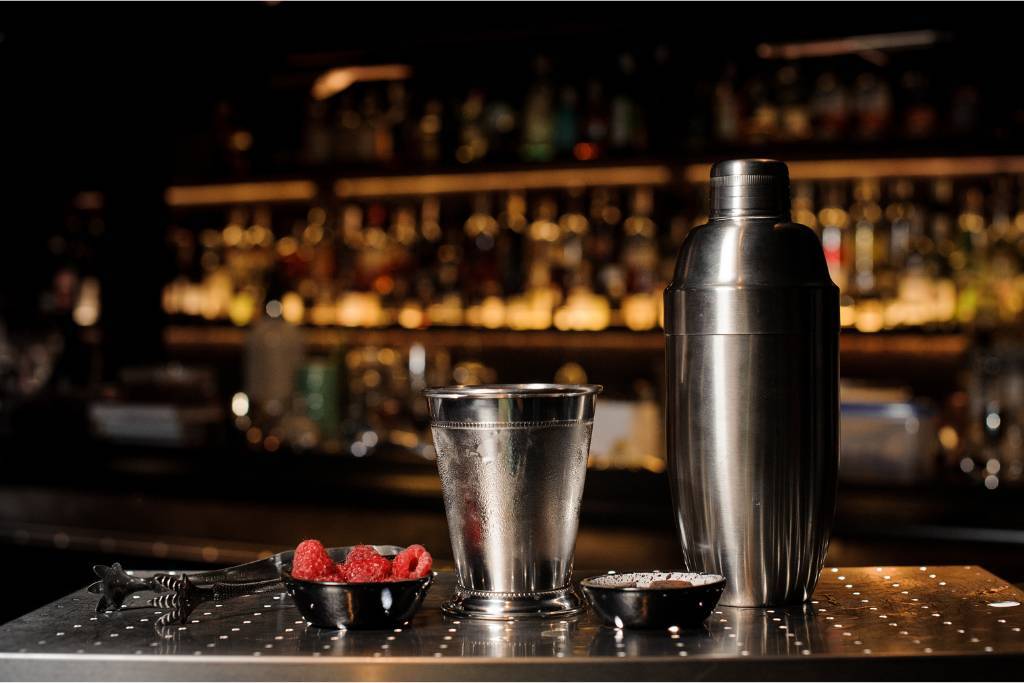
Our original bartender toolkit describes what you will find at a working bar: a shaker and strainer to mix and separate chilled drinks, a jigger to measure consistently, a spoon or muddler for recipes that call for them, suitable glassware, clean ice tools, garnish equipment and a bottle opener. Towels and an apron support a clean, organised station. Learn what each item does, how the venue stores and sanitises it, and which recipes and measures its menu uses. Food-safe handling of ice and garnishes matters as much as presentation.
That is a familiarisation list, not a shopping list. The venue normally provides its bar equipment; the personal essentials and the equipment it must supply are distinguished below. RSA and safe service remain more important than a polished toolkit.
3. The physical kit you bring
Most venues supply the bar tools. What you personally bring is short:
- A speed opener — the one thing most bartenders own
- A decent bar blade or waiter's friend
- A lighter, endlessly borrowed
- A pen that works
- Non-slip, closed-toe shoes — the single best purchase you will make
- A spare shirt
Do not turn up with a full personal kit of shakers and strainers. It reads as inexperience, and the venue has its own. It also has to: the assessment conditions for the accredited bar unit require the venue to supply the range.
4. The kit the venue has to have
This is the part worth reading before you accept a job, not after. The assessment conditions for SITHFAB023 Operate a bar set out what an operational commercial bar has to provide, and it doubles neatly as a checklist for whether a bar is properly set up.
| Category | What has to be there |
|---|---|
| Fixtures and equipment | A bar service area, cashiering facilities, refrigeration, storage for glassware and drinks, water supply, utensils, a range of glassware, service-ware |
| Stock | Edible and non-edible garnishes and accompaniments, ice, a wide commercial range of alcoholic and non-alcoholic beverages |
| Cleaning | Cloths, commercial cleaning and sanitising agents, a dishwasher or glasswasher, dustpan and broom, garbage bins and bags, a hand towel dispenser and towels, mops and bucket, and a separate hand basin with antiseptic liquid soap |
| Documents | Equipment manufacturer instructions, cleaning schedules, bar menus, cocktail menus, standard recipes, preparation methods and presentation standards, wine lists, price lists, and safety data sheets for the cleaning agents and chemicals in use |
The unit's own bar set-up list is slightly wider than the assessment conditions and worth knowing as a job description: beers, spirits, wines and fortified drinks; edible and non-edible garnishes and accompaniments; non-alcoholic beverages; and manual or electronic registers and EFTPOS. The unit also expects familiarity with both electronic and non-electronic ordering systems, which is the polite way of saying some venues still run dockets.
The documents row is the interesting one. A bar with written standard recipes and presentation standards is a bar where you can actually be consistent, and consistency is what the unit is assessed on. A bar with no recipe specs is asking every bartender to invent the product nightly, then wondering why margins move.
One more assessment condition doubles as a quality test, this time of the training rather than the venue. Assessors for SITHFAB023 must meet the Standards for RTOs requirements and have worked in industry for at least three years applying the skills and knowledge of the unit. So the person assessing you should have actually run a bar. It is a fair question to ask a provider before you enrol.
5. The safety kit nobody mentions at interview
The knowledge evidence for SITHFAB023 names AS5034 Installation and use of inert gases for beverage dispensing, and requires you to know the specific dangers of the inert gases used in beer and post-mix systems, how access to restricted areas containing inert gas equipment is controlled, and the appropriate signage for areas where gases and chemicals are used.
This is the genuine hazard in a bar job, and the one most likely to be handed to whoever is on shift without explanation. Ask who is trained on the gas, where the cellar isolation is, and where the signage and safety data sheets are kept. A venue that answers those three questions crisply is a well-run venue.
The same knowledge evidence covers safe manual handling, the chemicals used in bar operations, the equipment features, safety and hygiene requirements for dispensing systems, glass-washers and dishwashers, ice machines and refrigeration, and the environmentally sound disposal of bar waste, including hazardous substances, recyclable glass, plastic bottles and containers. See health and safety best practice in hospitality and the first aid course.
6. The knowledge that gets you kept
The accredited units are a fair guide to what a venue actually values, because industry wrote them.
- The classics, built consistently.
SITHFAB030 Prepare and serve cocktailsis assessed on consistent quality, volume and appearance, using standard measures, to commercial timeframes — across three service periods, with two cocktails by each of six methods. Speed and consistency beat repertoire. Note that it is also the most gated unit in the stream:SITHFAB021,SITHFAB023andSITXFSA005all have to be held first, so the order is food safety, then operate a bar, then cocktails. - The six methods, properly: blended, built, floated, muddled, shaken, stirred.
- Product knowledge.
SITHFAB023requires knowledge of mixed drinks, basic and popular cocktails, beers, fortified drinks, non-alcoholic beverages, spirits and wines — and of customer preferences across brand, garnish, glassware, ice, mixers, strength and temperature. - Wine and beer basics, because most bar sales are not cocktails. The specialist units exist:
SITHFAB031beers, spirits and liqueurs,SITHFAB032Australian wines,SITHFAB033imported wines. All three sit behind RSA, and the two wine units are themselves the prerequisites forSITHFAB039 Manage the sale or service of wine— a sommelier path four units deep. - Types of bar service. Cash drinks, dry till, inclusive packages, open bar, pre-set drinks, set limits. Most self-taught bartenders have never seen these named, and they change how you take an order at a function.
- Mise en place. Explicit knowledge evidence in the unit, and the difference between surviving a peak service period and not.
- POS speed and cash handling.
SITXFIN007 Process financial transactionsis a core unit ofSIT30722, not an optional extra. - Handover. The unit requires you to pass on current customer information including drink preferences and customer problems, beverage quality issues and stock requirements. A refusal of service belongs in that handover.
- Refusal of service. A legal duty, not a soft skill — and the unit names the early signal most people miss, which is ordering behaviour rather than appearance: mixing a wide range of drink types, drinking in quick succession, ordering more than one drink for own consumption, repeatedly returning for more samples, and ordering "triple shots" or extra-large drinks. See managing intoxicated patrons.
7. Understanding how you are paid
Worth knowing before your first shift, because underpayment in hospitality usually comes from classification rather than the hourly rate.
Which award covers you is decided by the premises, not your job title, and there are four possible destinations rather than two. Each award covers its industry to the exclusion of any other modern award, so exactly one applies to a given employer.
| Award | Code | Covers |
|---|---|---|
| Hospitality Industry (General) Award 2020 | MA000009 |
Hotels, motels, pubs, taverns, wine bars, guest houses, caravan parks, ski lodges, resorts, casinos, caterers, accommodation, and restaurants operating in or in connection with those premises |
| Registered and Licensed Clubs Award 2020 | MA000058 |
Not-for-profit registered clubs — RSL, bowls, golf, surf, sporting and community clubs |
| Restaurant Industry Award 2020 | MA000119 |
Standalone restaurants, cafes, bistros, night clubs, reception centres, roadhouses |
| Fast Food Industry Award 2010 | MA000003 |
Takeaway, food courts, and food sold mainly to be eaten away from the point of sale |
Two traps, both counter-intuitive, both worth memorising.
Clubs are not covered by the hospitality award. MA000009 clause 4.4(d)(i) expressly states it does not cover "clubs registered or recognised under State or Territory legislation". Clubs are the one industry the hospitality award carves out by name. An RSL, bowls or golf club sits under MA000058, and the test in MA000058 clause 4.3 has two limbs: the venue must be registered and licensed under a relevant liquor, gaming, associations incorporation or corporations statute, and operating on a not-for-profit basis for the benefit of members and the community. The not-for-profit limb does the real work, so a commercially owned venue calling itself a "club" is not a club for award purposes.
Night clubs are not covered by the clubs award. A night club is commercial, so it falls under MA000119.
MA000058 clause 4.4 also expressly covers bar attendants and stewards employed in a club on a football ground, cricket ground, golf course or sports ground — useful if you pick up sporting-venue shifts.
So a wine bar inside a hotel, a standalone cocktail bar, and the bar at a bowls club can sit under three different awards while the job looks identical.
The classification lever, and it reaches further than most people think. Under MA000009, MA000119 and MA000058 — three of the four — a relevant AQF Certificate III or higher, used at work, sets a minimum classification of Level 4. In MA000009 and MA000119, Level 4 is the reference point for the whole structure. The fast food award MA000003 has no equivalent provision.
So if you hold a relevant Certificate III and you are using it, Level 1 is not the right classification, whether you are in a pub, a standalone restaurant or a registered club.
And a full qualification is not the only way in. "Appropriate level of training" is defined three ways: completing a training program meeting the training and assessment requirements of a qualification or one or more appropriate units of competency from a training package; or being assessed by a qualified skills assessor as having at least equivalent skills; or, as at a specified date, having been doing the work of that classification for at least three months. Individual units count. So does assessed experience.
Three distinctions worth keeping straight, because this is a pay entitlement rather than a courtesy:
MA000009andMA000119(both at clause 18.1, adult rates) require you to make use of the skills and knowledge derived from those Certificate III competencies. It is not automatic on completion.MA000058(clause 18.3) omits the words "or higher", and adds that the Fair Work Commission may require you to demonstrate that you utilise the relevant skills.- If it is disputed, the routes differ:
MA000009clause 40,MA000119clause 34, and forMA000058referral to the Fair Work Commission.
Two other provisions are MA000009-specific rather than industry-wide. The Introductory level for untrained new entrants is time-limited under that award: up to three months, extendable by mutual agreement for a further three, so six months is the ceiling. And under clause 13.5 of MA000009, a junior employee working as a liquor service employee must be paid as an adult at the classification rate for the work performed — not at the reduced junior percentage. A nineteen-year-old pouring drinks is on the adult rate. If your venue is a club or a night club, check the equivalent provisions in that award.
On rosters, this page gives you no figure, on purpose. Rostering and notice-of-change provisions are set by the award that covers the venue, and they differ between the four above, so no single number is correct for every reader. Find out which award applies and read its rostering clause. Penalty, overtime and break structures differ between the awards in the same way, and this page deliberately prints no rates or loadings — they re-set every 1 July, and a stale rate is worse than none. Use the Fair Work Ombudsman's Pay and Conditions Tool with the award code that actually applies. See superannuation, tax and payslips and working hours, rosters and public holidays.
What not to bother with
"Certified mixologist" credentials. There is no such thing in Australia. No licence, no protected title, and no unit or qualification on the national register carrying that name. See how long does it take to become a certified mixologist.
Flair, for most venues. Impressive, rarely what you are hired for, and not in any assessment requirement.
A course with no unit code. If there is no unit code and no RTO number on the certificate, it is not nationally recognised, whatever it covered. A genuine Statement of Attainment carries the RTO's name, registration code and logo, the full title and national code of each unit as listed on the National Register, the NRT logo, an authorised signature and a seal or watermark. Your USI must not be printed on it.
Making the training count
If you want your bar training to build toward something, look for a unit code. We hold several relevant skill sets on our scope of registration:
SITSS00071Responsible Service of AlcoholSITSS00075Beverage Advice —SITHFAB021,SITHFAB031,SITHFAB032,SITHFAB037food and beverage matchingSITSS00094Sommelier —SITHFAB021,SITHFAB031,SITHFAB032,SITHFAB033,SITHFAB039SITSS00080Espresso Machine Operation —SITHFAB025,SITXCCS014,SITXFIN007,SITXFSA005SITSS00070Hospitality Compliance —SITHFAB021,SITXFSA005,SITXFSA006SITSS00068Food Handling
Each produces a Statement of Attainment attached permanently to your USI, and the units credit-transfer into SIT30622 or SIT30722 Certificate III in Hospitality later. Neither Certificate III has entry requirements — and a completed one is what triggers the Level 4 floor above. Certification has to be issued within 30 calendar days from the completion of the assessment, once you have completed the product and paid all agreed fees, so if nothing has arrived after a month, ask.
See the bartending course and what a bartending course actually teaches.
About us
We are Complete Hospitality Training, RTO 3722, CRICOS 04242E. Level 3, 28 Elizabeth Street, Melbourne VIC 3000, and 410 Elizabeth Street, Surry Hills NSW 2010. Contact melbourne@cht.edu.au or +61 3 9654 1554.
We link to the relevant course and regulatory sources in this guide. Check those sources for current requirements, and confirm course availability, delivery, fees and entry requirements with us before enrolling.
Source records and further guidance
We link the unit records and regulator guidance relevant to this page below. Check the current source before making an enrolment, licensing or employment decision.
- SITHFAB023 Operate a bar
- SITHFAB021 Provide responsible service of alcohol
- SITHFAB030 Prepare and serve cocktails
- SITXFSA005 Use hygienic practices for food safety
- SITHFAB031 Provide advice on beers, spirits and liqueurs
- Responsible Service of Alcohol training requirements (Victoria)
- Responsible Service of Alcohol training requirements (Queensland)
- Responsible Service of Alcohol training requirements (Western Australia)
- Responsible Service of Alcohol training requirements (South Australia)
- Responsible Service of Alcohol training requirements (Tasmania)
- Responsible Service of Alcohol training requirements (Australian Capital Territory)
- Food Standards Code — Standards 3.2.2 and 3.2.2A (food safety practices and food safety management tools)
- Hospitality Industry (General) Award 2020 (MA000009)
- Restaurant Industry Award 2020 (MA000119)
- National Code of Practice for Providers of Education and Training to Overseas Students 2018 — Standards 1 to 11
- Unique Student Identifier (USI) requirements for RTOs
What do I actually need to buy?
Shoes, an opener, a lighter, a pen. The venue supplies the rest, and under the unit's assessment conditions a properly set up bar has to.
Do I need RSA before applying?
Practically, yes. Several states do allow a short grace period after you start, but most employers want to see it at hiring, and in NSW the card requires an in-person appointment.
Is a cocktail course worth it?
For skills, yes. For a credential, only if it carries a unit code. SITHFAB030 requires twelve cocktail preparations across three service periods in an operational commercial bar, so a genuine one is not a two-hour session — and you must already hold SITHFAB021, SITHFAB023 and SITXFSA005.
Do I need my own shaker set?
No, and bringing a full personal kit tends to read badly. A speed opener is the exception because it is about your own hands rather than the venue's stock.
What should I ask about before accepting a shift?
Who is trained on the gas, where the cellar isolation and signage are, where the safety data sheets are, whether there are written standard recipes, and which award covers the venue. All five are things a well-run venue answers immediately.
How much notice of my roster should I get?
That is set by the award covering the venue, and the four awards that can apply to bar work do not answer it the same way. Establish the award, then read its rostering clause on the Fair Work Ombudsman's site. We do not print a single figure because none would be correct across all four.
Why are non-slip shoes on a training provider's list?
Because a bar has ice, water, a glasswasher and a mop bucket in it, and safe work practices are core to the qualification. SITXWHS005 Participate in safe work practices is a core unit of both Certificate IIIs in Hospitality.
Do I need a food safety certificate to work behind a bar?
You are a food handler if you touch ice, cut fruit or unpackaged garnishes, so you need food handler training — which does not have to be accredited. Many venues ask for the accredited unit anyway, and it is a prerequisite if you want Operate a bar, bar cleaning, cocktails or the espresso unit.
How do I know my trainer has actually worked in a bar?
Ask. The assessment conditions for SITHFAB023 require assessors to meet the Standards for RTOs requirements and to have worked in industry for at least three years applying the skills and knowledge of the unit.
What if the venue has gaming machines?
That is a separate requirement with a separate regulator. In Victoria it is free government-delivered training accessed through RSG Online and venue-arranged sessions. Note also that gaming work in a pub or casino sits under MA000009 while the same work in an RSL, bowls or sporting club sits under MA000058 — same machines, same units, different award and different pay table, though both carry the Level 4 qualification floor. See how to get a bar and gaming licence (/news/how-do-i-get-my-bar-gaming-license/).
Which award am I under?
Check the premises rather than the job title. Hotels, pubs, taverns, wine bars, casinos and resorts sit under MA000009; not-for-profit registered clubs under MA000058; standalone restaurants, cafes, bistros and night clubs under MA000119; takeaway and food-court outlets under MA000003.
I work at a bowls club. Is that the hospitality award?
No. MA000009 expressly excludes clubs registered or recognised under State or Territory legislation. A not-for-profit registered bowls club is MA000058 — which does still carry the Level 4 qualification floor.
I have a Certificate III. Does that change my pay?
It can set a floor, and in three of the four awards. Under MA000009, MA000119 and MA000058, a relevant AQF Certificate III or higher that you actually use at work sets a minimum classification of Level 4. The fast food award MA000003 has no equivalent provision. MA000009 and MA000119 require you to make use of the skills derived from those competencies; MA000058 adds that the Fair Work Commission may require you to demonstrate that you utilise them.
I only have a couple of units, not the whole certificate. Is that useless?
No. "Appropriate level of training" expressly covers a program meeting the requirements of a qualification or one or more appropriate units of competency, and separately covers assessment by a qualified skills assessor as having equivalent skills, or three months doing the work of the classification. Bring the Statements of Attainment and name the unit codes.
I am 19. Am I on a junior rate?
Not as a liquor service employee under MA000009. Clause 13.5 requires junior employees working as liquor service employees to be paid as adults at the classification rate for the work performed. Check the equivalent provision in your own award if the venue is a club.
How long should I expect to stay on the Introductory rate?
Under MA000009, up to three months, extendable by mutual agreement for up to a further three. If you are still on it at eight months, something is wrong.
Which units does SITXFSA005 unlock?
Nine, in the current food and beverage stream: SITHFAB022 clean and tidy bar areas, SITHFAB023 operate a bar, SITHFAB024 non-alcoholic beverages, SITHFAB025 espresso coffee, SITHFAB026 room service, SITHFAB027 serve food and beverage, SITHFAB030 cocktails, SITHFAB034 table service and SITHFAB035 silver service. SITHFAB023, SITHFAB030 and SITHFAB034 also need RSA, and SITHFAB030 needs SITHFAB023 on top of that.
What is the fastest way to become employable?
RSA first, because it is the gate — and because it is itself a prerequisite to nine units further up. Food handling second, because it is cheap, commonly asked for, and unlocks nine other units in the food and beverage stream — SITHFAB023 Operate a bar needs both. Then the bar units, because they are what distinguishes you once you are through the door. See five tips to help you secure the best bartender job (/news/five-tips-to-help-you-secure-the-best-bartender-job/).
Images on This Page
-
https://cht.edu.au/wp-content/uploads/2022/04/cht_logo_web_land.svg
logo
-
data:image/svg+xml,%3Csvg%20xmlns='http://www.w3.org/2000/svg'%20viewBox='0%200%200%200'%3E%3C/svg%3E
logo
-
https://cht.edu.au/wp-content/uploads/2022/04/cht_logomark_webb.png
logo
-
https://cht.edu.au/wp-content/uploads/2022/04/cht_logo_rgb.svg
logo
-
https://cht.edu.au/wp-content/uploads/2020/11/banner_bar.jpg
(no alt text)
-
data:image/svg+xml,%3Csvg%20xmlns='http://www.w3.org/2000/svg'%20viewBox='0%200%201024%20683'%3E%3C/svg%3E
Cocktail shaker, strainer, and jigger placed neatly on a bar with fresh raspberries, illustrating bartender toolkit essentials in use.
-
https://cht.edu.au/wp-content/uploads/2025/10/The-Essential-BartenderΓCOs-Toolkit-What-You-Actually-Need-to-Get-Hired.jpg
Cocktail shaker, strainer, and jigger placed neatly on a bar with fresh raspberries, illustrating bartender toolkit essentials in use.
-
data:image/svg+xml,%3Csvg%20xmlns='http://www.w3.org/2000/svg'%20viewBox='0%200%201200%20800'%3E%3C/svg%3E
(no alt text)
-
https://cht.edu.au/wp-content/uploads/2020/08/AdobeStock_139998652b-e1604277396692.jpg
(no alt text)
-
https://cht.edu.au/wp-content/uploads/2020/08/AdobeStock_108943277-e1604277362634.jpg
(no alt text)
-
https://cht.edu.au/wp-content/uploads/2020/08/AdobeStock_202644171-e1604277433640.jpg
(no alt text)
-
https://cht.edu.au/wp-content/uploads/2020/08/AdobeStock_172629488-e1604277467697.jpg
(no alt text)
-
data:image/svg+xml,%3Csvg%20xmlns='http://www.w3.org/2000/svg'%20viewBox='0%200%2030%200'%3E%3C/svg%3E
nationally
-
https://cht.edu.au/wp-content/uploads/2024/08/nationally.svg
nationally
-
data:image/svg+xml,%3Csvg%20xmlns='http://www.w3.org/2000/svg'%20viewBox='0%200%2040%200'%3E%3C/svg%3E
nationally
-
https://cht.edu.au/wp-content/uploads/2024/08/quality.svg
nationally
-
data:image/svg+xml,%3Csvg%20xmlns='http://www.w3.org/2000/svg'%20viewBox='0%200%2045%200'%3E%3C/svg%3E
nationally
-
https://cht.edu.au/wp-content/uploads/2024/08/art.svg
nationally
-
https://cht.edu.au/wp-content/uploads/2024/08/established.svg
nationally
-
https://cht.edu.au/wp-content/uploads/2024/08/service.svg
nationally
-
data:image/svg+xml,%3Csvg%20xmlns='http://www.w3.org/2000/svg'%20viewBox='0%200%201%201'%3E%3C/svg%3E
(no alt text)
-
https://cht.edu.au/wp-content/uploads/2022/04/cht_logo_wht.svg
(no alt text)
-
data:image/svg+xml,%3Csvg%20xmlns='http://www.w3.org/2000/svg'%20viewBox='0%200%2032%2032'%3E%3C/svg%3E
Facebook
-
https://cht.edu.au/wp-content/uploads/2023/02/facebook.svg
Facebook
-
https://cht.edu.au/wp-content/uploads/2023/02/instagram.svg
Instagram
-
https://cht.edu.au/wp-content/uploads/2023/02/youtube.svg
YouTube
-
https://cht.edu.au/wp-content/uploads/2023/02/tiktok.svg
TikTok
-
https://cht.edu.au/wp-content/uploads/2023/02/linkedin.svg
LinkedIn
-
data:image/svg+xml,%3Csvg%20xmlns='http://www.w3.org/2000/svg'%20viewBox='0%200%20404%2074'%3E%3C/svg%3E
(no alt text)
-
https://cht.edu.au/wp-content/uploads/2023/12/flags.png
(no alt text)
-
https://cht.edu.au/wp-content/themes/cht/images/close-icon.png
(no alt text)