Making Great Coffee at Home
Most home coffee problems come down to three variables, and none of them is the machine. Grind, dose and milk texture account for the overwhelming majority of bad espresso made at home.
That is not an opinion. The nationally recognised unit for espresso work, SITHFAB025 Prepare and serve espresso coffee, requires competent baristas to know the adjustments available to dose, grind, tamping technique, water flow and water pressure — and nothing at all about buying a better machine. The variables that a professional is assessed on are the same variables sitting in your kitchen.
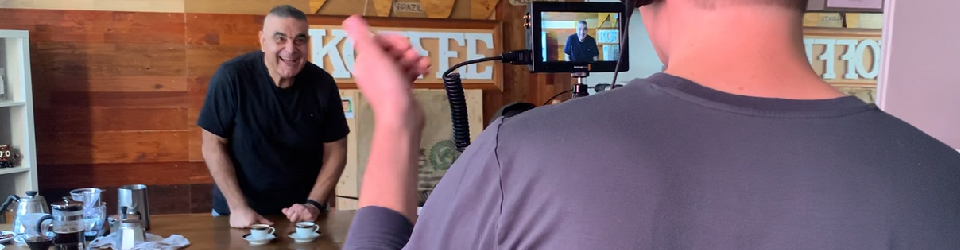
Sam’s home-brewing feature
The original news item introduced a video featuring CHT master barista trainer Sam Demelis on ABC Everyday. It covered budget-conscious improvements to French press, pour-over, moka pot and ibrik brewing, along with why Sam enjoys making coffee. The historical video link is in that source item; its availability may change. The technical guidance below is broader than the original feature and can help you experiment at home.
Start with the grinder, not the machine
If you are going to spend money on one thing, spend it on the grinder. A modest espresso machine with a good burr grinder beats an expensive machine with a blade grinder.
Espresso needs a consistent, fine grind. Blade grinders produce a mix of dust and boulders, so water channels through the coarse particles while over-extracting the fine ones. That is how you get sour and bitter in the same cup.
Grind fresh, immediately before brewing. Ground coffee stales quickly.
The three variables that matter
Grind size. Too coarse and water rushes through, under-extracting, and the result tastes sour and thin. Too fine and it chokes, over-extracting, and the result is bitter and harsh. Adjust in small steps and change only one thing at a time.
Dose and time. Use the same dose each time so you have a fixed reference, then time the shot. If the timing is off, adjust the grind rather than the dose. Our published craft benchmarks for a standard double are a dose of around 18 to 22 grams producing roughly 36 to 44 grams in the cup, with the shot running about 25 to 30 seconds and flowing like warm honey. Under 20 seconds tends to mean under-extracted and sour; over 35 seconds, over-extracted and bitter. Scales beat scoops, and a timer beats instinct while you are learning.
Milk texture. Most home milk is over-heated and under-textured. Introduce air only briefly at the start with the steam wand tip just below the surface — the stretch — then dip the tip deeper to roll the milk into a smooth vortex. The goal is glossy microfoam with no visible bubbles, not stiff foam sitting on hot milk. Swirl and tap the jug before pouring.
On temperature, we teach a sweet spot of 55 to 65 °C. Above 70 °C the milk proteins break down and the taste goes flat and dull. The touch cue: stop when the jug is almost too hot to hold. And do not re-steam milk that has already been steamed — the proteins will not hold structure a second time. See milk texturing 101 for the full method.
Of those three variables, milk is the one worth the most practice, and the assessed beverage list explains why. See the split further down.
The professional checklist, translated for a home kitchen
One of the more useful things about an accredited unit is that it writes down what a competent operator is expected to know. SITHFAB025's knowledge evidence is a list of thirteen things, and almost every one of them has a direct home equivalent. This is the closest thing there is to a syllabus for getting better in your own kitchen.
| What the unit requires a barista to know | What that means at home |
|---|---|
| Types and characteristics of espresso coffee beverages | Know what a flat white actually is before you try to make one for someone who cares |
| Different types of milk and their characteristics for different beverages | Milks behave differently in the jug; the one that textures best is not always the one you drink |
| Characteristics of different beans, blends and roasts | Learn to describe what you like, so your next bag is a choice rather than a gamble |
| Mise en place requirements for preparing coffee beverages | Have the jug rinsed, the cup warmed and the basket dry before you start, not during |
| Methods and techniques: grinding, measuring, tamping, extracting, milk texturing | Five separate skills. Practise them one at a time |
| Quality indicators for espresso coffee extraction | The diagnosis table below |
| Options for customer preferences | Strength, milk, beans, sweeteners, accompaniments, service-ware |
| Factors relevant to quality: ambient humidity, crema, espresso flow, steam pressure, taste | Why the same setting gives a different shot on a different day |
| Extraction rates for different espresso coffee beverages | A ristretto and a long black are not the same shot poured differently |
| Adjustments to dose, grind, tamping technique, water flow and water pressure | Your five levers, in order of how often you should touch them |
| Essential features and functions of espresso machines and grinders | Know what your machine can and cannot control |
| Basic maintenance and cleaning methods for espresso equipment | The cleaning section below |
The thirteenth is the one home users almost never think about, and it is worth its own heading.
Why your grind setting changes when the weather does
Among the factors the unit names as relevant to beverage quality is ambient humidity, alongside crema, espresso flow, steam pressure and taste. That single word explains a frustration most home users blame on themselves or their beans.
Coffee is hygroscopic. On a humid Melbourne morning the grounds take up moisture, clump slightly and resist water differently from the way they did on a dry day, so the shot you dialled in on Tuesday runs long on Thursday with the grinder untouched. Professionals re-dial through the day for exactly this reason. At home, the practical response is not to chase a permanent "correct" setting but to taste the first shot of the day and expect to move the grinder a notch either way.
The same list explains two other things. Steam pressure is a variable, not a constant: a domestic machine recovering between the shot and the milk will not steam the same way as one that has been left to stabilise. And crema is an indicator, not a goal — a thick crema on a stale, finely ground shot tells you nothing good.
Diagnosing by taste
This is the skill worth building, because it tells you which variable to change. The unit calls this knowing the quality indicators for espresso extraction, and it is the difference between following a recipe and actually making coffee.
| Tastes | Likely cause | Fix |
|---|---|---|
| Sour, thin, weak | Under-extracted, running too fast | Grind finer |
| Bitter, harsh, drying | Over-extracted, running too slow | Grind coarser |
| Hollow, uneven | Channelling | Level the bed and tamp evenly |
| Flat, stale | Old beans or pre-ground coffee | Fresher beans, grind to order |
| Dull and lifeless despite good timing | Machine or water | Clean and descale; use filtered water |
A vocabulary for judging a cup
If you want a more structured way to describe what you are tasting than "good" and "off", the accredited system supplies one. The senior espresso unit, SITHFAB038 Plan and monitor espresso coffee service, is written for someone monitoring quality across a whole service rather than making one cup, and its performance evidence names the eight characteristics it expects to be judged:
| # | Characteristic |
|---|---|
| 1 | Appearance, including opacity or transparency |
| 2 | Aroma |
| 3 | Colour |
| 4 | Flavour |
| 5 | Freshness |
| 6 | Presentation |
| 7 | Taste |
| 8 | Volume |
That is a better tasting checklist than most home guides offer, and it separates two things people routinely blur: flavour and taste are listed as different characteristics, and freshness is judged in its own right rather than inferred from the other seven. Its element 3 also asks the candidate to identify the desirable characteristics of superior espresso coffee and to evaluate bean freshness, which is the accredited version of the beans advice further down this page. Element 4 covers monitoring temperature and water pressure and knowing when equipment needs a service call.
One quirk worth knowing if this interests you: SITHFAB038 carries no prerequisite units at all, not even SITHFAB025. The entry-level espresso unit is gated by food safety and the senior one is not gated by anything, so it is not a locked door at the top of a ladder.
Reading the shot, not just tasting it
You can diagnose before you taste. We teach this as the fastest single improvement most home users make:
| What you see | What it usually means |
|---|---|
| Pale stream early | Grind too coarse, or the basket is underfilled |
| Slow drips, or the shot stalls | Grind too fine, or the dose is too high |
| Uneven flow from the spouts | The puck was not level, or water has channelled |
Wipe the rim of the basket before locking the portafilter in, so the seal is even.
Making it the way the other person wants it
The unit also expects a barista to handle options for customer preferences, and the listed options are a good prompt list for anyone making coffee for a household rather than only for themselves: accompaniments, blends, service-ware, strength, sweeteners, types of beans and types of milk.
Two of those are more interesting than they sound at home.
Strength is not the same as dose. A drink can be made stronger by changing the ratio of coffee to milk, by using a ristretto rather than a standard shot, or by adding a second shot — three different drinks, all described by the same word. Ask which one the person means.
Service-ware changes the drink. The same shot and the same milk in a 150 ml cup and a 300 ml mug are not the same beverage, because the milk-to-coffee ratio has moved. If your flat white tastes weak, check the cup before you change the grind.
One honesty note. People often ask about allergen duties and cross-contact when handling milk substitutes. The regulatory material behind this page does not cover allergen obligations for coffee service, so this page deliberately does not state any. If allergens matter in your setting, the food regulator in your state is the authority, not a coffee guide.
Beyond espresso: the other half of a cafe list
If you want to widen what you can make at home, the accredited map is SITHFAB024 Prepare and serve non-alcoholic beverages. It is the companion unit to the espresso one, and its scope is broader than most people expect. The beverage types it names are:
| Carbonated drinks | Iced chocolate or iced coffee |
| Non-espresso coffees | Milkshakes |
| Frappés | Mocktails |
| Freshly squeezed juices | Smoothies |
| Hot chocolate | Teas |
Its assessment shape is also worth knowing, because it tells you what "competent" means in a commercial sense. SITHFAB024 requires beverages prepared and presented across a minimum of three different service periods, including at least one peak service period, and at least six different beverages from that list, on three occasions each — within commercial timeframes, at consistent quality, volume and appearance, using the correct equipment, ingredients and standard measures.
Note that non-espresso coffees sit in SITHFAB024, not in the espresso unit. Plunger, filter and cold brew are a different unit from the machine.
Latte art is a milk skill, not an assessed unit
This surprises people: latte art is not separately assessed, not even inside SITHFAB025. It appears in neither the performance evidence nor the knowledge evidence of the espresso unit, and there is no accredited unit code for it.
That is not a reason to dismiss it. It is a reason to understand what it is: a consequence of good milk texture and a steady pour, not a separate technique layered on top. If your microfoam is glossy and your pour starts high to cut the crema and then drops close and tilts, a pattern will appear. If your milk is bubbly, no amount of wrist movement will produce one. Work on the jug, not the picture.
The nearest the register comes to assessing how a cup looks is SITHFAB038's eight characteristics above, where appearance and presentation are two of the eight — and even there it is consistency across a service being judged, not a pattern.
We do run latte art and coffee appreciation as interest offerings. They are genuinely useful and they are not accredited units — neither produces a Statement of Attainment. That distinction is worth insisting on whoever you train with, because it is the difference between a skill and a credential.
Beans and water
Buy beans with a roast date, not just a best-before, and use them while they are fresh. Store them airtight, at room temperature, away from light. The freezer is not the right place for coffee you are drinking daily.
The unit expects a barista to know the characteristics of different beans, blends and roasts — which is a reasonable thing for a home user to learn too, because it is what turns "this coffee is nice" into "I know what I want next time". SITHFAB038 goes one step further and makes evaluating bean freshness an assessed act rather than a habit, which is a useful reframing: freshness is something you judge, not something the packet tells you.
Water matters more than people expect. Since water is most of what ends up in the cup, its quality affects both taste and the machine. Very hard water dulls extraction and scales the machine; very soft water tends to taste flat. Filtered water, with balanced minerals, is usually the right answer, and descaling on the manufacturer's schedule keeps it that way.
Let it warm up
A cold machine brews at the wrong temperature, and that shows up in the cup as a thin, sour shot no grind adjustment will fix. Our guidance is to give the machine 10 to 15 minutes to come up to temperature, run a blank shot to purge and stabilise the group head, and preheat the cup with hot water. The first coffee of the morning is the one most often ruined by impatience.
Clean it
Most "the machine is bad" problems are maintenance problems. Rancid coffee oils in the group head and grinder taste exactly like bad coffee.
- Clean the group head regularly
- Backflush weekly if your machine supports it
- Wipe and purge the steam wand immediately after every use
- Clean the grinder periodically
- Descale on the manufacturer's schedule
Maintenance sits inside the accredited unit, not outside it: SITHFAB025's knowledge evidence includes the essential features and functions of espresso machines and grinders and basic maintenance and cleaning methods. Professionals are assessed on cleaning. It is not the boring part of the craft; it is part of the craft.
Where the ceiling is
Home practice will teach you extraction, diagnosis and texturing. There are two things it will not teach you.
Speed. SITHFAB025 requires beverages prepared within commercial timeframes — at the pace a paying venue needs, while people wait. Nothing in a kitchen replicates that.
Range under pressure. The unit requires ten named espresso beverages, each on three separate occasions:
| Beverage | Beverage |
|---|---|
| Caffe latte | Piccolo latte |
| Cappuccino | Mocha |
| Espresso (short black) | Ristretto |
| Flat white | Short macchiato |
| Long black | Long macchiato |
Thirty competent preparations, assessed. Most home users make two or three of those ten regularly and never touch the rest.
Which of the ten you can practise without a jug
The split matters at home, because milk is the harder half and the one a beginner most needs to repeat. Only three of the ten are milk-free — espresso (short black), long black and ristretto — because both macchiatos and the mocha take milk. The other seven require textured milk, so 21 of the 30 assessed preparations go through a jug and only 9 do not.
That gives a home practice plan with no guesswork in it. The three black beverages let you isolate grind, dose and extraction with the steam wand switched off, which is the right way to learn diagnosis. The seven milk beverages are where the volume of practice actually has to go, and they are the ones where a second attempt teaches you more than a second reading. If you can produce the three black drinks reliably and your milk is inconsistent, you have located your problem precisely: seven-tenths of the accredited standard is still in front of you.
It is also worth noting what the unit does not impose: unlike SITHFAB024, SITHFAB027, SITHFAB038 and SITHFAB034, the espresso unit sets no minimum number of service periods. Ten beverages, three times each, is the bar — which is precisely why so much of it can be practised outside a venue, and why the part that cannot is speed.
If you want to go further than home
| Offering | What it is |
|---|---|
| Barista coffee course | The core barista offering |
| Accredited barista training in Sydney NSW | NSW delivery |
| Barista master class | A delivery format, not a credential |
| Latte art | An interest course, and mostly a milk-texturing skill |
| Coffee appreciation | An interest course, not an accredited unit |
If you want the training to count toward a qualification, ask whether it is built on SITHFAB025, or the SITSS00080 Espresso Machine Operation skill set — those produce a Statement of Attainment that credit-transfers into SIT30622 or SIT30722. SITSS00080 is four units: SITHFAB025, SITXCCS014 Provide service to customers, SITXFIN007 Process financial transactions and SITXFSA005 Use hygienic practices for food safety, and achievement provides credit towards SIT Training Package qualifications. Its own documentation states that no occupational licensing, certification or legislative requirement applies to the skill set — which is the plain answer to whether a barista needs a licence to make coffee. They do not.
If what you actually enjoy is the tasting and describing rather than the machine, the skill set aimed at that is SITSS00075 Beverage Advice, and SITHFAB038 element 2 covers providing specialist advice and promoting coffee appreciation.
Where the espresso unit sits in a qualification
SITHFAB025 is not core anywhere. It is an elective, which means you choose it:
| Qualification | How SITHFAB025 appears |
|---|---|
| SIT30622 Certificate III in Hospitality | Group B (Food and Beverage) elective |
| SIT30722 Certificate III in Hospitality (Restaurant Front of House) | Elective — and this qualification carries SITXFSA005 as core, so the prerequisite is included; students still need to complete it |
One planning point: SITHFAB025 carries SITXFSA005 as a prerequisite, which must be completed before the espresso unit. Within the food and beverage stream SITXFSA005 is the gateway to nine units — SITHFAB022, SITHFAB023, SITHFAB024, SITHFAB025, SITHFAB026, SITHFAB027, SITHFAB030, SITHFAB034 and SITHFAB035 — so putting it first is the sequencing decision that saves the most time later. Keep that figure scoped to the stream, because the same unit also sits in front of cookery, patisserie and kitchen units elsewhere in the SIT package. RSA SITHFAB021 reaches just as far, gating nine units of its own, and four units in the stream carry two or more prerequisites: SITHFAB023 and SITHFAB034 carry two, SITHFAB030 and SITHFAB039 carry three. SITHFAB038, unusually, needs none of them. See barista training: how long and virtual food handling SITXFSA005.
And if you are making coffee for other people commercially rather than at home, the rules change completely: food handler training, or skills and knowledge commensurate with the activity, is required before carrying out a prescribed activity in a business that makes and serves unpackaged potentially hazardous ready-to-eat food. See food handling.
For the wider craft and career picture, see how to become a successful barista, how long does it take to become a good barista and brewed together.
About us
We are Complete Hospitality Training, RTO 3722, CRICOS 04242E. Level 3, 28 Elizabeth Street, Melbourne VIC 3000, and 410 Elizabeth Street, Surry Hills NSW 2010. Contact melbourne@cht.edu.au or +61 3 9654 1554.
We have held RTO code 3722 since 1 June 1994 and our current registration period runs to 30 June 2032. Coffee work has been part of that history long enough to have its own registered trading name: Coffee School by CHT, on the record since 20 May 2021. Across our scope we hold 17 current qualifications, 81 current skill sets and 579 current units.
We link to the relevant course and regulatory sources in this guide. Check those sources for current requirements, and confirm course availability, delivery, fees and entry requirements with us before enrolling.
Source records and further guidance
We link the unit records and regulator guidance relevant to this page below. Check the current source before making an enrolment, licensing or employment decision.
- SITHFAB025 Prepare and serve espresso coffee
- SITHFAB038 Plan and monitor espresso coffee service
- SITXFSA005 Use hygienic practices for food safety
- SITHFAB024 Prepare and serve non-alcoholic beverages
- SITSS00080 Espresso Machine Operation
- Outcome Standards for Registered Training Organisations 2025 (full text)
Assessment wording clarified on 2 October 2026. SITXFSA005 unit record.
Do I need an expensive machine?
No. Prioritise the grinder. Grind consistency does more for the cup than machine price.
Why is my coffee sour?
Usually under-extraction: the shot is running too fast. Grind finer. If it is running in the right time and still sour, check the machine has warmed up properly.
Why is my coffee bitter?
Usually over-extraction: the shot is running too slow. Grind coarser, or check the dose is not too high.
How long should an espresso shot take?
Our published benchmark is about 25 to 30 seconds for a standard double, flowing like warm honey. Under 20 seconds and over 35 seconds are the two failure zones.
How much coffee should I use?
Around 18 to 22 grams for a standard double, yielding roughly 36 to 44 grams in the cup, as a starting reference to adjust from.
Why does my dialled-in shot change from one day to the next?
Because ambient humidity is one of the factors the espresso unit itself names as relevant to quality. Coffee takes up moisture, so the same grinder setting behaves differently on a humid day. Taste the first shot and expect to adjust.
Which of the ten beverages can I practise without milk?
Three: espresso (short black), long black and ristretto. The other seven take textured milk, so 21 of the 30 assessed preparations go through a jug. Practise the three black drinks to learn diagnosis, and put your repetitions into the seven.
Why will my milk not pour?
Usually too hot, or too much air introduced at the start. Stretch briefly, then sink the tip and roll. Stop at around 65 °C.
Can I re-heat milk I already steamed?
No. Once steamed, the proteins will not hold structure again and the sweetness is gone. Start with fresh, cold milk.
Is there a structured way to describe what I am tasting?
Yes. SITHFAB038 names eight characteristics: appearance including opacity or transparency, aroma, colour, flavour, freshness, presentation, taste and volume. Note that flavour and taste are listed separately, and freshness is judged in its own right.
Is latte art part of the accredited espresso unit?
No. Latte art appears in neither the performance nor the knowledge evidence of SITHFAB025, and there is no accredited unit for it. It is a by-product of good microfoam and a steady pour. The nearest thing is SITHFAB038, which assesses appearance and presentation for consistency across a service rather than assessing a pattern.
How fresh should beans be?
Buy with a roast date rather than a best-before, and use them while fresh. Grind immediately before brewing rather than in advance. SITHFAB038 treats evaluating bean freshness as an assessed skill, which is a reasonable hint that it is not obvious from the bag.
Does water really matter?
Yes, because it is most of the drink. Filtered water with balanced minerals is generally best, and descaling keeps the machine from dulling everything it makes.
Do I have to warm the machine up?
Yes. Give it 10 to 15 minutes, purge the group head with a blank shot, and preheat the cup. A cold machine cannot brew at the right temperature.
Which unit covers espresso if I want it accredited?
SITHFAB025 Prepare and serve espresso coffee. SITHFAB024 Prepare and serve non-alcoholic beverages covers the rest of a cafe list — including non-espresso coffees, plunger and filter among them — and it is not the espresso unit. SITHFAB038 is the senior espresso unit above both.
Do I need a licence or certificate to make coffee?
No. The Espresso Machine Operation skill set SITSS00080 states expressly that no occupational licensing, certification or legislative requirement applies to it. Food handling duties are a separate matter and do apply in a commercial setting.
Is there a home equivalent of the accredited assessment?
Not formally, but you can set yourself the same test: the ten named beverages, three times each, timed. Most people discover the gap is range and speed rather than technique — and that the seven milk beverages are where the range is missing.
Can my existing skill be recognised?
Recognition of prior learning is available and RTOs must offer it under Standard 1.6 of the Outcome Standards for RTOs. It is a genuine assessment against the same evidence, not a waiver. Credit transfer, under Standard 1.7, is the separate route if you already hold the unit. Both are raised at the pre-training review, required under Standard 2.2 of those same standards.
How much does barista training cost?
Fees change, so this page does not print one. Confirm the current fee directly.
Images on This Page
-
https://cht.edu.au/wp-content/uploads/2022/04/cht_logo_web_land.svg
logo
-
data:image/svg+xml,%3Csvg%20xmlns='http://www.w3.org/2000/svg'%20viewBox='0%200%200%200'%3E%3C/svg%3E
logo
-
https://cht.edu.au/wp-content/uploads/2022/04/cht_logomark_webb.png
logo
-
https://cht.edu.au/wp-content/uploads/2022/04/cht_logo_rgb.svg
logo
-
https://cht.edu.au/wp-content/uploads/2021/05/IMG_0247-scaled.jpeg
(no alt text)
-
data:image/svg+xml,%3Csvg%20xmlns='http://www.w3.org/2000/svg'%20viewBox='0%200%202560%201708'%3E%3C/svg%3E
(no alt text)
-
https://cht.edu.au/wp-content/uploads/2021/05/IMG_0255-scaled-e1621214561197.jpeg
(no alt text)
-
https://cht.edu.au/wp-content/uploads/2021/05/bg-abc.jpeg
(no alt text)
-
data:image/svg+xml,%3Csvg%20xmlns='http://www.w3.org/2000/svg'%20viewBox='0%200%201200%20800'%3E%3C/svg%3E
(no alt text)
-
https://cht.edu.au/wp-content/uploads/2020/08/AdobeStock_139998652b-e1604277396692.jpg
(no alt text)
-
https://cht.edu.au/wp-content/uploads/2020/08/AdobeStock_108943277-e1604277362634.jpg
(no alt text)
-
https://cht.edu.au/wp-content/uploads/2020/08/AdobeStock_202644171-e1604277433640.jpg
(no alt text)
-
https://cht.edu.au/wp-content/uploads/2020/08/AdobeStock_172629488-e1604277467697.jpg
(no alt text)
-
data:image/svg+xml,%3Csvg%20xmlns='http://www.w3.org/2000/svg'%20viewBox='0%200%2030%200'%3E%3C/svg%3E
nationally
-
https://cht.edu.au/wp-content/uploads/2024/08/nationally.svg
nationally
-
data:image/svg+xml,%3Csvg%20xmlns='http://www.w3.org/2000/svg'%20viewBox='0%200%2040%200'%3E%3C/svg%3E
nationally
-
https://cht.edu.au/wp-content/uploads/2024/08/quality.svg
nationally
-
data:image/svg+xml,%3Csvg%20xmlns='http://www.w3.org/2000/svg'%20viewBox='0%200%2045%200'%3E%3C/svg%3E
nationally
-
https://cht.edu.au/wp-content/uploads/2024/08/art.svg
nationally
-
https://cht.edu.au/wp-content/uploads/2024/08/established.svg
nationally
-
https://cht.edu.au/wp-content/uploads/2024/08/service.svg
nationally
-
data:image/svg+xml,%3Csvg%20xmlns='http://www.w3.org/2000/svg'%20viewBox='0%200%201%201'%3E%3C/svg%3E
(no alt text)
-
https://cht.edu.au/wp-content/uploads/2022/04/cht_logo_wht.svg
(no alt text)
-
data:image/svg+xml,%3Csvg%20xmlns='http://www.w3.org/2000/svg'%20viewBox='0%200%2032%2032'%3E%3C/svg%3E
Facebook
-
https://cht.edu.au/wp-content/uploads/2023/02/facebook.svg
Facebook
-
https://cht.edu.au/wp-content/uploads/2023/02/instagram.svg
Instagram
-
https://cht.edu.au/wp-content/uploads/2023/02/youtube.svg
YouTube
-
https://cht.edu.au/wp-content/uploads/2023/02/tiktok.svg
TikTok
-
https://cht.edu.au/wp-content/uploads/2023/02/linkedin.svg
LinkedIn
-
data:image/svg+xml,%3Csvg%20xmlns='http://www.w3.org/2000/svg'%20viewBox='0%200%20404%2074'%3E%3C/svg%3E
(no alt text)
-
https://cht.edu.au/wp-content/uploads/2023/12/flags.png
(no alt text)
-
https://cht.edu.au/wp-content/themes/cht/images/close-icon.png
(no alt text)